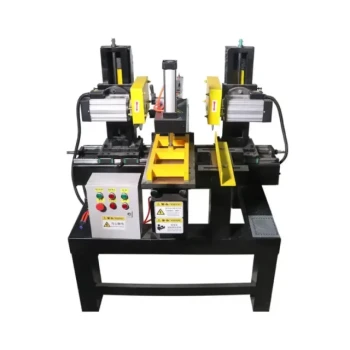
Industrial hive-making machines serve as the backbone of modern apiary defense by automating the production of standardized, movable-frame hives. This physical uniformity is the prerequisite for scientific management strategies—specifically colony splitting and precise medication application—that are critical for neutralizing threats like Varroa mites and Cape honeybee infestations.
The defense capability of an apiary relies on the consistency of its equipment. Industrial machines facilitate the mass production of interchangeable parts, enabling scalable and precise interventions that irregular, manual hive construction cannot support.
The Link Between Standardization and Biosecurity
The Foundation of Scientific Management
The primary contribution of industrial machines is the mass production of standardized movable-frame hives.
In the context of pest control, standardization is not merely about convenience; it is a biological necessity. It allows beekeepers to apply a consistent management methodology across thousands of colonies.
Enabling Colony Splitting
One of the most effective defensive tactics in beekeeping is colony splitting. This technique helps manage population density and breaks the brood cycle of certain pests.
Industrial machines ensure that every hive box and frame is identical. This allows beekeepers to split colonies and move frames between hives seamlessly, maintaining strong, defensible population levels.
Precision in Medication Application
Effective defense often requires chemical or organic treatments.
Standardized hive dimensions allow for the precise application of medication. Because the internal volume of the hive is constant, beekeepers can calculate exact dosages, ensuring treatments are lethal to pests like Varroa mites without harming the bees.
Operational Efficiency as Defense
Combatting the Cape Honeybee Problem
Infestations such as the Cape honeybee problem thrive in unmanaged or weak colonies.
By facilitating efficient honey harvesting and regular maintenance, machine-produced hives allow beekeepers to inspect colonies more frequently. Early detection of parasitic Cape honeybees is only possible when frames can be easily removed and examined.
The Role of Interchangeable Parts
When a hive component is damaged or contaminated, it must be replaced immediately to maintain the colony's security envelope.
Industrial manufacturing ensures that a replacement part fits perfectly every time. This eliminates gaps or structural weaknesses that pests and diseases could exploit to enter the hive.
Understanding the Trade-offs
The Distinction Between Tools and Tactics
It is crucial to understand that the machine itself does not kill the pest.
The machine creates the potential for defense. If a beekeeper utilizes industrial hives but fails to implement the associated scientific management techniques (such as timely splitting or monitoring), the standardization offers no biological advantage.
Uniformity vs. Adaptation
While standardization is excellent for efficiency, it imposes a rigid structure.
If the standard design produced by the machine is flawed or ill-suited for a specific local environment, that flaw is replicated across the entire operation. This can inadvertently stress the bees, making them more susceptible to the very diseases the system is meant to manage.
Making the Right Choice for Your Apiary
The value of industrial hive-making technology depends on how you leverage the equipment for management.
- If your primary focus is Pest Exclusion: Prioritize machines that produce high-precision joints to eliminate physical gaps where pests can enter.
- If your primary focus is Disease Management: Utilize the standardized movable frames to implement a rigorous schedule of colony inspections and brood cycle breaks.
Ultimately, industrial machines provide the standardized infrastructure necessary to turn beekeeping from a game of chance into a controlled, defensible science.
Summary Table:
| Feature of Industrial Machines | Contribution to Colony Defense | Management Benefit |
|---|---|---|
| Standardized Dimensions | Ensures identical internal volumes | Precise medication dosage and application |
| Interchangeable Frames | Facilitates seamless colony splitting | Disrupts pest breeding cycles (e.g., Varroa mites) |
| High-Precision Joints | Eliminates structural gaps | Prevents physical entry of pests and predators |
| Movable-Frame Design | Enables frequent, easy inspections | Early detection of Cape honeybee infestations |
| Mass Production | Allows rapid replacement of contaminated parts | Maintains biosecurity without compromising structural integrity |
Secure Your Apiary with HONESTBEE’s Professional Infrastructure
At HONESTBEE, we understand that the foundation of a healthy, pest-resistant apiary is precision-engineered equipment. As a dedicated partner to commercial apiaries and global distributors, we provide more than just tools—we provide the defensive infrastructure your business needs to scale.
From high-precision hive-making machines that eliminate pest entry points to automated honey-filling systems and specialized beekeeping machinery, our comprehensive wholesale portfolio covers the full spectrum of industry needs. Whether you require durable hardware or essential consumables, we deliver standardized solutions that turn complex colony management into a controlled science.
Protect your investment and enhance operational efficiency today.
Contact HONESTBEE for Wholesale Inquiries & Expert Solutions
References
- Mike Allsopp. Cape honeybee (Apis mellifera capensis Eshscholtz) and varroa mite (Varroa destructor Anderson & Trueman) threats to honeybees and beekeeping in Africa. DOI: 10.1079/ijt20041
This article is also based on technical information from HonestBee Knowledge Base .
Related Products
- High-Efficiency Pneumatic Bee Hive Making Machine for Rapid Box Assembly
- Beehive Handle and Frame Rest Cutting Machine: Your Specialized Hive Machine
- Automatic Finger Joints Joint Making Machine for Bee Box and Hive Making
- Beehive Machine Double End Saw for Precision Hive Component Manufacturing
- Mini Desktop Bee Hive Frame Forming Making Machine
People Also Ask
- How does the introduction of professional beehive-making machinery benefit sustainable beekeeping? Scale Your Apiary
- Why is specialized beehive-making machinery critical for low-defense breeding? Enhance Selection with Precision Tools
- How does the introduction of specialized beehive making machinery contribute to increasing the scale of regional beekeeping industries?
- What is the importance of specialized beehive making machinery in a circular bio-economy? Build Local Sustainability
- Why is specialized beehive-making machinery essential? Scale Your Apiary with Precision Industrial Standards