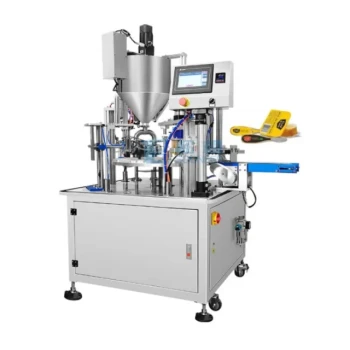
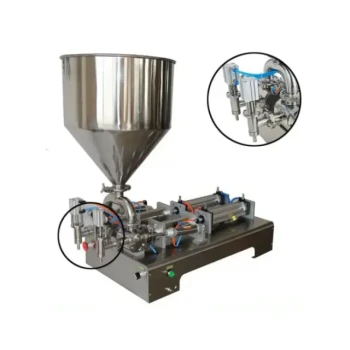
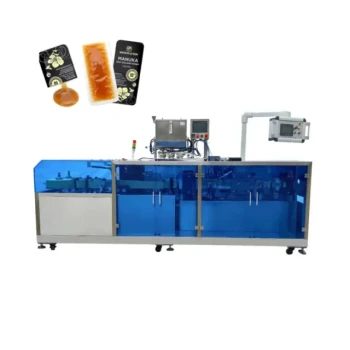
Industrial honey filling machines drive export efficiency by combining precise dosing control with automated packaging that adheres to rigorous hygiene standards. These systems are critical for ensuring consistent sealing and packaging quality, which are prerequisites for meeting international trade regulations. By standardizing the final product, producers can significantly increase added value and successfully enter competitive global markets.
Success in the global honey trade relies less on the volume of harvest and more on the consistency of the final packaged product. Industrial filling technology transforms raw production into export-ready inventory by guaranteeing measurement accuracy, regulatory compliance, and shelf-stability during transport.
Achieving International Compliance Standards
Precision Dosing and Risk Reduction
Global trade operates on strict standardization. Precise metering capabilities found in industrial machines ensure that every unit meets exact volume specifications.
This eliminates the weight deviations common in manual filling processes. By guaranteeing consistency, exporters reduce trade risks associated with measurement disputes or non-compliance at customs.
Meeting Strict Hygiene Protocols
International markets often reject products that fail traceability or hygiene audits. Industrial machines operate within sterile or hygiene-controlled environments, replacing open-air manual methods.
This automation minimizes human contact with the product. It ensures the packaging process meets the sanitary requirements necessary for certification in high-value markets.
Improving Economic Efficiency and Scalability
Reducing Unit Production Costs
Small-scale operations often suffer from low profit margins due to labor inefficiencies. Automated filling and metering significantly increase labor productivity and total output.
By reducing the production cost per kilogram of honey, producers can improve their margins. This economic shift allows local producers to compete on price against established imported brands.
Handling Centralized Volume
To serve commercial distribution networks, speed is essential. Industrial-grade machines provide precise flow control capable of processing large volumes from central production areas.
This high throughput capability prevents bottlenecks in the supply chain. It ensures that supply can scale rapidly to meet the bulk demands of international distributors.
Preserving Quality During Logistics
Ensuring Physical and Chemical Stability
Exporting honey often involves long-distance, transoceanic transport. Professional sealing equipment integrated into filling lines protects the chemical integrity of the honey.
Proper sealing prevents color oxidation and contamination from impurities during transit. This preservation is vital for maintaining the premium pricing and market value of the product upon arrival.
Enhancing Brand Perception
Global consumers demand professional presentation. Automated operations ensure consistent liquid levels across all bottles, creating a uniform shelf appearance.
This visual consistency helps build a professional brand image. It signals to distributors and consumers that the product is high-quality, traceable, and safe.
Understanding the Operational Trade-offs
Capital Investment vs. Operational Speed
While automation reduces per-unit costs, it requires significant upfront capital. Producers must balance the cost of machinery against their projected export volume to ensure a positive return on investment.
Maintenance and Technical Expertise
Moving from manual to industrial filling shifts the labor requirement from general manual labor to skilled technical operation. Reliability depends on regular maintenance of the precision filtration and metering components.
Integrating Filling Technology into Your Export Strategy
To maximize the impact of automation on your export operations, align the technology with your specific market goals:
- If your primary focus is Commodity Export: Prioritize machines with high flow control and throughput to minimize the unit cost per kilogram and maximize volume.
- If your primary focus is Premium Retail Markets: Focus on machines with advanced sealing and hygiene controls to prevent oxidation and ensure a pristine, shelf-ready presentation.
Automation is the critical infrastructure that bridges the gap between local beekeeping and the global supply chain.
Summary Table:
| Feature | Export Advantage | Impact on Trade |
|---|---|---|
| Precision Dosing | Eliminates weight deviations | Reduces customs risks and measurement disputes |
| Hygiene Protocols | Sterile, automated packaging | Meets international sanitary & certification standards |
| High Throughput | Rapid bulk processing | Prevents supply chain bottlenecks for distributors |
| Sealing Quality | Prevents oxidation & leakage | Maintains chemical integrity during transoceanic transit |
| Visual Consistency | Uniform liquid levels | Enhances brand perception and premium market value |
Scale Your Global Honey Trade with HONESTBEE
Transitioning from local production to global distribution requires industrial-grade reliability. HONESTBEE specializes in empowering commercial apiaries and distributors with high-performance honey-filling machines and specialized hive-making equipment.
Our comprehensive wholesale portfolio is designed to lower your per-unit costs, ensure rigorous international compliance, and protect the quality of your honey throughout the export lifecycle. From precision machinery to essential consumables and honey-themed merchandise, we provide the full-spectrum infrastructure your business needs to lead the market.
Ready to automate your way to global success?
Contact our export specialists today to discuss how our solutions can maximize your operational efficiency.
References
- Liena Poiša, Artis Teilāns. HONEY PRODUCTION IN LATVIA. DOI: 10.17770/sfi2025.1.1.8372
This article is also based on technical information from HonestBee Knowledge Base .
Related Products
- Commercial Rotary Honey Filling Machine for Production
- Precision Durable Efficient HONESTBEE Rotary Honey Filling Machine
- Fully Automatic Honey Filling Packaging Machine for Processing Line
- Economy Small Honey Filling Machine Honey Bottle Filler Packaging Machine
- Precision Automated Packaging Turntable Honey Spoon Filling Sealing Packing Machine
People Also Ask
- What role do commercial honey filling machines play in honey distribution? Scaling Efficiency and Quality Control
- What technical support do commercial-grade filling machines provide? Convert Honey NTFPs into Marketable Commodities
- What is the significance of specialized honey filling equipment? Scaling from Beekeeping to Commercial Success
- Why is professional honey filling machinery critical for honey production? Scale Your Apiary's Profit & Efficiency
- Why is high-capacity honey filling machinery necessary for Giant Honey Bees? Solve the Apis dorsata Volume Crisis