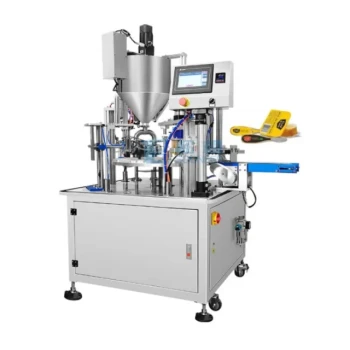
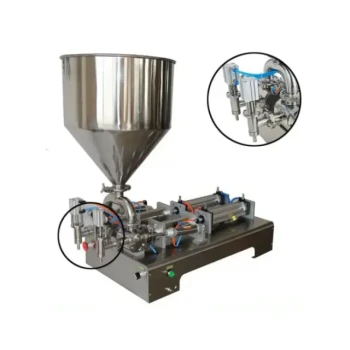
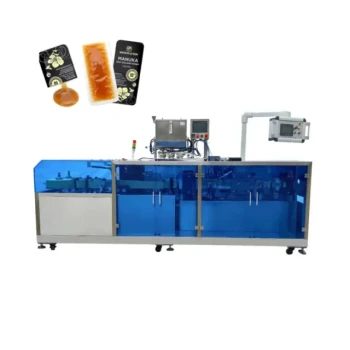
Industrial honey filling machines transform raw agricultural by-products into retail-ready commodities through automated precision. For pollination service providers, these machines serve as the critical bridge between large-scale field operations and the consumer market. By utilizing precise quantitative control and standardized sealing technologies, this equipment converts honey—often treated as a secondary revenue stream—into a high-value product that meets the strict hygiene and consistency standards required for direct retail distribution.
The Core Value Proposition While pollination fees provide immediate revenue, the honey produced during these operations represents untapped long-term equity. Industrial filling machines allow providers to bypass the low-margin bulk market and enter high-margin retail channels by ensuring every unit meets the professional standards of safety, weight, and packaging consistency.
Transitioning from Bulk to Brand
For pollination providers, honey is often a high-volume byproduct of their primary service. Industrial filling machines allow these businesses to pivot from selling raw ingredients to selling finished goods.
Capitalizing on Monofloral Varieties
Pollination services frequently target specific crops (e.g., almonds, blueberries, or clover). Industrial machines allow providers to efficiently segregate and package these specific batches.
Instead of selling generic "wildflower" blends in drums, providers can process distinct runs of premium monofloral honeys. This specificity commands a higher price point in the retail market.
Ensuring Market-Ready Consistency
Retailers and supermarkets reject products that lack uniformity. Manual filling often leads to inconsistent fluid levels and messy labeling.
Automated equipment ensures precise volumetric control. This guarantees that every bottle matches its labeled weight, satisfying consumer expectations and strict international trade standards for weights and measures.
Elevating Hygiene and Product Integrity
The value of honey is directly tied to its purity and chemical composition. Industrial machines introduce a level of control that is virtually impossible to achieve manually.
Eliminating Secondary Contamination
Moving honey from the hive to the bottle presents multiple opportunities for contamination. Manual handling increases the risk of introducing bacteria or foreign particles.
Industrial machines utilize closed-loop, hygienic sealing technologies. This significantly reduces human contact with the product, minimizing the risk of secondary contamination and ensuring the final product meets food safety regulations.
Preserving Biochemical Stability
Honey is hygroscopic (it absorbs moisture from the air) and sensitive to heat. Prolonged exposure to the environment during slow manual packaging can degrade quality.
Automated filling is rapid and sealed. This prevents moisture absorption and helps maintain optimal levels of biochemical indicators, such as Hydroxymethylfurfural (HMF). Keeping HMF levels low is essential for selling into high-end and medicinal markets.
Operational Efficiency and Yield
Pollination is a labor-intensive, time-sensitive industry. The introduction of industrial filling equipment optimizes the workforce and material usage.
Maximizing Throughput
During peak pollination seasons, labor is scarce. Dedicating staff to manual bottling is inefficient.
Automated machines drastically increase packaging speed. This allows apiaries to process large harvests quickly, freeing up personnel to focus on hive health and pollination logistics.
Reducing Material Waste
Honey is viscous and difficult to handle; manual pouring inevitably leads to spills and overfilling. Over time, these losses accumulate significantly.
High-precision metering eliminates spillage and prevents "giveaway" (overfilling bottles). This ensures that the provider monetizes exactly 100% of the sellable product, maximizing the economic yield of the byproduct.
Understanding the Trade-offs
While industrial filling machines offer significant value, they represent a commitment to a specific operational model.
Capital and Maintenance Intensity These machines require a significant upfront investment compared to manual equipment. They also demand a strict cleaning and maintenance schedule to prevent crystallization within the nozzles, which can cause downtime.
Flexibility vs. Speed Industrial machines are optimized for high-speed runs of a single container type. If your business strategy relies on offering dozens of different jar shapes or sizes, the time required to re-calibrate the machine for each changeover may negate the efficiency gains.
Making the Right Choice for Your Goal
To determine if industrial filling automation aligns with your business model, consider your primary objective:
- If your primary focus is entering formal retail channels: Prioritize machines with high-precision metering and hygienic sealing to ensure your product meets the strict compliance standards of supermarkets and export markets.
- If your primary focus is operational efficiency: Look for high-throughput automation that minimizes labor requirements, allowing your team to focus on pollination logistics rather than bottling.
- If your primary focus is premium branding: Select equipment that supports specific, high-quality container types and ensures gentle handling to preserve the unique flavor profiles of monofloral honeys.
Ultimately, the machine is not just a packer; it is a value-multiplier that turns a raw agricultural surplus into a scalable, shelf-ready asset.
Summary Table:
| Key Benefit | Impact on Pollination Providers | Business Value |
|---|---|---|
| Precise Volumetric Control | Eliminates product giveaway and ensures weight consistency | Maximizes yield and meets retail standards |
| Hygienic Closed-Loop | Reduces human contact and secondary contamination | Ensures food safety and export compliance |
| Monofloral Processing | Efficiently packages crop-specific honey (e.g., almond, clover) | Commands premium retail pricing |
| High-Speed Automation | Frees up labor for hive health and pollination logistics | Drastically increases operational throughput |
| Quality Preservation | Minimizes air exposure and moisture absorption | Maintains biochemical stability and HMF levels |
Elevate Your Apiary Operations with HONESTBEE
Transitioning from bulk honey by-products to a premium retail brand requires the right technology. HONESTBEE specializes in empowering commercial apiaries and distributors with high-performance industrial honey-filling machines, hive-making equipment, and a full spectrum of beekeeping tools. Whether you are looking to optimize your production line with automated machinery or source essential consumables at wholesale, we provide the expertise and hardware to turn your raw surplus into a scalable, shelf-ready asset.
Ready to maximize the commercial value of your honey? Contact HONESTBEE Today for Custom Equipment Solutions
References
- Anna Frida Hatsue Modro, Luís Carlos Marchini. Polinização por abelhas em fruteiras no Brasil. DOI: 10.13102/scb7972
This article is also based on technical information from HonestBee Knowledge Base .
Related Products
- Commercial Rotary Honey Filling Machine for Production
- Precision Durable Efficient HONESTBEE Rotary Honey Filling Machine
- Fully Automatic Honey Filling Packaging Machine for Processing Line
- Precision Automated Packaging Turntable Honey Spoon Filling Sealing Packing Machine
- Automatic Honey Filling and Filtering Machine for Beekeeping Bottle Filling
People Also Ask
- What role do commercial honey filling machines play in honey distribution? Scaling Efficiency and Quality Control
- What technical support do commercial-grade filling machines provide? Convert Honey NTFPs into Marketable Commodities
- What is the significance of specialized honey filling equipment? Scaling from Beekeeping to Commercial Success
- Why is professional honey filling machinery critical for honey production? Scale Your Apiary's Profit & Efficiency
- Why is high-capacity honey filling machinery necessary for Giant Honey Bees? Solve the Apis dorsata Volume Crisis