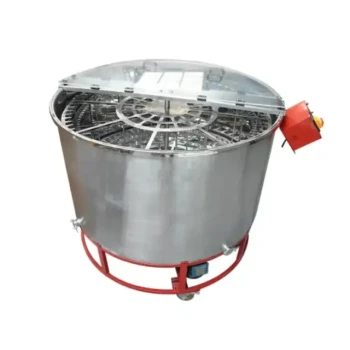
Industrial honey processing ensures quality through a tightly integrated system of advanced filtration, temperature control, agitation, and automated filling. These lines utilize high-precision equipment to maintain the honey's natural physical and chemical properties while strictly adhering to the hygiene protocols necessary for global export competitiveness.
Core Takeaway Success in the international honey market requires transforming raw harvest into a standardized, shelf-stable product without compromising its natural integrity. Industrial lines achieve this by combining rigorous physical filtration and moisture control with high-precision, hygienic filling to meet complex trade regulations.
The Mechanics of Processing and Standardization
To compete globally, honey must move beyond hobbyist production standards. Industrial processing lines serve as the physical foundation for achieving the uniformity and stability required by international markets.
Precision Moisture Control
Raw honey often varies in moisture content, which poses a fermentation risk. Industrial-grade machines integrate specialized dehydration and heating mechanisms to precisely control this variable.
By removing excess water, these systems stabilize the honey chemically. This prevents spoilage during long-term storage and ensures the product meets specific physicochemical indicators required for export.
Advanced Filtration Systems
Filtration is not merely about removing debris; it is about enhancing market value. Industrial systems employ physical screening to remove fine particles, air bubbles, and impurities.
This process significantly improves clarity and visual appeal, aligning with consumer aesthetic preferences. Furthermore, removing these impurities reduces perceived defects, allowing producers to command a price premium in retail markets.
Temperature and Agitation Management
Maintaining the natural state of honey during processing is critical. Industrial lines use controlled agitation and temperature regulation to keep the honey flowable without overheating it.
This careful balance preserves the honey's delicate chemical properties. It ensures that essential enzymes remain intact while preparing the substance for the filling stage.
Hygiene and Precision in Filling
The transition from bulk processing to individual packaging is where many quality issues arise. Industrial filling lines mitigate these risks through automation and isolation.
Minimizing Environmental Exposure
Hygiene standards are maintained by reducing the honey's contact with the open environment. Automated lines provide a closed-loop system during the packaging phase.
This isolation protects the honey from airborne contaminants and humidity. It ensures the final chemical indicators, such as sucrose content, remain consistent with strict international non-tariff trade measures (NTMs).
High-Precision Metering
Manual filling often leads to weight deviations that are unacceptable in trade. Industrial machines utilize high-precision quantitative filling to ensure exact net weights.
This consistency is vital for trade credibility. It eliminates volume disputes and ensures compliance with strict regulations regarding packaging accuracy in markets like the European Union.
Standardized Sealing Integrity
The final step in hygiene control is the seal. Industrial machinery applies standardized sealing processes that lock in quality immediately after filling.
This guarantees the product remains safe during international transportation. It prevents leakage and acts as a final barrier against contamination, ensuring the product reaches the consumer as intended.
Understanding the Trade-offs
While industrial automation is essential for scale, it introduces specific risks that must be managed to maintain true quality.
The Balance of Filtration
There is a fine line between cleaning honey and stripping it of its identity. Aggressive filtration improves clarity but can remove pollen grains necessary for determining botanical origin.
If filtration is too fine (ultra-filtration), the honey may lose its traceability, potentially leading to its classification as "adulterated" or "syrup" in strict markets.
Thermal Sensitivity
Heating is necessary for viscosity reduction and moisture control, but honey is heat-sensitive. Over-reliance on thermal processing can degrade natural enzymes and increase HMF (Hydroxymethylfurfural) levels.
High HMF levels are a primary indicator of heat damage or age. Exceeding the allowable limits will result in the rejection of shipments by major importers.
Making the Right Choice for Your Goal
Selecting the right processing parameters depends heavily on your target market's specific regulations and consumer expectations.
- If your primary focus is High-End Retail: Prioritize filtration systems that remove visual defects and air bubbles to maximize clarity and consumer willingness to pay.
- If your primary focus is Bulk International Export: Focus on dehydration and moisture control capabilities to prevent fermentation and ensure compliance with chemical stability standards.
By leveraging these industrial technologies to control moisture, clarity, and weight, you transform a variable raw material into a globally competitive commercial asset.
Summary Table:
| Feature | Key Function | Market Benefit |
|---|---|---|
| Moisture Control | Prevents fermentation via dehydration | Ensures chemical stability and longer shelf life |
| Advanced Filtration | Removes impurities and air bubbles | Enhances clarity and increases retail value |
| Thermal Management | Regulates viscosity and HMF levels | Preserves natural enzymes and honey integrity |
| Automated Filling | High-precision quantitative metering | Guarantees weight accuracy and trade compliance |
| Hygienic Sealing | Closed-loop environmental isolation | Prevents contamination during global transport |
Elevate Your Honey Production with HONESTBEE
Transitioning from raw harvest to a globally competitive product requires equipment that meets the highest standards of precision and hygiene. HONESTBEE specializes in empowering commercial apiaries and distributors with professional-grade solutions.
Our comprehensive wholesale offering includes:
- Advanced Machinery: From high-precision honey-filling machines to specialized hive-making equipment.
- Processing Tools: Full-spectrum beekeeping tools designed for durability and efficiency.
- Industry Consumables: A wide array of essentials to keep your operations running smoothly.
- Cultural Merchandise: Unique honey-themed products to diversify your brand.
Whether you are scaling your export capacity or refining your retail presentation, our team is ready to provide the specialized hardware you need to succeed in the international market.
Contact HONESTBEE Today for a Wholesale Consultation
References
- R. B. Jones. Present Day Beekeeping in the Ukraine. DOI: 10.1080/0005772x.2013.11417537
This article is also based on technical information from HonestBee Knowledge Base .
Related Products
- Fully Automatic Honey Filling Packaging Machine for Processing Line
- Automatic Honey Filling and Filtering Machine for Beekeeping Bottle Filling
- Precision Durable Efficient HONESTBEE Rotary Honey Filling Machine
- Commercial Rotary Honey Filling Machine for Production
- Double Nozzle Small Honey Filling Machine Honey Sachet Packing Packaging Equipment
People Also Ask
- Why are fully automatic honey filling and packaging lines essential? Boost Your Honey's Market Value and Quality
- What is a fully-automatic honey filler? Streamline Your Production with High-Precision Automation
- How do automated honey filling and packaging machines affect profitability? Boost Margins with HONESTBEE Technology
- How do automated honey filling and packaging machines contribute to the market value of honey products? Maximize Your ROI
- How do industrial-grade automated honey filling and packaging machines mitigate the risk of physical contamination?