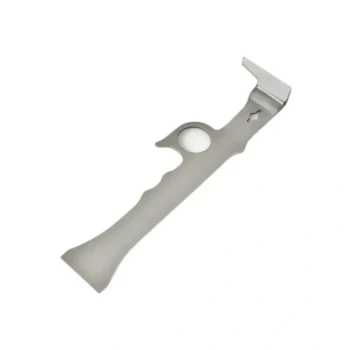
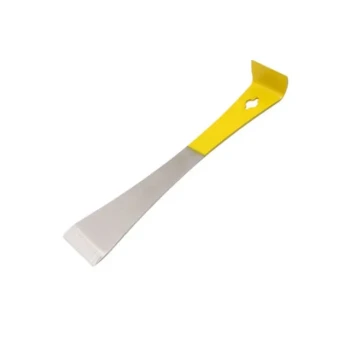
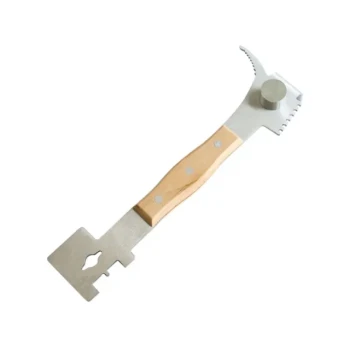
Professional beekeeping tools act as the critical bridge between field observation and precise laboratory analysis. By enabling technicians to access the hive's interior, these instruments allow for the collection of specific biological samples—such as worker bees, larvae, or honeycomb—without disrupting the colony’s delicate ecosystem. This capability is essential for obtaining the high-quality raw materials required to investigate complex health issues.
Accurate diagnosis begins with non-intrusive extraction. Professional tools serve as the fundamental hardware for health monitoring, ensuring that samples collected for pathogen and pesticide analysis are pristine and obtained without causing excessive stress to the colony.
Precision Access and Colony Stability
Accessing the Hive Interior
To monitor health effectively, technicians must move beyond external observation and inspect the core of the hive. Professional tools are designed to pry apart hive components and lift frames. This grants access to the brood nest and food stores where the most critical biological data resides.
Minimizing Ecological Disruption
The validity of scientific data depends on the "normality" of the test subject. High-quality tools allow researchers to extract samples without triggering a defensive swarm or causing colony-wide panic. Minimizing stress ensures that the behavior and physiological state of the bees remain representative of their natural condition.
Obtaining High-Quality Raw Data
Targeting Specific Biological Samples
General sampling is often insufficient for rigorous science; researchers need specific tissues or castes. Tools facilitate the precise isolation of worker bees, larvae, or sections of honeycomb. This specificity is crucial because different colony members and hive structures bioaccumulate toxins and pathogens differently.
The Foundation of Laboratory Analysis
The sample collected in the field is the raw material for all subsequent data. Professional tools ensure these samples are collected cleanly, preventing contamination. Without this high-quality raw sample, advanced laboratory testing for viruses or chemicals would be rendered inaccurate or inconclusive.
Diagnosing Complex Health Threats
Detecting Pesticide Residues
One of the primary uses of these samples is to track chemical exposure. By analyzing comb and bee tissue, scientists can measure pesticide residues. This data helps determine if environmental toxins are compromising the colony's immune system or neurological functions.
Investigating Colony Collapse Disorder (CCD)
Understanding the catastrophic decline of hives requires a multi-faceted approach. Tools enable the systematic collection of data points necessary to study Colony Collapse Disorder. By ruling out or confirming pathogen infections and chemical loads, researchers can piece together the causes of CCD.
Understanding the Operational Trade-offs
The Human Element
While tools enable access, they do not replace expertise. The effective use of these instruments requires skilled technicians who understand bee biology. Improper use of even the best tools can accidentally injure the queen or incite aggression, skewing the results of the health check.
Invasiveness vs. Data Granularity
Every physical inspection carries a cost. While professional tools minimize stress, they are still inherently intrusive compared to external sensors. Researchers must constantly balance the need for granular physical samples against the slight disruption caused by opening the hive.
Making the Right Choice for Your Goal
To maximize the value of your beekeeping investigations, align your methods with your specific objectives.
- If your primary focus is Scientific Research: Prioritize tools that allow for the precise isolation of larvae and tissue samples to ensure high-fidelity lab results regarding pathogens and toxins.
- If your primary focus is General Colony Management: Focus on tools that emphasize speed and minimal disruption to maintain routine productivity while allowing for quick visual health spot-checks.
By utilizing the right hardware to minimize stress and maximize sample quality, you transform a standard hive inspection into a rigorous scientific investigation.
Summary Table:
| Feature | Benefit for Research | Impact on Colony Health |
|---|---|---|
| Precision Hive Access | Allows targeted sampling of brood and food stores | Minimizes physical damage to the hive structure |
| Specialized Extraction | Ensures pristine samples for pesticide/pathogen testing | Reduces colony stress and defensive behavior |
| Minimal Disruption | Maintains 'normal' physiological states for data | Preserves the delicate hive ecosystem and queen safety |
| Targeted Isolation | Enables specific caste (larvae/worker) tissue analysis | Prevents broad-spectrum hive contamination |
Elevate Your Apiary Research with HONESTBEE
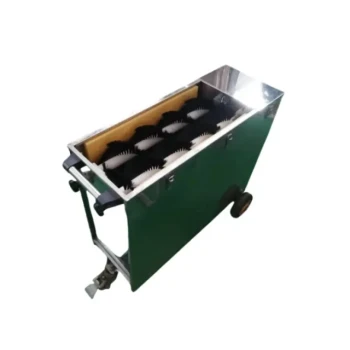
At HONESTBEE, we understand that scientific precision and colony vitality go hand-in-hand. As a premier partner for commercial apiaries and global distributors, we provide a comprehensive wholesale range of professional beekeeping tools and advanced machinery designed for rigorous health monitoring. From specialized hardware for hive-making to precision honey-filling machines and essential consumables, our portfolio supports the data integrity your operation demands.
Ready to scale your commercial beekeeping or distribution business with high-performance equipment? Contact our experts today to explore our wholesale solutions and discover how HONESTBEE can optimize your productivity and scientific outcomes.
References
- Deborah Stevenson. The Hive Detectives: Chronicle of a Honey Bee Catastrophe , and: The Buzz on Bees: Why Are They Disappearing? (review). DOI: 10.1353/bcc.0.1752
This article is also based on technical information from HonestBee Knowledge Base .
Related Products
- Professional 600D Oxford Cloth Beekeeping Tool Bag with 8 Pockets and Elastic Loops
- HONESTBEE Professional Mini J-Hook Hive Tool for Beekeeping
- Double Head Beekeeping Grafting Tools for Beekeepers
- HONESTBEE 15-in-1 Beekeeper Multi-Tool with Hammer and Pliers for Beekeeping
- Stainless Steel J Hook Hive Tool for Beekeeping
People Also Ask
- What is the recommended method for storing beekeeping tools? Expert Vertical Storage Solutions for Your Apiary
- Why is the treatment of beekeeping tools with high-concentration chemical disinfectants necessary for preventing AFB?
- How does a favorable microclimate interact with beekeeping tools? Boost Overwintering Success and Equipment Longevity
- What are the approximate costs of basic beekeeping tools? Start Your Apiary for Under $85
- Proper Beekeeping Tools and Regular Hive Maintenance: How to Mitigate Pest Infestations and Colony Instability?