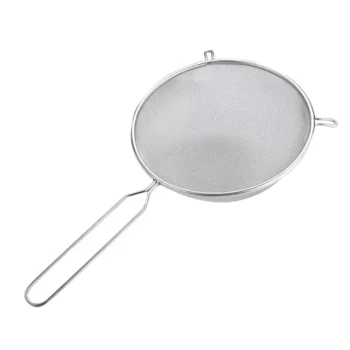
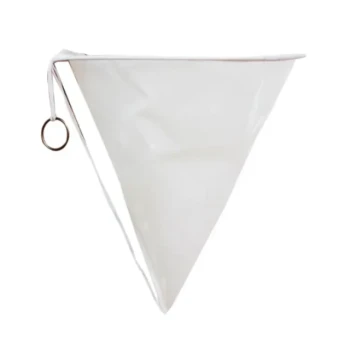
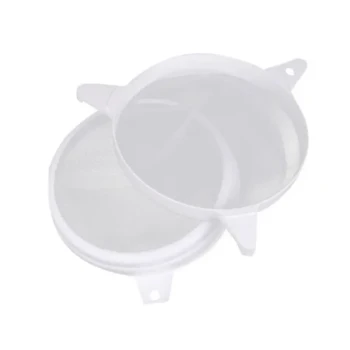
Professional honey filtration tools are the bridge between raw harvest and a market-ready premium product. By utilizing high-density sieves and specialized filter cloths, producers remove wax debris, bee carcasses, larval remains, and honeycomb fragments. This critical post-harvest step significantly enhances visual clarity, ensures food safety compliance, and extends the product's shelf life by removing particles that trigger premature crystallization.
Effective honey filtration is not merely a cleaning step; it is a quality-assurance process that elevates raw honey into a high-grade commercial asset. By removing organic impurities and physical debris, these tools ensure sensory consistency and long-term stability in the global supply chain.
Elevating Sensory and Aesthetic Quality
Achieving Superior Visual Clarity
Professional filtration removes micro-impurities that cause honey to appear cloudy or dull. The result is a clear, transparent appearance that meets the high sensory expectations of modern consumers and premium retailers.
Maintaining Color Consistency
Using multi-stage mesh designs ensures that the honey maintains a uniform color profile across large batches. This consistency is vital for wholesalers who need to meet strict branding and labeling requirements for high-end markets.
Preserving Natural Flavor Profiles
Unlike traditional manual squeezing, professional-grade sieves use physical forces that purify the product without damaging its nutritional components. This ensures the honey retains its original flavor and aroma, which are essential for market competitiveness.
Maximizing Shelf Life and Stability
Preventing Premature Crystallization
Solid particles such as pollen or wax fragments often act as "seeds" that trigger crystallization. High-density filtration removes these nucleation points, keeping the honey in a liquid state for significantly longer periods during transport and storage.
Ensuring Physical Homogeneity
Advanced processing prevents phase separation or layering, where different components of the honey begin to settle or rise. This ensures that the product remains shelf-stable and visually appealing from the moment it leaves the warehouse until it reaches the end-user.
Reducing Organic Degradation
By removing larval residues and bee fragments, filtration eliminates organic contaminants that could lead to spoilage. This rigorous purification process is essential for meeting international food safety standards and passing strict quality inspections.
Strengthening Market Position and Premium Value
Meeting Global Food Safety Standards
Professional filtration tools are non-negotiable for achieving market access in regions with stringent import regulations. They provide a documented level of purity that protects distributors from costly rejections or safety recalls.
Commanding Higher Market Premiums
Processed honey that has been filtered to a high degree of purity is categorized into higher quality grades. For resellers, this translates directly into increased profit margins and the ability to target high-end boutique or pharmaceutical markets.
Improving Order Fulfillment Efficiency
Utilizing mechanized filtration systems rather than manual methods allows for rapid response times and high-volume output. This efficiency ensures that wholesalers can maintain a consistent supply chain and meet large-scale order requirements without delay.
Understanding the Trade-offs
Filtration Density vs. Processing Speed
While higher-density sieves produce a clearer product, they can slow down the flow of honey, especially if the honey is cold. Producers must balance the micron rating of the filter with the temperature of the honey to maintain efficient production speeds without compromising purity.
Risk of Over-Processing
Excessive filtration or the use of extreme heat to speed up the process can sometimes remove beneficial pollen or alter the honey’s delicate enzymes. It is critical to use professional-grade equipment designed to filter effectively while preserving the honey's natural integrity.
How to Apply This to Your Distribution Strategy
To maximize the commercial value of your honey portfolio, your sourcing strategy should prioritize products processed with standardized filtration equipment.
- If your primary focus is rapid market entry and volume: Source honey processed with multi-stage centrifugal systems that offer high purity at scale, ensuring you can meet large order demands with consistent quality.
- If your primary focus is the high-end premium sector: Prioritize suppliers using fine high-density cloths and temperature-controlled filtration that preserve the honey’s nutritional profile while achieving maximum transparency.
By integrating professional filtration standards into your quality control, you ensure a superior product that commands a premium price and maintains a long, stable shelf life.
Summary Table:
| Feature | Key Benefit | Commercial Impact |
|---|---|---|
| High-Density Sieves | Removes wax, debris, and bee fragments | Superior visual clarity and transparency |
| Specialized Filter Cloths | Eliminates micro-impurities | Extended shelf life and delayed crystallization |
| Multi-stage Mesh Design | Ensures uniform color and texture | Reliable brand consistency for wholesalers |
| Professional Equipment | Preserves enzymes and natural flavor | Commands higher market premiums and margins |
Elevate Your Honey Processing with HONESTBEE
As a premier partner for commercial apiaries, wholesalers, and B2B resellers, HONESTBEE provides a comprehensive one-stop sourcing solution for the entire beekeeping industry. Whether you need high-performance filtration consumables or industrial-grade honey-filling and hive-making machinery, our portfolio is designed to maximize your operational efficiency and product quality.
Why Partner with HONESTBEE?
- Full-Spectrum Portfolio: Access everything from specialized hardware to honey-themed cultural merchandise.
- Rapid Fulfillment: Benefit from ultra-fast delivery and efficient order processing to meet large-scale demands.
- Industry Expertise: Leverage our deep professional knowledge and dedicated customer service to optimize your profit margins.
Ready to upgrade your supply chain? Contact our experts today to discuss our wholesale offerings and premium trading services!
References
- Abebe Tadesse, Zena Amdebirhan. Exploring Honey Production and Marketing Practices, Challenges, and Opportunities in Workawotu of Gidan Woreda, North Wollo; Ethiopia. DOI: 10.5281/zenodo.7823618
This article is also based on technical information from HonestBee Knowledge Base .
Related Products
- Electric Double Wall Honey Filtering Machine Purifier Equipment for Honey Processing Plant
- Professional Stainless Steel Honey Filtering Machine with Water Bath Heating for Beekeeping
- Professional Honey Filter with Tripod Support Stand
- Professional Stainless Steel Honey Filter with Support Handle
- Stainless Steel Triangle Support Honey Strainer and Filters
People Also Ask
- What is the process of filtering honey? A Guide to Clean, Pure, and Market-Ready Honey
- What types of equipment are used in honey filtering? Build an Efficient System for Pure, Marketable Honey
- What is the overall importance of using the right equipment in honey filtering? Boost Quality & Marketability
- What role do professional honey harvesting and filtering equipment play in meeting honey market quality standards? Boost ROI
- What steps are involved in maintaining honey filtering equipment? A Guide to Protecting Your Honey Quality