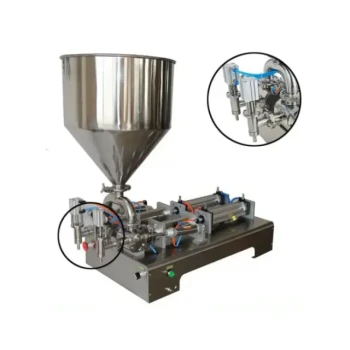
Professional honey packaging and filling equipment enhances market competitiveness by ensuring precise dispensing within a sterile environment and creating standardized, high-quality seals. This technology transforms raw agricultural products into retail-ready commodities that can withstand oxidation and moisture, meeting the strict standards required for modern supermarket shelves and premium pricing.
By automating precision and hygiene, this equipment provides the necessary hardware foundation to transition from local sales to formal retail channels. It effectively removes the barriers to entry for high-end markets, allowing local products to compete directly with established imported brands.
The Technical Foundation of Competitiveness
To understand why this equipment is a requirement for growth, you must look beyond simple bottling. The competitive edge comes from how the machinery protects the chemical integrity of the honey while elevating its visual presentation.
Mastering the Preservation Barrier
The primary reference highlights that high-quality packaging serves as a critical barrier against oxidation and moisture. Honey is hygroscopic, meaning it absorbs moisture from the air, which can lead to fermentation.
Professional sealing acts as the first line of defense.
By utilizing industrial-grade encapsulation, you prevent air exchange that causes quality degradation. This ensures the product maintains its premium image and flavor profile throughout the supply chain.
Ensuring Standardization and Hygiene
Manual filling introduces human error and potential contaminants. Professional equipment dispenses honey in a sterile environment, drastically reducing impurities.
Consistency is the hallmark of a professional brand.
Automated systems use precise metering controls. This ensures that every unit sold meets exact volumetric measurements, creating a uniformity that consumers trust and regulators require.
Mitigating Physical Defects
Improper packaging often leads to abnormal crystallization or fermentation issues. Advanced sealing technology stabilizes the environment inside the container.
This reliability extends the product's shelf life. It allows producers to distribute over larger distances without fear of the product spoiling before it reaches the consumer.
Elevating Brand Value and Market Access
The "deep need" here is not just about filling bottles; it is about business evolution. Transitioning from primitive operations to brand-driven marketing requires specific hardware capabilities.
Meeting Modern Supermarket Standards
Retail chains have strict requirements regarding packaging integrity and labeling. The primary reference notes that this equipment provides the hardware foundation necessary to meet these modern standards.
Without this level of finish, local products are often relegated to informal markets. Professional packaging is the prerequisite for entering formal retail channels.
Competing with Imported Goods
Consumers often equate packaging quality with product quality. A significant portion of consumers identifies packaging as a key factor in purchase decisions.
Aesthetic presentation drives premium pricing.
By utilizing containers and labels that offer anti-counterfeiting and traceability, producers can justify higher price points. This allows local honey to sit next to expensive imports and compete on a level playing field.
Understanding the Trade-offs
While the benefits are clear, adopting industrial-grade equipment introduces new complexities that must be managed.
Operational Rigidity vs. Flexibility
High-speed automated fillers are excellent for large batches of a single container size. However, changing formats—such as switching from small jars to large jugs—often requires significant downtime for recalibration.
If your product line is highly variable, automation can create bottlenecks.
Maintenance and Technical Skill
Moving from manual to automated processes shifts labor requirements. You rely less on manual filling labor but require more skilled operators to maintain the machinery.
Equipment downtime can halt your entire supply chain.
Regular calibration is essential to maintain the "precise dispensing" mentioned in the primary reference. Neglecting maintenance negates the consistency benefits and risks regulatory non-compliance.
Making the Right Choice for Your Goal
Selecting the right equipment depends on your specific market strategy.
- If your primary focus is Supermarket Access: Prioritize equipment that guarantees standardized sealing and precise volumetric controls to meet strict retail compliance codes.
- If your primary focus is Brand Premiumization: Invest in machinery that supports high-quality aesthetic materials and unique container shapes to influence consumer psychology.
- If your primary focus is Export and Shelf Life: Choose systems with advanced vacuum sealing and sterile filling environments to maximize the barrier against oxidation and moisture.
Professional equipment is not merely a tool for speed; it is a strategic asset that validates your product’s quality to the world.
Summary Table:
| Feature | Competitive Advantage | Business Impact |
|---|---|---|
| Precise Volumetric Filling | Ensures consistency & regulatory compliance | Builds consumer trust & reduces waste |
| Sterile Filling Environment | Minimizes impurities & contaminants | Meets strict safety standards for retail |
| Industrial-Grade Sealing | Prevents oxidation & moisture absorption | Extends shelf life & protects flavor |
| Standardized Presentation | Elevates brand aesthetic & professionalism | Enables entry into high-end supermarkets |
| Automated Traceability | Enhances anti-counterfeiting measures | Justifies premium pricing & export readiness |
Scale Your Apiary Operations with HONESTBEE
Transitioning from local sales to a global retail brand requires more than just high-quality honey—it requires professional-grade infrastructure. At HONESTBEE, we specialize in empowering commercial apiaries and distributors with the hardware foundation needed to dominate the market.
Our Value to Your Business:
- Comprehensive Wholesale Range: From specialized hive-making machinery to high-precision honey-filling and packaging lines.
- Industry Expertise: We supply everything from essential consumables to honey-themed cultural merchandise to diversify your revenue streams.
- Market Readiness: Our equipment is designed to meet the rigorous standards of modern supermarkets, ensuring your products are retail-ready and competitive against premium imports.
Ready to elevate your bee products? Contact HONESTBEE Today to discuss our wholesale equipment solutions and how we can support your business growth.
References
- Kawan Sirwan, Hemin Neima. The Constrains and Challenges of Beekeeping in Sulaymaniyah Governorate, Kurdistan Region, Iraq. DOI: 10.21608/jaess.2019.67526
This article is also based on technical information from HonestBee Knowledge Base .
Related Products
- Double Nozzle Small Honey Filling Machine Honey Sachet Packing Packaging Equipment
- Small Honey Filling Machine Sachet Packing Equipment Single Nozzle
- Fully Automatic Honey Filling Packaging Machine for Processing Line
- Economy Small Honey Filling Machine Honey Bottle Filler Packaging Machine
- Precision Automated Packaging Turntable Honey Spoon Filling Sealing Packing Machine
People Also Ask
- How does industrial honey-filling machinery support Robinia pseudoacacia stands? Maximize Your Acacia Honey Yield
- What value do retail packaging equipment and filling technologies provide in the honey distribution process? Maximize ROI
- How does specialized honey filling equipment contribute to honey distribution? Scale Your Wholesale Efficiency Today
- Why is high-precision honey filling equipment necessary? Secure the medicinal value and ROI of stingless bee honey.
- What role does precision filling equipment play in cost control? Maximize Honey Profits & Market Growth