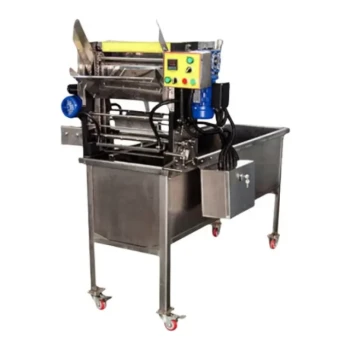
Professional honey storage and automated filling systems directly drive market value by imposing strict controls on environmental variables and packaging consistency. These technologies provide a stable, light-shielded environment to prevent spoilage and utilizing hygienic, precise automation to preserve the honey’s natural flavor and active ingredients for commercial standards.
The integration of professional storage and filling technology transforms honey from a raw, variable agricultural product into a standardized, high-value commodity. By ensuring biological integrity and physical uniformity, producers can secure access to mainstream retail channels and command premium pricing.
Preserving Biological Integrity
The market value of honey is heavily dependent on its chemical and biological stability. Professional storage systems address the "living" nature of raw honey to prevent degradation before packaging.
Controlling Fermentation and Crystallization
Raw honey is susceptible to environmental changes. Professional storage systems maintain a constant temperature and shield the product from light.
This strictly controlled environment prevents abnormal fermentation, which ruins flavor, and manages excessive crystallization, which can affect texture and consumer appeal.
Retaining Heat-Sensitive Enzymes
High-value honey markets demand high levels of bioactive substances. Professional equipment allows for processing without heat damage, maximizing the retention of heat-sensitive enzymes like diastase and flavonoids.
Preserving these bioactive components is essential for meeting strict regulatory requirements for physicochemical indicators, ensuring the product qualifies for international trade.
The Economics of Automated Precision
Automated filling machines contribute to profitability not just through speed, but through the rigorous reduction of waste and the enhancement of physical product standards.
Exact Quantitative Control
Manual filling often leads to overfilling or underfilling. Automated machines utilize high-precision piston-style or weighing-based systems to ensure the net content of every jar complies strictly with label specifications.
This precision significantly reduces raw material loss, directly improving the economic margins of the production process.
Eliminating Contamination Risks
Hygiene is a primary determinant of shelf life. Automated systems feature no-drip filling nozzles and automatic capping functions, eliminating the human contact inherent in manual methods.
By achieving a clean, airtight seal, these machines prevent contamination at the bottle neck, effectively extending the shelf life and preventing spoilage during distribution.
Unlocking Commercial Markets
To move beyond local sales and into high-value retail or export markets, products must meet rigorous consistency standards.
Standardization for Retail Contracts
Large-scale retailers demand uniformity. Modern processing equipment enables standardized packaging, ensuring every unit looks identical on the shelf.
This consistency allows beekeepers to fulfill large-scale retail contracts that require uniform glass jars and precise weight verification, opening doors to mainstream revenue streams.
Building Consumer Trust
Professional labeling equipment, often integrated with filling lines, provides transparent information regarding origin and nutritional content.
High-precision labeling verifies product authenticity and floral source, providing the visual professionalism necessary to justify premium pricing to consumers who value geographical origin.
Understanding the Trade-offs
While automation increases value, it introduces new operational considerations that must be managed to ensure a return on investment.
Capital Investment vs. Production Volume
Implementing industrial-grade machinery requires significant upfront capital. This investment is generally only justifiable if the production volume is high enough to amortize the cost through labor savings and reduced material waste.
Maintenance and Sanitation Protocols
Automated lines are complex. They require rigorous cleaning protocols to prevent cross-contamination between batches of different floral sources.
Failure to maintain these systems can lead to machinery downtime or the very contamination issues they are designed to solve.
Making the Right Choice for Your Goal
The selection of equipment should be driven by your specific business objectives within the honey market.
- If your primary focus is Scalability and Efficiency: Prioritize automated filling systems with piston or weight-based metering to minimize material loss and reduce labor costs per unit.
- If your primary focus is Premium/Export Quality: Invest heavily in temperature-controlled storage and low-temperature processing equipment to maximize enzyme retention and meet international biological standards.
By leveraging these technologies, producers convert raw forest honey into a consistent, hygienic, and high-standard commercial product capable of competing globally.
Summary Table:
| Feature | Value Driver | Impact on Honey Product |
|---|---|---|
| Climate-Controlled Storage | Biological Integrity | Prevents fermentation and preserves heat-sensitive enzymes. |
| Precision Filling Systems | Economic Efficiency | Reduces raw material waste through exact quantitative control. |
| Automated Capping/Sealing | Hygiene & Shelf Life | Eliminates human contact and contamination for longer shelf life. |
| Standardized Packaging | Market Accessibility | Ensures uniformity required for large-scale retail and export contracts. |
| High-Precision Labeling | Consumer Trust | Verifies authenticity and floral source to justify premium pricing. |
Scale Your Honey Business with HONESTBEE
Transitioning from raw agricultural production to a high-value honey brand requires more than just bees—it requires industrial precision. HONESTBEE specializes in empowering commercial apiaries and distributors with the tools needed to dominate the market.
Our comprehensive wholesale range includes:
- Automated Honey-Filling Machines: High-precision piston and weighing systems for exact quantitative control.
- Professional Hive-Making Machinery: Durable hardware for large-scale infrastructure.
- Specialized Beekeeping Tools: A full spectrum of equipment and essential consumables.
- Honey-Themed Merchandise: Enhance your brand's cultural appeal.
Whether you are aiming to meet international export standards or secure large-scale retail contracts, we provide the machinery and expertise to maximize your margins and ensure biological integrity.
Ready to elevate your production capacity?
Contact us today to explore our wholesale solutions
References
- Mustafa Bahadır ÇEVRİMLİ, Engin Umut Sakarya. Arıcılık işletmelerinin yapısal özellikleri ve sorunları; Ege Bölgesi örneği. DOI: 10.15312/eurasianjvetsci.2018.187
This article is also based on technical information from HonestBee Knowledge Base .
Related Products
- Fully Automatic Honey Filling Packaging Machine for Processing Line
- Automatic Honey Filling and Filtering Machine for Beekeeping Bottle Filling
- Precision Durable Efficient HONESTBEE Rotary Honey Filling Machine
- Precision Automated Packaging Turntable Honey Spoon Filling Sealing Packing Machine
- Semi Automatic Small Honey Bottle Filling Machine Honey Filler
People Also Ask
- Why are fully automatic honey filling and packaging lines essential? Boost Your Honey's Market Value and Quality
- What is a fully-automatic honey filler? Streamline Your Production with High-Precision Automation
- How do automated honey filling and packaging machines affect profitability? Boost Margins with HONESTBEE Technology
- How do automated honey filling and packaging machines contribute to the market value of honey products? Maximize Your ROI
- How do industrial-grade automated honey filling and packaging machines mitigate the risk of physical contamination?