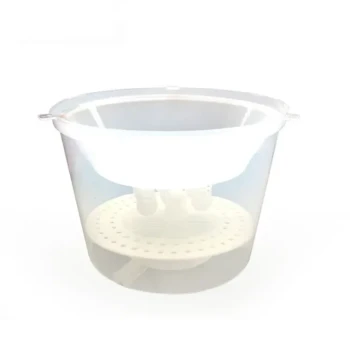
Professional pollen traps are specialized hardware devices installed at the entrance of beehives to systematically collect environmental samples. By forcing returning worker bees to pass through a grid with precise apertures—typically around 5mm—the device mechanically scrapes pollen pellets from the bees' hind legs, dropping the material into a secure tray for analysis without harming the colony.
Core Insight: By converting the beehive into a passive data collection point, pollen traps allow researchers to obtain representative samples of local flora and protein sources. This enables precise botanical and chemical analysis without requiring invasive insect capture or hive disruption.
The Mechanics of Non-Invasive Sampling
Strategic Placement
The trap is installed directly at the hive entrance. It acts as the primary gateway for all returning foragers, ensuring that the sampling covers the colony's entire foraging range.
Physical Separation
The core mechanism uses a grid or mesh with specific physical restriction holes. As bees crawl through these apertures to enter the hive, the dimensions are calculated to allow the bee's body to pass while dislodging the pollen loads carried on their legs.
Sample Preservation
Once dislodged, the pollen falls into a lower collection tray. This separates the biological sample from the active colony immediately, preventing the bees from processing, consuming, or storing the pollen, which ensures the sample remains "fresh" for accurate chemical analysis.
Facilitating Behavior and Protein Analysis
Quantifying Foraging Preferences
Because the trap collects the exact loads brought back by the colony, it provides a direct window into bee foraging behavior. Researchers can visually sort and identify pellets to determine exactly which plant species the bees are prioritizing at any given time.
Assessing Environmental Protein
Pollen is the primary protein source for a bee colony. By analyzing the trapped pellets, scientists can determine the availability and nutritional quality of plant protein in the surrounding ecosystem. This allows for the identification of specific plant species that support colony health.
Monitoring Chemical Exposure
Traps provide raw materials that reflect the immediate environment. Because the pollen is intercepted before it is stored in the comb, it serves as a precise medium for measuring pesticide exposure levels and other environmental contaminants present on local crops.
Understanding the Trade-offs
Collection Efficiency vs. Colony Needs
Well-designed traps typically intercept about 50% of incoming pollen. While this is excellent for sampling, it deprives the colony of half its protein intake, which is essential for brood rearing and colony growth.
Impact on Honey Production
The colony will naturally react to the loss of pollen by reallocating its workforce. More bees will be drafted to forage for pollen to compensate for the loss, resulting in fewer nectar foragers. Consequently, honey production often decreases while traps are active.
Operational Duration
To mitigate stress on the hive, these traps should not be used permanently. A common professional practice is to trap for limited periods, such as one week, followed by a removal period to allow the colony to replenish its nutritional stores.
Making the Right Choice for Your Goal
- If your primary focus is Environmental Monitoring: Use the trap to gather fresh, unprocessed samples for botanical identification and pesticide residue analysis.
- If your primary focus is Colony Health: Limit trapping intervals strictly to prevent nutritional stress, or supplement the hive with syrup to offset the reduction in nectar foraging.
Ultimately, the professional pollen trap serves as an essential bridge between field activity and laboratory data, allowing you to audit the environment through the bees' activity.
Summary Table:
| Feature | Functionality | Key Benefit |
|---|---|---|
| 5mm Precision Grid | Mechanically scrapes pollen from foragers' legs | High-efficiency, non-invasive sample collection |
| Secure Collection Tray | Isolates samples from hive processing | Ensures sample purity for chemical & protein analysis |
| Botanical Identification | Correlates pellet color/type to local flora | Precise mapping of foraging ranges and preferences |
| Chemical Monitoring | Intercepts pollen before comb storage | Accurate detection of pesticide exposure levels |
Maximize Your Apiary Insights with HONESTBEE
At HONESTBEE, we specialize in empowering commercial apiaries and global distributors with professional-grade beekeeping hardware. From precision pollen traps and hive-making machinery to advanced honey-filling systems, our comprehensive wholesale portfolio is designed to optimize your operations.
Whether you are conducting environmental research or scaling up honey production, our expert-engineered equipment and essential consumables provide the reliability your business demands. Partner with us today to enhance your colony management and data collection capabilities — Contact Us Now!
References
- Talita Antonia da Silveira. Botanical Origin of Protein Sources Used by Honeybees (Apis mellifera) in an Atlantic Forest. DOI: 10.13102/sociobiology.v59i4.515
This article is also based on technical information from HonestBee Knowledge Base .
Related Products
- Removable Plastic Pollen Trap With Ventilated Tray for Bees Pollen Collector
- 30 cm Plastic Entrance Hole Bee Pollen Trap and Collector
- Plastic Bee Pollen Trap Strips Comb Catcher Collector
- Professional Bucket Style Wasp and Moth Pheromone Trap
- Professional Multi-Component Bucket Wasp Trap
People Also Ask
- What are the design principles and advantages of pollen traps in the collection of bee pollen? Boost Your Apiary Yield
- What is the function of professional pollen traps in evaluating honey plants? Quantifying Pollination and Crop Potential
- What functions do pollen traps serve for bee bread production? Optimize Your Raw Material Collection
- What maintenance and pest prevention measures should be taken for pollen traps? Protect Your Hive and Harvest Quality
- How does the use of pollen traps in honeybee hives enhance crop fertilization? Boost Your Yield Through Induced Activity