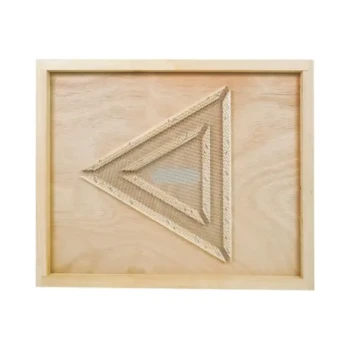
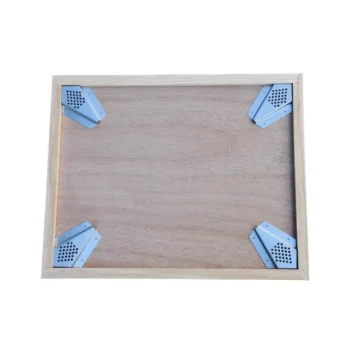
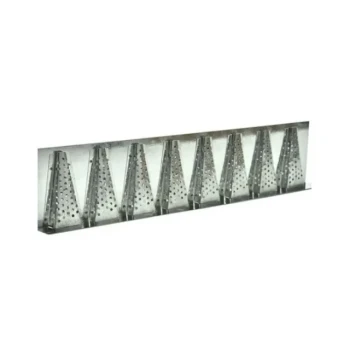
Screened beehive bottom boards function as a crucial selective barrier for accurate pest monitoring. By utilizing a metal mesh cover with specific dimensions, these boards allow falling Varroa mites to pass through into a collection area while physically blocking honey bees from following them. This isolation is the primary mechanism that prevents the colony from cleaning away the mites, ensuring that the count of fallen pests remains undisturbed and accurate.
The core value of a screened bottom board lies in its ability to neutralize the hive's natural hygienic behavior during the monitoring process. By physically separating the bees from the collection tray, the screen ensures that fallen mites are preserved for counting rather than being removed and discarded by worker bees.
The Mechanics of Physical Isolation
Selective Permeability
The efficacy of these boards relies on precise mesh sizing. The metal screen is engineered with gaps large enough to allow Varroa mites—which fall due to natural mortality or bee grooming—to drop through freely.
Blocking Bee Access
Simultaneously, the mesh is too small for honey bees to pass through. This creates a secure zone beneath the hive where debris and pests collect without bee interference.
Preventing Sample Tampering
Without this screen, worker bees would naturally access the bottom board to clean the hive. They would physically remove fallen mites and debris, effectively "tampering" with the sample before a beekeeper could inspect it.
Enhancing Data Accuracy
Preserving the "Natural Drop"
Varroa mites fall naturally from bees due to grooming behavior or old age. The screen ensures that this natural drop rate is captured in its entirety, providing a reliable baseline for the infestation level.
Integration with Sticky Boards
To facilitate detection, a sticky inspection board is often placed beneath the mesh. The screen allows mites to land on the adhesive, while the sticky surface ensures they remain trapped for counting, preventing wind or movement from displacing the data.
Assessing Colony Hygiene
By collecting the fallout from the bees' grooming behaviors, the screened board provides indirect evidence of the colony's ability to suppress mites mechanically. This allows beekeepers to gauge the hygienic traits of their specific stock.
Understanding the Trade-offs
Passive vs. Active Monitoring
While screened boards are excellent for tracking trends over time, relying solely on natural mite fall can sometimes be misleading. A low natural drop does not always guarantee a low infestation level, as it depends on the bees' grooming activity.
Maintenance Requirements
The mesh itself can become clogged with wax, pollen, or propolis over time. If the screen is not kept clean, it loses its permeability, preventing mites from falling through to the detection tray and leading to inaccurate lower counts.
Making the Right Choice for Your Goal
When incorporating screened bottom boards into your management strategy, consider your specific data needs:
- If your primary focus is precise infestation tracking: Combine the screened board with a sticky insert to trap every fallen mite and prevent them from crawling away or being blown off.
- If your primary focus is breeding for resistance: Use the natural mite fall counts to identify colonies that show high grooming activity (high mite drop) without chemical intervention.
The screened bottom board effectively transforms the hive floor from a simple structural component into a reliable diagnostic tool for long-term colony health.
Summary Table:
| Feature | Function in Mite Detection | Benefit to Beekeeper |
|---|---|---|
| Mesh Sizing | Allows mites to fall through while blocking bees | Prevents bees from cleaning/removing mite samples |
| Physical Isolation | Separates the collection tray from the brood chamber | Ensures an undisturbed, accurate count of fallen pests |
| Sticky Board Support | Provides a landing zone for mites below the screen | Prevents wind or movement from displacing collected data |
| Passive Monitoring | Captures natural drop from grooming and mortality | Provides a baseline for colony infestation levels |
Optimize Your Apiary with HONESTBEE’S Professional Beekeeping Equipment
At HONESTBEE, we specialize in empowering commercial apiaries and distributors with high-performance tools designed for precision beekeeping. Whether you are monitoring colony health with our specialized bottom boards or scaling your production with our honey-filling and hive-making machinery, we provide the full spectrum of industrial-grade hardware and consumables.
Partner with HONESTBEE to access:
- Comprehensive Wholesale Solutions: Bulk supply of beekeeping tools, equipment, and industry consumables.
- Advanced Machinery: Reliable hive-making and honey-processing technology for high-volume operations.
- Proven Value: Durable products that enhance hive management and operational efficiency.
Ready to elevate your beekeeping business? Contact us today to discuss our wholesale offerings and how we can support your growth.
References
- Marco Pietropaoli, Giovanni Formato. Evaluation of Two Commonly Used Field Tests to Assess Varroa destructor Infestation on Honey Bee (Apis mellifera) Colonies. DOI: 10.3390/app11104458
This article is also based on technical information from HonestBee Knowledge Base .
Related Products
- Langstroth Screen Bottom Board for Beekeeping Wholesale
- Australian Pine Wood Langstroth Screen Bottom Board for Wholesale
- Langstroth Solid Bottom Board for Beekeeping
- Solid Bottom Board Australian Pine Wood Langstroth Bottom Board for Wholesale
- HONESTBEE Wooden Bee Escape Board with Triangle Mesh Design for Beekeeping
People Also Ask
- What is the primary function of a screen bottom board? Achieve Accurate Varroa Mite Assessment in Your Apiary
- Why is the combination of a screen bottom board and a sticky trap board essential for monitoring Varroa mite? Guide
- What is the primary function of a standard screen bottom board when assessing honeybee grooming behavior? - Key Mite Data
- What role do screen bottom boards and monitoring inserts play in assessing Varroa mite mortality and maintaining hive hygiene in Langstroth hives?
- Why might a screen bottom board be less effective for pest control? Understanding the 'Mixed Sunlight' Complication