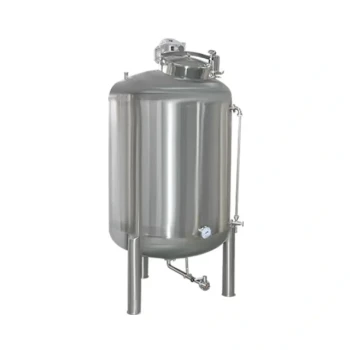
Temperature-controlled storage containers act as precise aging vessels that facilitate the natural decay of unstable toxins in honey without compromising its quality. By maintaining a strictly regulated environment, these systems utilize the passage of time to ensure toxic activity declines to a safe range before the product enters the industrial market.
Core Takeaway Industrial temperature control does not actively "scrub" toxins through extreme heat; rather, it stabilizes the environment to maximize the "time effect." This allows unstable toxic compounds to naturally degrade over a managed aging cycle, ensuring safety without degrading the honey’s nutrients or flavor profile.
The Mechanism of Toxin Reduction
Utilizing the Time Effect
The primary function of temperature-controlled storage is to leverage the natural instability of certain toxins found in specialty honey.
These containers provide the long-term consistency required for the "time effect" to occur. As the honey ages in this stable environment, the chemical structure of the toxins breaks down naturally.
Managing the Aging Cycle
Industrial-grade systems allow producers to turn storage into an active processing step.
Rather than simply warehousing the product, producers use these containers to precisely manage the duration of the aging cycle. This ensures the honey is held exactly as long as necessary for toxicity to drop to permissible levels.
Preventing Premature Release
The ultimate goal of this controlled aging is public safety.
By integrating temperature control into the logistics chain, producers ensure that honey is not released to the market until the bioactivity of unstable toxins has neutralized.
Understanding the Trade-offs
The Risk of Thermal Degradation
While it might be tempting to raise temperatures to accelerate chemical reactions, this is a major pitfall.
Excessive heat can degrade the honey’s nutrients and irreversibly alter its flavor. Furthermore, high temperatures accelerate the production of Hydroxymethylfurfural (HMF), a compound used to indicate thermal damage and poor quality.
The Problem with Cold Storage
Conversely, lowering the temperature too much to preserve freshness can hinder the process.
Refrigeration is generally not recommended as it accelerates crystallization. Solidification changes the texture of the honey and may alter the rate at which chemical interactions—including toxin degradation—occur.
Finding the Equilibrium
Effective storage requires a "Goldilocks" approach, typically between 50°F and 70°F (10°C to 21°C).
This range is optimal for maintaining consistency and delaying crystallization while still allowing the natural aging process to proceed. The temperature-controlled container is the tool that guarantees this narrow window is never breached.
Making the Right Choice for Your Goal
When implementing large-scale storage solutions for honey, your strategy depends on your specific objective:
- If your primary focus is Toxicity Reduction: Prioritize the duration of the storage cycle, utilizing the container to maintain stability while the "time effect" degrades unstable compounds.
- If your primary focus is Commercial Quality: Ensure your temperature set-points never exceed room temperature ranges (approx. 70°F) to prevent flavor loss and HMF accumulation.
- If your primary focus is Texture Maintenance: Avoid refrigeration settings, as cold environments will accelerate crystallization and complicate processing.
By treating time as a purification ingredient and temperature as its stabilizer, you ensure the final product is both safe for consumption and high in quality.
Summary Table:
| Factor | Storage Strategy | Impact on Honey Quality |
|---|---|---|
| Toxin Reduction | Managed aging (Time Effect) | Natural decay of unstable toxins over time |
| Temperature Range | 50°F - 70°F (10°C - 21°C) | Optimal balance for safety and nutrient preservation |
| High Heat Risk | Avoid (> 70°F / 21°C) | Increases HMF levels and degrades flavor/nutrients |
| Cold Storage | Avoid (Refrigeration) | Accelerates crystallization and alters chemical rates |
| Outcome | Industrial Stability | Market-ready honey with neutralized bioactivity |
Elevate Your Honey Production with HONESTBEE
Maintaining the delicate balance between toxin reduction and quality preservation is critical for commercial success. At HONESTBEE, we specialize in supporting commercial apiaries and distributors with professional-grade beekeeping machinery and storage solutions.
Whether you need specialized honey-filling machines, precision hive-making hardware, or a full spectrum of beekeeping tools and consumables, we provide the industrial-strength equipment necessary to manage your aging cycles and scale your operations efficiently.
Ready to optimize your apiary's output and safety? Contact HONESTBEE today to discover how our wholesale solutions and honey-themed cultural merchandise can add value to your business.
References
- Abdülkadır Gündüz, Hikmet Öksüz. The Honey, The Poison, The Weapon. DOI: 10.1016/j.wem.2011.01.006
This article is also based on technical information from HonestBee Knowledge Base .
Related Products
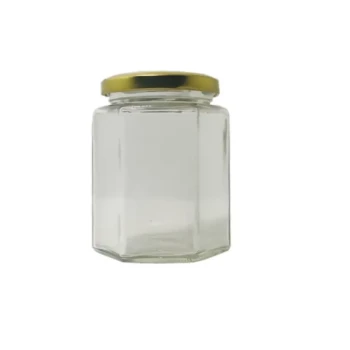
- Hexagonal Glass Honey Jars with Metal Lug Caps Elegant Versatile Packaging
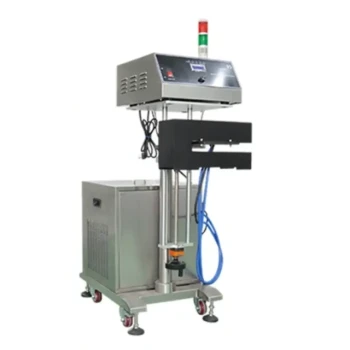
- Professional Water Cooled Induction Sealing Machine for Bottles and Containers
- Professional Honey Storage Tank with Agitation System
- Classic Drum Shaped Glass Honey Jar with Airtight Lid
People Also Ask
- What is the aesthetic appeal of using glass jars for honey? Elevate Your Brand with Premium Packaging
- What are the logistical challenges associated with using glass jars for honey packaging? Navigating Weight & Fragility
- What are the advantages of glass containers for honey? Elevate Quality and Market Value with Premium Packaging
- What are the technical advantages of using glass jars for honey? Master Commercial Packaging for Premium Purity
- What are the advantages of using glass jars for honey packaging? Preserve Purity & Elevate Your Brand