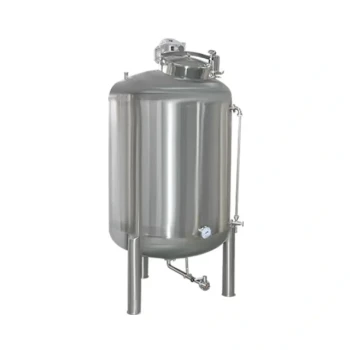
Ultra-High Temperature (UHT) sterilization maintains the quality of bee-product-fortified beverages by leveraging a precise time-temperature ratio that kills bacteria without cooking the ingredients. By heating the liquid to temperatures exceeding 135°C for only a few seconds, the system achieves commercial sterility while bypassing the chemical reactions that typically degrade sensitive natural products.
The core success of UHT in this application lies in the brevity of the thermal shock. By restricting high-heat exposure to a matter of seconds, manufacturers can stabilize high-sugar formulas like honey against spoilage without triggering caramelization or compromising nutrient density.
The Mechanics of Quality Preservation
The Time-Temperature Advantage
Standard pasteurization often relies on lower temperatures held for longer periods. This prolonged exposure can be detrimental to delicate ingredients.
UHT systems invert this approach. They apply intense heat (>135°C) strictly for a few seconds. This rapid thermal spike is sufficient to destroy microorganisms but is too brief to significantly alter the beverage's chemical structure.
Preventing Sugar Degradation
Bee products, particularly honey, are rich in sugars. When these sugars are exposed to sustained heat, they undergo caramelization.
This reaction alters the flavor profile and darkens the product, which is often undesirable in beverage formulation. The flash-heating method of UHT avoids this by cooling the product before the sugars have time to break down and caramelize.
Nutrient Retention
Consumers often choose bee-product beverages for their perceived health benefits.
Long heating processes can denature proteins and destroy bioactive compounds. The rapid nature of UHT balances the need for safety with the preservation of these essential nutrients, ensuring the final product retains its value proposition.
Industrial Scalability and Stability
Achieving Commercial Sterility
For large-scale manufacturing, safety and shelf-life are paramount.
UHT ensures the beverage reaches commercial sterility. This level of microbial control is necessary to prevent spoilage during the logistics of industrial filling and distribution.
Stability for Filling
Once sterilized, the product must remain stable during the packaging process.
The UHT process creates a stable liquid matrix that can be handled by large-scale industrial filling equipment without the risk of re-contamination or immediate degradation.
Operational Considerations and Trade-offs
Precision is Critical
While UHT is effective, the margin for error is slim. The "few seconds" window must be strictly controlled.
Risk of Over-processing
If the cooling phase is delayed even slightly, the benefits of UHT are lost. Extended exposure to temperatures above 135°C will immediately lead to the caramelization and nutrient loss the system is designed to prevent.
Optimizing Production Strategy
To maximize the effectiveness of UHT for bee-product beverages, align your processing parameters with your specific quality goals:
- If your primary focus is sensory profile: Tightly control the holding time to strictly prevent the caramelization of honey and other high-sugar components.
- If your primary focus is nutritional value: Utilize the rapid heating cycle to minimize thermal stress on heat-sensitive bio-actives found in bee products.
- If your primary focus is safety: Ensure the temperature threshold (>135°C) is consistently met to guarantee commercial sterility for mass-market distribution.
Mastering the precise timing of UHT allows you to deliver a sterile, shelf-stable product that tastes and functions like a fresh formulation.
Summary Table:
| Feature | UHT Sterilization | Standard Pasteurization |
|---|---|---|
| Temperature Range | >135°C (275°F) | 63°C - 72°C (145°F - 161°F) |
| Exposure Time | 2 - 5 Seconds | 15 - 30 Minutes |
| Honey Quality | Prevents caramelization; maintains color | Risk of darkening and flavor change |
| Nutrient Density | High retention of bioactive compounds | Potential denaturation of proteins |
| Shelf Stability | Long-term (Aseptic packaging) | Short-term (Refrigerated) |
Elevate Your Bee-Product Beverage Production with HONESTBEE
Maintaining the delicate balance of flavor and nutrition in honey-fortified beverages requires professional-grade precision. HONESTBEE empowers commercial apiaries and beverage distributors with high-performance machinery and specialized tools designed for the industrial scale. From advanced honey-filling machines to specialized processing hardware, we provide the full spectrum of equipment needed to optimize your production line.
Ready to scale your operation with industry-leading technology?
Contact HONESTBEE Today for a Professional Consultation
References
- Gabriela Vlăsceanu, Andrei APETREI. STUDIES ON THE NUTRACEUTIC PROPERTIES OF SOME NATURAL BIO STIMULATING JUICES OBTAINED FROM INDIGENOUS PLANTS AND BEE PRODUCTS. DOI: 10.17930/agl2023228
This article is also based on technical information from HonestBee Knowledge Base .
Related Products
- Professional Plastic Honey Dipper for Easy Honey Drizzling
- Professional Thermostatic Conical Honey Melter
- Honey Concentrating and Filtering Dehumidifier Machine 2T Capacity for Honey
- Honey Concentrating Vacuum Heating Thickening Machine Dehumidifier for Honey
- Heavy Duty Stainless Steel Honey Processing Machine Decrystallizing Tank
People Also Ask
- What is a honey dipper and what is it used for? A Guide to Mess-Free Drizzling
- What is a honey dipper? Master the Art of the Perfect Drizzle with This Essential Tool
- What is a honey taking spoon called? Discover the Tool for a Perfect, Mess-Free Drizzle
- What is the proper method for cleaning a honey dipper? Maintain Pure Flavor with These Easy Pro Tips
- How do you clean and store a honey dipper? Simple Steps for Long-Lasting Performance