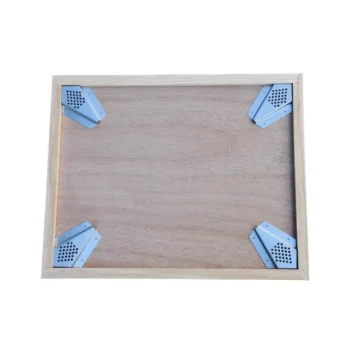
A dead bee trap functions as a specialized monitoring device installed at the beehive exit to intercept bee carcasses removed by worker bees. By systematically collecting and counting these carcasses, beekeepers can generate quantitative data to measure the negative impact of mite control treatments. This process converts subjective observations into hard numbers regarding honeybee survival rates during intervention.
Effective mite control requires a delicate balance between eliminating pests and preserving the colony. The dead bee trap provides the objective mortality data necessary to identify solutions that offer high efficacy against mites while maintaining low toxicity to the honeybees.
Quantifying Colony Health
Intercepting Natural Cleaning Behavior
Honeybee colonies maintain hygiene by physically removing dead bees from the hive. Worker bees carry these carcasses to the exit to dispose of them.
The Collection Mechanism
The trap is installed directly at the beehive exit. It captures the carcasses before they are discarded into the environment, ensuring they are available for analysis.
Generating Quantitative Data
By regularly counting the contents of the trap, you obtain a specific mortality figure. This moves safety evaluation away from guesswork and toward measurable statistics.
Measuring Treatment Impact
Assessing Chemical Toxicity
Different miticides carry varying risks to the host colony. If a specific chemical treatment causes a spike in the dead bee count, it indicates a high level of toxicity that may outweigh the benefits of mite control.
Evaluating Delivery Equipment
Safety is not limited to the chemical agent alone. The delivery equipment used to apply the treatment can also stress or harm the bees.
Identifying Physical Trauma
The trap helps verify if the application method itself is causing physical injury or death. This ensures that the machinery or tools used are safe for the colony's population.
Understanding the Limitations
Mortality vs. Morbidity
The trap strictly measures survival rates (death). It does not quantify bees that are weakened, disoriented, or suffering from sub-lethal effects but remain alive.
Context is Critical
A count of dead bees must be compared against a baseline. Without knowing the hive's natural daily mortality rate, it can be difficult to attribute death solely to the mite treatment.
Making Evidence-Based Decisions
To select the safest and most effective mite control solution, you must analyze the data contextually.
- If your primary focus is Research and Development: Use the trap to compare the mortality curves of different chemical formulations to identify the least toxic option.
- If your primary focus is Operational Beekeeping: Use the trap to validate that your current delivery equipment is not physically damaging the workforce during application.
By prioritizing treatments that yield low carcass counts, you ensure the longevity of the colony while effectively managing pest pressures.
Summary Table:
| Feature | Function in Safety Evaluation |
|---|---|
| Mechanism | Intercepts bee carcasses during natural hive cleaning |
| Data Type | Quantitative mortality statistics (Hard numbers) |
| Toxicity Check | Identifies chemical agents that exceed safe colony limits |
| Hardware Audit | Detects physical trauma caused by delivery machinery |
| Limitation | Measures survival rates only, not sub-lethal morbidity |
Maximize Your Colony Productivity with HONESTBEE
Protecting your workforce is critical to the success of any commercial apiary or distribution business. HONESTBEE specializes in providing professional-grade beekeeping tools and machinery designed with bee safety as a priority.
Whether you are looking for high-precision honey-filling machines, durable hive-making equipment, or a steady supply of essential consumables, we offer comprehensive wholesale solutions tailored to your scale.
Ready to upgrade your operation with industry-leading equipment? Contact HONESTBEE today to discuss how our specialized hardware and cultural merchandise can add value to your business.
References
- Qodratollah Sabahi, Ernesto Guzmán‐Novoa. Continuous release of oregano oil effectively and safely controls Varroa destructor infestations in honey bee colonies in a northern climate. DOI: 10.1007/s10493-017-0157-3
This article is also based on technical information from HonestBee Knowledge Base .
Related Products
- HONESTBEE Collapsible Tiered Bee Swarm Catcher for Beekeeping
- 30 cm Plastic Entrance Hole Bee Pollen Trap and Collector
- Black Plastic Beetle Barn Hive Beetle Trap for Beehives
- Removable Plastic Pollen Trap With Ventilated Tray for Bees Pollen Collector
- Plastic Bee Pollen Trap Strips Comb Catcher Collector
People Also Ask
- What should be done if the swarm is situated on the bottom of a tree limb? A Guide to Methodical Bee Capture
- What role do swarm catchers play in maintaining the production scale of an apiary? Turn Colony Loss into Growth.
- What role does a Swarm Catcher play in the process of expanding apiary colony scale? Optimize Growth & Reduce Costs
- What precautions can be taken to prevent a newly captured swarm from absconding? Secure Your Swarm with Proven Methods
- What information should be gathered before attempting to catch a swarm of bees? A Safe and Successful Guide