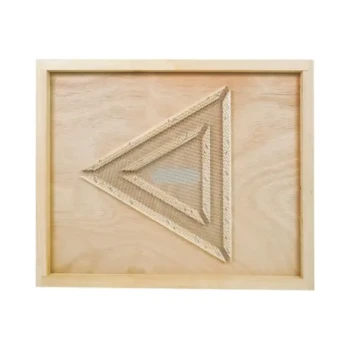
A double-screened board functions as a critical pheromone buffer within a queenright banking system, physically dividing the hive into two distinct sections. It utilizes two distinct layers of mesh to separate the established laying queen in the bottom box from the "bank" of caged queens in the upper box.
This separation prevents direct physical contact between bees in the different sections while managing the internal chemical signals of the colony.
By isolating the strong pheromones of the laying queen, the double-screened board creates a localized "queenless" environment in the upper super. This tricks the nurse bees into caring for the banked queens rather than abandoning them in favor of the established queen below.
The Mechanics of Isolation
The Double Mesh Barrier
The device is constructed with two layers of wire mesh separated by a small gap.
This specific gap is the defining feature. It makes it physically impossible for bees in the bottom box to touch or feed bees in the top box through the screen.
Separation of Colony Sections
In a standard queenright banking setup, the laying queen acts as the engine of the hive, residing in the bottom box to maintain colony population.
The queen bank (holding the caged queens) is placed in the box above the double-screened board. This vertical arrangement utilizes the rising heat from the colony below to keep the banked queens warm without allowing direct interaction.
Managing Queen Pheromones
The Biological Problem
Worker bees naturally prefer an established, laying queen over caged, non-laying queens.
If workers have full access to the laying queen's pheromones, they will often neglect or abandon the caged queens in the bank, leading to the death of the stored stock.
The Screening Solution
The double-screened board significantly reduces the transmission of "queen substance" (pheromones) from the bottom box to the top.
By dampening this chemical signal, the board creates a state of confusion or perceived queenlessness in the upper box.
This compels the nurse bees in the top section to accept and feed the caged queens as if they were the only option available, while the colony technically remains "queenright" and sustainable below.
Critical Distinctions and Pitfalls
Double Screen vs. Single Screen
A single screen is insufficient for this specific application.
With a single layer of mesh, bees can touch antennas and exchange pheromones directly through the wire. This maintains a strong connection to the laying queen, defeating the purpose of the bank.
The Necessity of Isolation
The primary function of the board is preventing abandonment.
Without the double layer preventing tactile contact and reducing airflow, the biological impulse to support the dominant laying queen will override the care required for the banked queens.
Making the Right Choice for Your Apiary
To successfully bank queens using this method, apply the following principles:
- If your primary focus is keeping banked queens alive: Ensure your board has two distinct mesh layers to sufficiently dull the pheromone signal from the bottom box.
- If your primary focus is colony sustainability: Keep a strong laying queen in the bottom box to provide heat and population replacement, relying on the board to protect the bank above.
The double-screened board is the essential tool that allows a colony to be biologically "queenright" but functionally "queenless" where it counts.
Summary Table:
| Feature | Double-Screened Board | Single Screen Board |
|---|---|---|
| Layer Count | Two layers with a physical gap | Single layer of wire mesh |
| Pheromone Control | High suppression; creates "queenless" zone | Low suppression; pheromones pass through |
| Bee Interaction | No tactile contact allowed | Bees can touch antennas/exchange food |
| Primary Use | Queenright banking & queen isolation | Ventilation or basic hive division |
| Success Rate | High; prevents queen abandonment | Low; nurse bees prefer the laying queen |
Maximize Your Apiary Productivity with HONESTBEE
Successful queen banking requires precision tools that manage colony biology effectively. At HONESTBEE, we specialize in supporting commercial apiaries and distributors with a comprehensive range of professional beekeeping machinery and equipment.
Whether you need precision-built double-screened boards, hive-making machinery, or large-scale honey-filling solutions, we provide the industrial-grade hardware and essential consumables your business demands. Our wholesale offerings are designed to streamline your operations and ensure the health of your stock.
Ready to scale your beekeeping operations? Contact us today to learn how our expert solutions and high-quality equipment can drive your success.
Related Products
- Langstroth Screen Bottom Board for Beekeeping Wholesale
- Australian Pine Wood Langstroth Screen Bottom Board for Wholesale
- HONESTBEE Wooden Bee Escape Board with Triangle Mesh Design for Beekeeping
People Also Ask
- Why is the combination of a screen bottom board and a sticky trap board essential for monitoring Varroa mite? Guide
- What is the primary function of a screen bottom board? Achieve Accurate Varroa Mite Assessment in Your Apiary
- What role do screen bottom boards and monitoring inserts play in assessing Varroa mite mortality and maintaining hive hygiene in Langstroth hives?
- What is the primary function of a standard screen bottom board when assessing honeybee grooming behavior? - Key Mite Data
- Why might a screen bottom board be less effective for pest control? Understanding the 'Mixed Sunlight' Complication