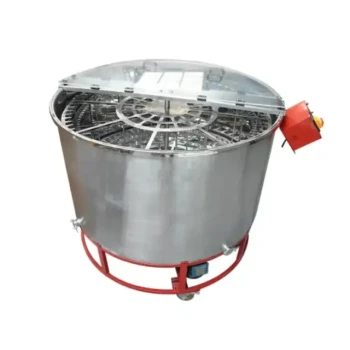
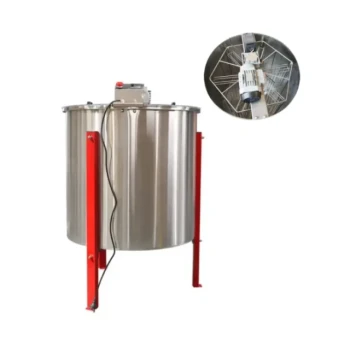
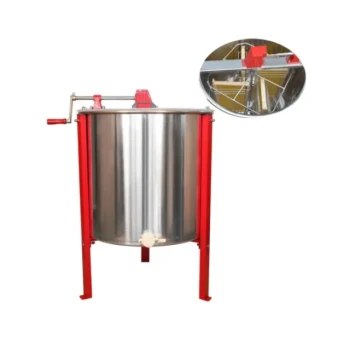
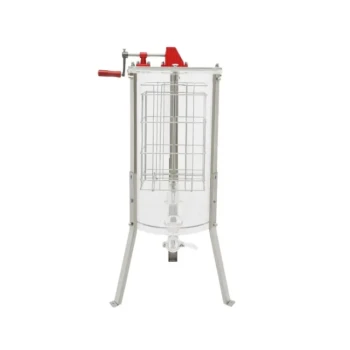
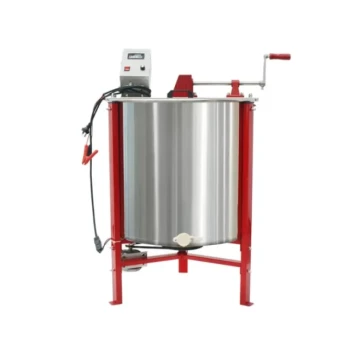
A honey extractor functions by generating centrifugal force to separate liquid honey from the wax comb without destroying the structure of the frame. After the protective wax cappings are removed, the frames are spun rapidly within a cylindrical drum, causing the honey to be flung out of the cells, strike the inner walls, and drain to the bottom for collection.
The defining advantage of using an extractor is the preservation of the honeycomb. By spinning the liquid out rather than crushing the wax, you allow the bees to reuse the comb, saving the colony significant energy and resources.
The Physiology of Extraction
The Prerequisite: Uncapping
Before a frame enters the extractor, the honey must be accessible. Bees seal filled cells with wax cappings, which acts as a lid.
You must remove or puncture these cappings using a hot or cold knife. If the cells remain sealed, the centrifugal force will not be able to pull the honey out.
Loading and Balancing
Once uncapped, the frames are placed vertically into wire baskets or a reel inside the extractor drum.
It is critical to balance the load. You must place frames of similar weight opposite each other to prevent the machine from vibrating violently or "walking" during the spin.
The Spinning Mechanism
Whether powered by a manual hand crank or an electric motor, the central basket rotates at high speed.
This rotation creates centrifugal force. The honey is forced out of the angled cells, flies through the air, and hits the interior wall of the drum. Gravity then pulls the honey down the walls to a collection area at the bottom, where it exits through a spigot.
Operational Process
Handling Two-Sided Frames
Honey frames contain cells on both sides of the foundation. The extraction process usually requires attention to both faces.
After spinning the frames for approximately 20 to 30 seconds (or up to a minute) to empty the first side, the frames must be stopped. They are then physically turned around or flipped within the baskets to extract the honey from the opposite side.
Managing Flow and Collection
As the honey accumulates at the bottom of the drum, it flows out through a gate or spigot.
From here, the honey enters your collection containers. This process separates the liquid harvest from the solid structure of the hive efficiently and hygienically.
Common Pitfalls and Trade-offs
Equipment Cost vs. Utility
Extractors represent a financial investment. For small-scale hobbyists with very few hives, the cost of a machine may outweigh the benefits compared to the simpler "crush-and-strain" method.
Fragility of Natural Comb
Standard extractors are designed for reinforced frames. If you are using foundationless frames (natural comb without a wire or plastic base), the centrifugal force can destroy the wax.
If you must extract foundationless frames, you must operate the machine at very low speeds to avoid comb breakage.
The Risk of Imbalance
An imbalanced extractor is difficult to control and can be dangerous. Failure to distribute weight interactions evenly within the basket leads to excessive wobbling and potential damage to the machine.
Making the Right Choice for Your Goal
Whether you choose a manual crank or a motorized unit, the goal is efficient separation without destruction.
- If your primary focus is preserving comb for the bees: Use an extractor to empty the cells without damaging the wax structure, allowing for immediate reuse by the colony.
- If your primary focus is low-cost processing: Consider the crush-and-strain method instead of an extractor, provided you do not mind destroying the comb.
- If your primary focus is processing natural/foundationless comb: Operate your extractor at the lowest possible speed or revert to crushing to prevent blowing out the delicate wax.
By utilizing centrifugal force correctly, you maximize your harvest volume while maintaining the integrity of the hive's infrastructure.
Summary Table:
| Extraction Phase | Process Description | Key Benefit |
|---|---|---|
| Uncapping | Removing wax lids with a knife | Opens cells for honey release |
| Loading | Balancing frames in the basket | Prevents machine vibration/damage |
| Spinning | Rapid rotation of the central reel | Flings honey out via centrifugal force |
| Collection | Gravity flow to bottom spigot | Clean separation of liquid and wax |
| Reuse | Returning intact frames to bees | Saves colony energy on wax building |
Scaling Your Apiary Operations?
Maximize your harvest efficiency with HONESTBEE. As a premier partner for commercial apiaries and distributors, we provide more than just equipment; we provide the backbone for your success.
Our comprehensive wholesale portfolio includes:
- Advanced Machinery: Industrial-grade honey-filling and hive-making machines.
- Beekeeping Essentials: A full spectrum of high-durability tools, hardware, and consumables.
- Cultural Merchandise: Unique honey-themed retail products to diversify your brand.
Whether you are upgrading your extraction facility or stocking a distribution network, HONESTBEE delivers quality that stands the test of time.
Connect with the HONESTBEE Experts Today to discuss our wholesale offerings and how we can support your business growth.
Related Products
- HONESTBEE 72 Frame Industrial Electric Honey Extractor for Beekeeping
- Commercial Electric 12 Frame Honey Extractor Spinner Motorized Honey Extractor
- HONESTBEE 3-Frame Manual Acrylic Honey Extractor
- electric honey extractor honey centrifuge 3 frame honey extractor stainless steel honey frame extractor
- HONESTBEE 6 Frame Self Reversing Electric Honey Extractor for Beekeeping
People Also Ask
- What is the importance of balancing honeycomb frames within a honey extractor? Ensure Stability and Protect Machinery
- How is honey separated from the frames after they are uncapped? Efficient Extraction Methods for High Yields
- What are the main benefits of using a honey extractor? Maximize Yields and Protect Your Honeycomb
- What are the recommended methods for removing honey from the honeycomb? Top Extraction Techniques for Maximum Efficiency
- How do manual honey extractors compare to electric honey extractors? Choosing the Right Tool for Your Apiary Growth