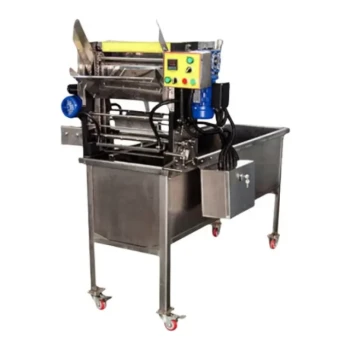
A jar or bottle packing machine for honey functions as an integrated automated system designed to transport, fill, and seal containers with high speed and consistency. The process begins with a conveyor transporting empty jars to a filling station, where a piston or gravity-based mechanism dispenses a precise amount of honey, utilizing specialized shut-off valves to ensure a clean cut-off before the container moves to capping and labeling stations.
Core Takeaway: The value of this technology lies in its ability to manage the high viscosity of honey without sacrificing speed or hygiene. By combining automated conveying with high-precision shut-off valves, these machines eliminate the variability of manual filling, ensuring identical volume or weight in every unit while preventing product waste.
The Operational Workflow
The Conveying System
The foundation of the machine is the conveying system. This belt transports glass or plastic containers of various shapes and sizes through the production line.
It ensures a continuous feed of empty jars to the filling nozzles. Once filled, it smoothly transitions them to downstream stations, preventing bottlenecks.
The Filling Mechanism
When a container arrives at the filling station, the machine engages its primary dispensing method. As noted in the primary reference, this is typically a piston or gravity-based mechanism.
The machine dispenses the honey into the jar. This step is governed by adjustable volume settings to handle different container capacities.
Capping and Labeling
After filling, the conveyor moves the jar to the sealing station. Here, caps are applied and tightened to ensure an airtight seal.
Finally, the jar reaches the labeling area. The machine applies branding and regulatory information, completing the cycle before packing for logistics.
The Mechanics of Precision
Precise Shut-off Valves
A critical component of these machines is the shut-off valve located at the filling nozzle. Honey is viscous and prone to dripping, which causes mess and waste.
These valves are engineered to stop the flow immediately once the container reaches its target level. This ensures the rim of the jar remains clean for the sealing process.
Volumetric vs. Weighing Systems
While many machines fill based on volume or liquid level, some utilize weighing filling technology.
As highlighted in the supplementary data, a weighing filler dispenses honey based on a specific weight target. This ensures uniformity across the final product regardless of slight variations in the container's internal volume.
Hygiene and Safety
The machine is designed with food-grade materials and enclosed systems. This creates a contamination-free workflow essential for food safety compliance.
Automated filling removes human contact from the open product. This significantly reduces the risk of foreign contaminants entering the honey.
Understanding the Trade-offs
Viscosity and Temperature
Honey changes viscosity based on temperature. Gravity-based fillers may struggle if the honey is too cold or thick, slowing down production.
Piston fillers offer more force for thick liquids but require more complex cleaning. You must ensure your machine is rated for the specific viscosity of your honey product.
Maintenance Demands
Honey is abrasive and sticky. The shut-off valves and nozzles require rigorous maintenance to prevent clogging or "crystallization" in the lines.
Neglecting daily cleaning protocols can lead to valve failure. This results in underfilled jars or dripping nozzles that compromise the seal.
Making the Right Choice for Your Goal
To select the best machine configuration, you must align the mechanism with your specific production needs.
- If your primary focus is speed and consistency: Prioritize a piston-based machine with robust shut-off valves to handle high viscosity without slowing down the line.
- If your primary focus is strict regulatory compliance: Choose a weighing filling machine to ensure every jar meets the exact net weight stated on the label.
- If your primary focus is flexibility: Look for a machine with easily adjustable volume settings and conveyor guides to switch between different jar sizes quickly.
Ultimately, the right machine turns a messy, labor-intensive task into a clean, precise, and scalable operation.
Summary Table:
| Feature | Piston-Based Filling | Weighing-Based Filling |
|---|---|---|
| Best For | High viscosity & speed | Precise net weight compliance |
| Mechanism | Force-driven piston | Scale-monitored dispensing |
| Advantage | Handles thick honey easily | Eliminates volume variability |
| Key Component | Specialized shut-off valves | High-precision sensors |
Scale Your Honey Production with HONESTBEE
At HONESTBEE, we understand the unique challenges of processing viscous honey. We provide commercial apiaries and distributors with high-performance beekeeping machinery, including honey-filling machines and automated packing lines designed for speed, hygiene, and precision.
Whether you are looking for specialized hardware or a full spectrum of beekeeping tools and consumables, our wholesale solutions are tailored to grow your business. Contact us today to discover how our equipment can streamline your operations and deliver consistent quality to your customers.
Related Products
- Automatic Single-Dose Snap & Squeeze Honey Sachets Packing Machine
- Fully Automatic Honey Filling Packaging Machine for Processing Line
- Precision Automated Packaging Turntable Honey Spoon Filling Sealing Packing Machine
- Honey Stick Filler Vertical Paste Sachet Packing Machine for Honey Sachets
- Economy Small Honey Filling Machine Honey Bottle Filler Packaging Machine
People Also Ask
- What are the advantages of honey sachet packing machines? Boost Efficiency & Unlock New Markets
- What are the main functions of a honey sachet packing machine? Boost Efficiency with Automated Precision
- How does an industrial-grade honey sachet packaging machine assist beekeepers in accessing public institution markets?
- Why is automated packaging machinery essential for scaling industrial honey production? Drive Commercial Scalability
- How does the viscosity of honey influence packaging choices? Selecting the Best Containers & Machinery