The primary role of a laboratory centrifuge in pollen analysis is to mechanically force the solid-liquid separation of pollen grains from a diluted honey matrix.
By spinning the sample at high speeds, the centrifuge overcomes the viscosity of the honey, causing microscopic pollen particles to sediment rapidly into a concentrated pellet at the bottom of the test tube, effectively isolating them from sugars and other interfering liquid components.
Core Takeaway Because pollen concentration in honey is extremely low, simple observation is impossible. A laboratory centrifuge is the standard tool used to concentrate these trace particles by density, creating a purified sediment "pellet" free of the sugar matrix that is necessary for accurate microscopic identification and botanical classification.
The Mechanics of Extraction
Overcoming Matrix Viscosity
Honey is a viscous, supersaturated sugar solution. Before centrifugation, the honey must be diluted (often with warm water) to lower its density.
Without this dilution, the natural buoyancy and thickness of the honey would prevent the pollen from settling, rendering the centrifuge ineffective.
Creating the Sediment Pellet
Once the sample is diluted, the laboratory centrifuge applies significant physical force—typically between 2500 and 3500 rpm.
This centrifugal force acts on the specific gravity of the suspended particles. Since pollen grains are denser than the surrounding liquid, they are forced outward and downward, aggregating at the bottom of the tube.
The "Washing" Cycle
A single spin is rarely enough. The process often involves decanting the supernatant (the liquid on top), adding fresh water, and spinning again.
This cycle "washes" the pollen, ensuring that the final sediment is free of sticky sugars that would obscure details or distort light during microscopic examination.
Why This Method Ensures Data Integrity
Quantitative Enrichment
Pollen exists in honey in trace amounts. To perform a valid statistical analysis, you need a high density of grains on a single microscope slide.
Centrifugation enriches the sample, compressing the pollen from a large volume of liquid into a tiny, observable solid mass.
Preventing Data Bias
Alternative methods, such as filtration, can inadvertently remove smaller pollen grains, skewing the results.
Centrifugation preserves the full spectrum of pollen, ensuring the sample accurately reflects the honey's floral composition (e.g., Brassicaceae, Fabaceae, or Asteraceae). This objectivity is vital for certifying botanical origin.
Preparing for Microscopic Clarity
To classify honey (e.g., Manuka vs. Clover), a distinct view of the pollen wall structure (exine) is required.
By removing the refractive sugar syrup through centrifugal washing, the resulting slide is clear. This allows for precise identification of the plant families needed to determine the honey's commercial grade and medicinal value.
Understanding the Operational Trade-offs
The Speed vs. Integrity Balance
While high speed is necessary for separation, it must be controlled.
References suggest a range of 2500 rpm to 3500 rpm is optimal. Operating below this threshold may result in incomplete sedimentation (lost data), while significantly higher speeds are generally unnecessary for this specific biological material.
Distinction from Honey Extractors
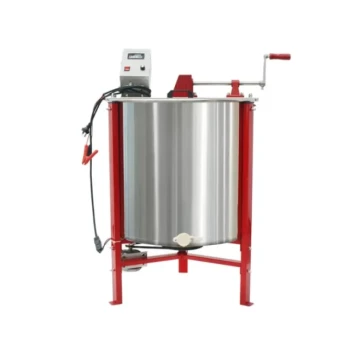
It is critical not to confuse a laboratory centrifuge with a centrifugal honey extractor.
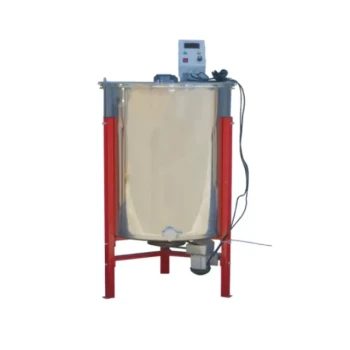
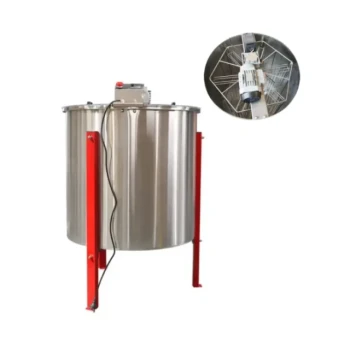
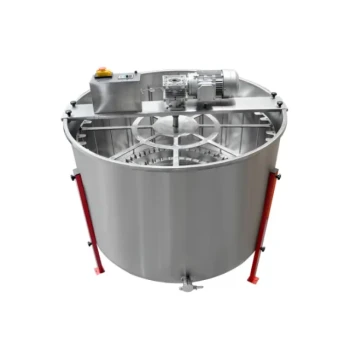
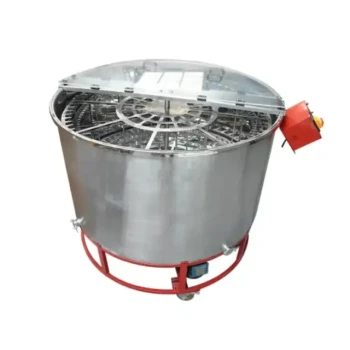
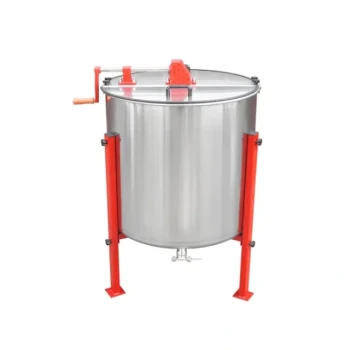
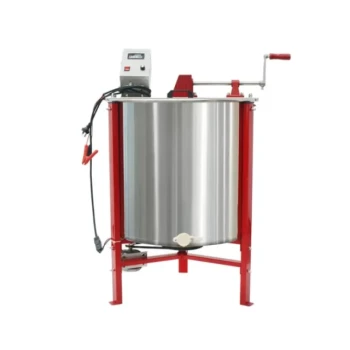
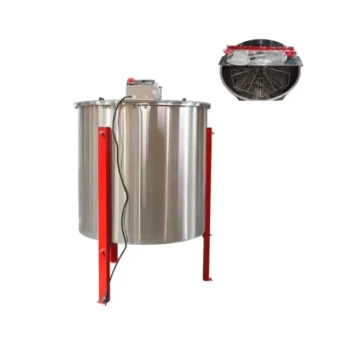
An extractor spins whole frames to harvest honey from the comb without destroying it. A laboratory centrifuge processes the liquid honey itself in test tubes to isolate pollen. However, using a centrifugal extractor for the harvest is preferred for research, as it preserves the original pollen profile better than heat extraction.
Making the Right Choice for Your Goal
When establishing a protocol for pollen analysis, consider your specific analytical needs:
- If your primary focus is Botanical Classification: Ensure your protocol includes multiple "wash" cycles in the centrifuge to fully remove sugars that obscure visual identification.
- If your primary focus is Quantitative Accuracy: strictly adhere to the 3500 rpm / 45-minute standard to ensure even the smallest, lightest pollen grains are forced into the sediment pellet.
- If your primary focus is Process Efficiency: Utilize a benchtop centrifuge capable of holding multiple tubes to process batches simultaneously, as the sedimentation phase is time-intensive.
The laboratory centrifuge is the bridge between a raw food product and scientific data, transforming a viscous liquid into a quantifiable biological record.
Summary Table:
| Feature | Specification/Detail | Purpose in Extraction |
|---|---|---|
| Optimal Speed | 2500 - 3500 RPM | Ensures sediment pellet formation of dense particles |
| Mechanism | Solid-Liquid Separation | Overcomes honey viscosity to isolate pollen grains |
| Process Step | Dilution & Washing | Removes refractive sugars for microscopic clarity |
| Outcome | Quantitative Enrichment | Compresses trace pollen into a measurable solid mass |
| Integrity | Full Spectrum Preservation | Prevents data bias common in mechanical filtration |
Elevate Your Beekeeping Operations with HONESTBEE
At HONESTBEE, we understand that precision is the backbone of a successful commercial apiary. Whether you are a large-scale producer needing industrial honey-filling machines or a distributor looking to supply the highest quality beekeeping tools and hardware, we provide the comprehensive wholesale solutions you need.
Our portfolio ranges from hive-making machinery to essential industry consumables and honey-themed cultural merchandise. We are dedicated to helping our partners ensure product purity and operational efficiency.
Ready to scale your apiary or distribution network? Contact us today to explore our full equipment catalog!
References
- Fernanda Jacobus de Moraes, Paulo Henrique Amaral Araújo de Sousa. Pollen analysis of honey samples produced in the counties of Santa Helena and Terra Roxa, western Region of Paraná, Southern Brazil. DOI: 10.13102/sociobiology.v66i2.3680
This article is also based on technical information from HonestBee Knowledge Base .
Related Products
- Manual Hand Crank 4 Frame Honey Extractor Centrifuge for Beekeeping
- electric honey extractor honey centrifuge 3 frame honey extractor stainless steel honey frame extractor
- Professional 4 Frame Self Reversing Electric Honey Extractor for Beekeeping
- HONESTBEE 3-Frame Manual Acrylic Honey Extractor
- Honey Concentrating and Filtering Dehumidifier Machine 2T Capacity for Honey
People Also Ask
- What are some tips for achieving efficient honey extraction with a centrifuge extractor? Maximize Your Yield & Efficiency
- What is the proper procedure for maintaining a centrifuge honey extractor? Expert Tips for Longevity and Hygiene
- What are the advantages of using a centrifuge honey extractor? Maximize Yields and Protect Your Honeycombs
- Which type of honey extractor is generally more durable? Focus on Material & Build Quality for Longevity
- What is a manual honey extractor? The Essential Guide to Cost-Effective Beekeeping for Beginners