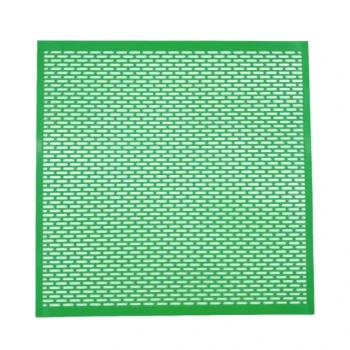
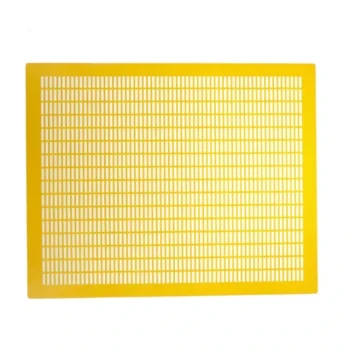
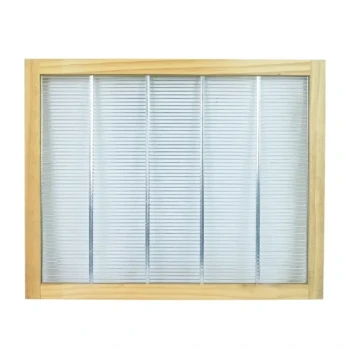
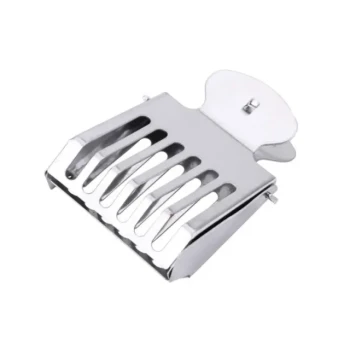
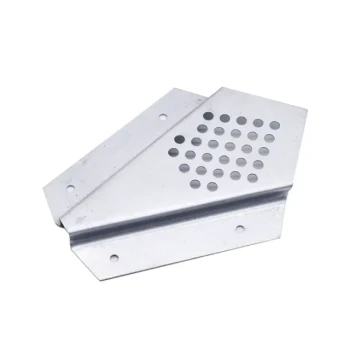
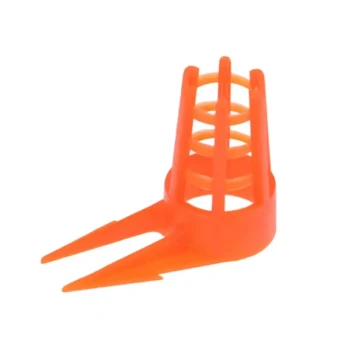
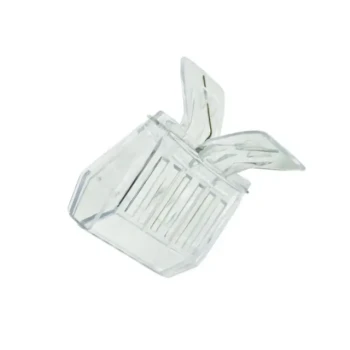
A Queen Excluder acts as a precise physical filter within the hive structure. It serves as a grid-like barrier placed between the brood chamber and the honey supers, featuring gaps specifically sized to allow smaller worker bees to pass freely while blocking the larger queen bee. This device ensures that the queen is confined to the lower level of the hive, preventing her from laying eggs in the upper honeycombs and guaranteeing that the harvested honey remains free of larvae and pupae.
By enforcing a strict separation between the colony's nursery and its pantry, a Queen Excluder eliminates the risk of brood contamination. This ensures the final product meets high standards for purity, clarity, and commercial viability.
The Mechanics of Hive Segregation
Physical Separation Based on Size
The core function of the excluder relies on the anatomical difference between the queen and the worker bees. The grid apertures are dimensioned precisely to permit the flow of nectar-carrying workers but are too narrow for the queen's abdomen to pass through.
The Two-Chamber System
This device effectively divides the hive into two distinct functional zones. The lower chamber becomes the dedicated brood nest for reproduction, while the upper "supers" are reserved strictly for honey storage.
Ensuring Purity and Commercial Value
Eliminating Biological Contamination
The most direct contribution to quality is the prevention of "brood in the supers." Without an excluder, a queen may move upward to lay eggs, leading to larvae or pupae developing in the frames meant for harvest.
Meeting Industry Standards
For commercial and organic markets, purity is non-negotiable. Using an excluder ensures the extracted honey is free from the protein and debris associated with larval development, which is essential for meeting international quality standards.
Enhancing Comb Honey Appearance
For beekeepers producing comb honey—where the wax comb is eaten along with the honey—visual appeal is critical. The excluder ensures the comb remains pristine and light-colored, avoiding the dark coloration that occurs after brood has been raised in the cells.
Operational Efficiency
Streamlined Mechanical Harvesting
Honey frames free of brood are significantly easier to process. Beekeepers can use mechanical extractors without worrying about damaging delicate larvae or filtering out pupal debris during the bottling process.
Undisturbed Ripening
Isolating the storage area provides a stable environment for worker bees. They can focus on dehydrating and ripening the nectar into honey without the disruption of nursing activities occurring in the same frames.
Understanding the Trade-offs
Potential for Swarming
While the excluder boosts purity, it introduces management variables. Some data suggests that colonies without excluders may swarm less and develop larger populations, as the queen has unrestricted space to lay.
The "Honey Barrier" Effect
Occasionally, worker bees may be reluctant to cross the metal or plastic grid to store nectar. This can create a bottleneck, potentially slowing down production compared to a hive where movement is completely unrestricted.
Making the Right Choice for Your Goal
Whether you employ a Queen Excluder depends on balancing the need for absolute purity against total colony population.
- If your primary focus is Commercial or Comb Honey: You must use an excluder to guarantee the product is free of brood and visually pristine.
- If your primary focus is Maximum Colony Population: You might forgo the excluder to allow the queen unrestricted laying room, accepting that sorting honey frames during harvest will require more labor.
- If your primary focus is Efficient Extraction: Use the excluder to ensure all upper frames are brood-free and ready for mechanical processing.
Using a Queen Excluder is the most reliable method to professionalize your output and ensure the honey you bottle is pure, clear, and debris-free.
Summary Table:
| Feature | Function & Impact on Quality | Key Benefit |
|---|---|---|
| Physical Grid | Sized to block the queen while allowing workers through | Prevents eggs and larvae in honey supers |
| Hive Segregation | Separates the brood nest from the storage supers | Ensures clear, debris-free honey extraction |
| Color Preservation | Prevents brood rearing in honeycomb cells | Keeps comb honey light-colored and visually appealing |
| Process Efficiency | Removes biological debris from the harvest cycle | Enables faster mechanical extraction and bottling |
Elevate Your Honey Production with HONESTBEE
At HONESTBEE, we understand that commercial success in beekeeping depends on purity and efficiency. As a leading supplier for commercial apiaries and distributors, we provide a comprehensive range of professional-grade queen excluders, hive-making machinery, and honey-filling systems designed to streamline your operations.
Whether you need precision hardware or essential industry consumables, our wholesale solutions are tailored to help you meet international quality standards and maximize your market value. Ready to scale your apiary? Contact us today to explore our full spectrum of beekeeping tools!
References
- Asfaw Albore, Getachew Abraham. Adoption and Intensity of Adoption of Beekeeping Technology by Farmers: The Case of Sheko Woreda of Bench-Maji Zone, South west Ethiopia. DOI: 10.7176/alst/97-03
This article is also based on technical information from HonestBee Knowledge Base .
Related Products
- High Performance Plastic Queen Excluder for Beekeeping and Apiary Management
- Professional Plastic Queen Excluder for Modern Beekeeping
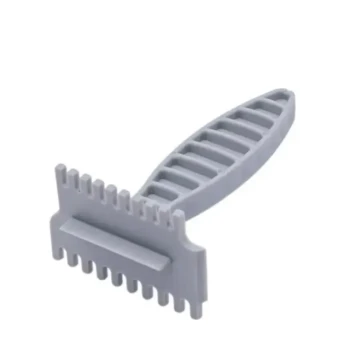
- Lightweight Durable Plastic Queen Excluder Scraper for Beekeeping
- Metal Queen Bee Excluder for Beekeeping
- Premium Wood Framed Metal Wire Queen Bee Excluder
People Also Ask
- What are the characteristics of a plastic queen excluder? Key Benefits for Cost-Effective Beekeeping
- What are the operational and cost advantages of using plastic queen excluders over metal or wire excluders in commercial hive management? Discover how they reduce labor, prevent wing damage, and lower total costs.
- What types of queen excluders are available for beekeepers? Choose the Right Tool for Your Hive
- Why are standardized hive frames and queen excluders essential for maintaining honey purity and quality? Scale Your Purity
- Do plastic queen excluders work? A Cost-Effective Solution for Modern Apiaries