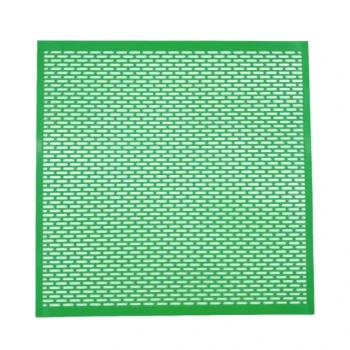
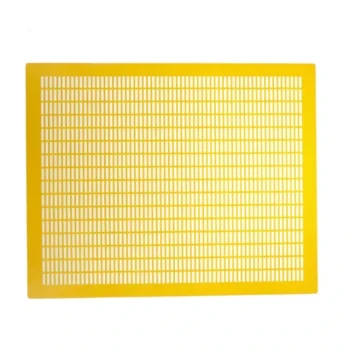
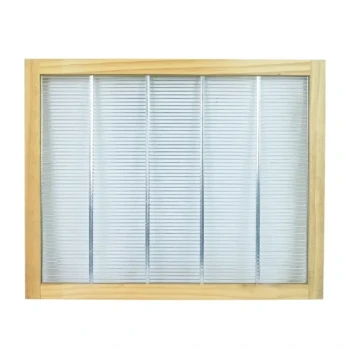
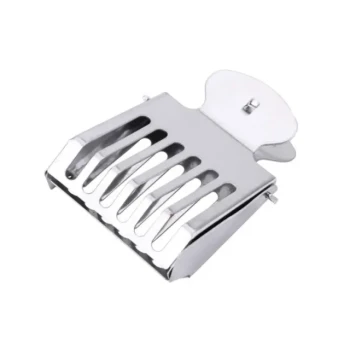
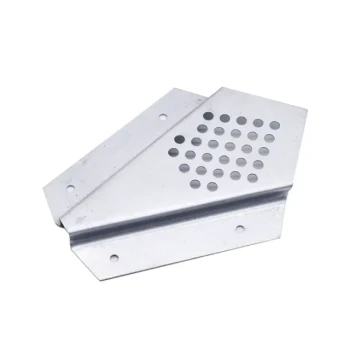
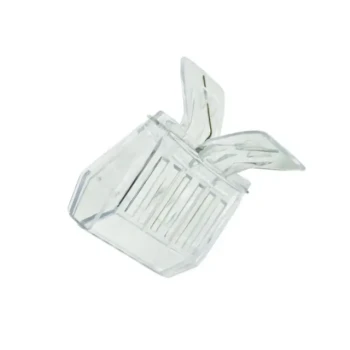
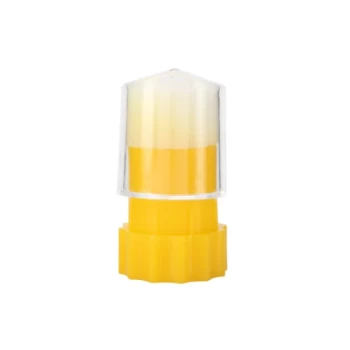
A queen excluder operates through precise physical filtration. It utilizes a gauged grid with gaps strictly calibrated between 4.1 and 4.4 millimeters. This specific dimension creates a physical barrier that permeable to smaller worker bees but impermeable to larger mature queens and drones.
A queen excluder functions as a selective biological sieve. By exploiting the natural size dimorphism between castes, it mechanically confines the queen to the brood chamber, ensuring that honey supers remain strictly for honey storage rather than brood rearing.
The Mechanics of Separation
The Critical Dimensions
The efficacy of a queen excluder relies entirely on size differentiation. The grid openings are engineered to be between 4.1 and 4.4 millimeters wide.
Selective Permeability
This specific spacing allows the smaller bodies of worker bees to pass through the grid with relative freedom. They can travel between the brood nest and the upper food stores to deposit nectar.
Physical Isolation
Because a mature queen and drones possess larger thoraxes, the 4.4mm gap is too narrow for them to navigate. This physical constraint blocks them from entering the upper sections of the hive, effectively locking the queen in the lower boxes.
Operational Objectives
Confining the Brood
The primary goal of this mechanical separation is to organize the hive vertically. By restricting the queen to the lower hive body, she is forced to lay eggs only in that specific zone.
Ensuring Pure Honey Harvests
With the queen unable to access the upper "honey supers," these frames remain free of eggs and larvae. This allows workers to fill the upper frames exclusively with honey, simplifying the extraction process for the beekeeper.
Creating Nursing Micro-environments
In advanced beekeeping, such as queen rearing, the excluder serves a protective role. It isolates the reigning queen from developing queen cells (like those on Doolittle Frames), preventing her from destroying her potential replacements while still allowing nurse bees to enter and care for the larvae.
Understanding the Trade-offs
Potential for Worker Injury
While workers can fit through the grid, it is not always effortless. Frequent travel through the metal or plastic grid can cause friction, potentially damaging the wings of worker bees over time.
Traffic Congestion
The excluder acts as a bottleneck within the hive. During a heavy honey flow, the grid can slow down the movement of workers trying to store nectar, potentially reducing overall efficiency.
Mitigation Strategies
To counteract congestion and wing damage, beekeepers can install an upper entrance above the excluder. This provides foragers a direct, unobstructed path to the honey supers without forcing them to squeeze through the grid.
Making the Right Choice for Your Goal
Whether you employ a queen excluder depends on your specific management philosophy and the current state of your hive.
- If your primary focus is pristine honey extraction: Use an excluder to guarantee that your honey supers remain free of brood, ensuring a cleaner harvest.
- If your primary focus is maximum flow efficiency: Consider adding an upper entrance to bypass the excluder's bottleneck, or skip the excluder entirely if using multiple hive bodies where the queen naturally stays lower.
- If your primary focus is queen rearing: You must use an excluder to physically protect developing queen cells from being destroyed by the reigning queen.
Effective beekeeping requires balancing the convenience of harvest management against the ease of movement for your colony.
Summary Table:
| Feature | Specification/Detail | Function/Impact |
|---|---|---|
| Grid Gap Size | 4.1mm - 4.4mm | Allows workers; blocks queens & drones |
| Primary Goal | Vertical organization | Keeps honey supers free of brood/larvae |
| Mechanism | Physical filtration | Exploits thorax size differences |
| Honey Quality | High purity | Simplifies extraction with brood-free frames |
| Advanced Use | Queen rearing | Protects queen cells from the reigning queen |
Elevate Your Apiary Efficiency with HONESTBEE
At HONESTBEE, we specialize in empowering commercial apiaries and distributors with high-performance beekeeping solutions. From precision-engineered queen excluders to industrial honey-filling machines and hive-making hardware, our comprehensive wholesale portfolio is designed to optimize your workflow.
Why partner with HONESTBEE?
- Full Spectrum Supply: Get everything from essential consumables to heavy machinery in one place.
- Commercial Scale: Tailored offerings for large-scale operations and global distributors.
- Expert Support: Benefit from tools that prioritize both colony health and harvest purity.
Ready to scale your production? Contact us today to discuss our wholesale equipment and how we can add value to your beekeeping business!
Related Products
- High Performance Plastic Queen Excluder for Beekeeping and Apiary Management
- Professional Plastic Queen Excluder for Modern Beekeeping
- Lightweight Durable Plastic Queen Excluder Scraper for Beekeeping
- Metal Queen Bee Excluder for Beekeeping
- Premium Wood Framed Metal Wire Queen Bee Excluder
People Also Ask
- What are the characteristics of a plastic queen excluder? Key Benefits for Cost-Effective Beekeeping
- What are the operational and cost advantages of using plastic queen excluders over metal or wire excluders in commercial hive management? Discover how they reduce labor, prevent wing damage, and lower total costs.
- What types of queen excluders are available for beekeepers? Choose the Right Tool for Your Hive
- Why are standardized hive frames and queen excluders essential for maintaining honey purity and quality? Scale Your Purity
- Do plastic queen excluders work? A Cost-Effective Solution for Modern Apiaries