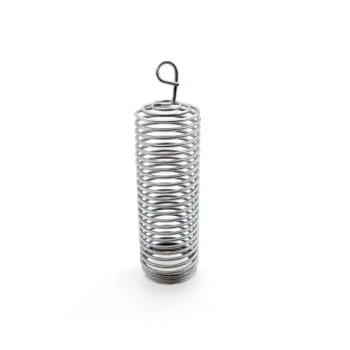
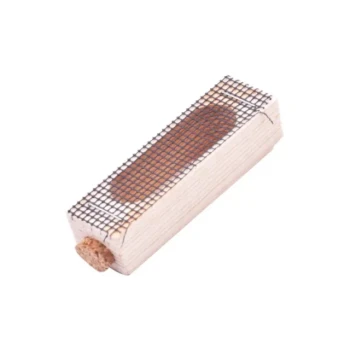
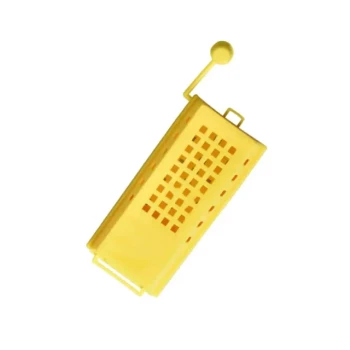
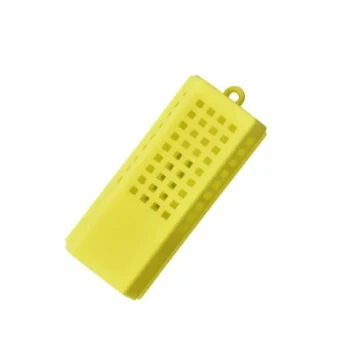
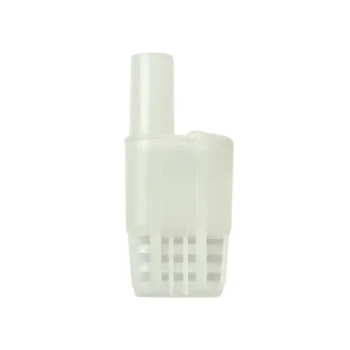
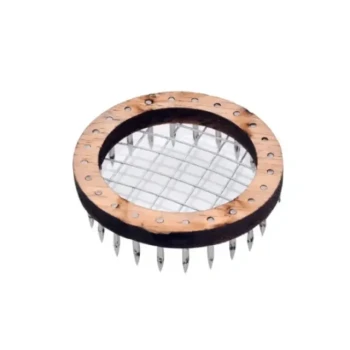
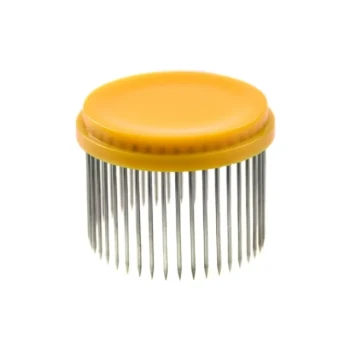
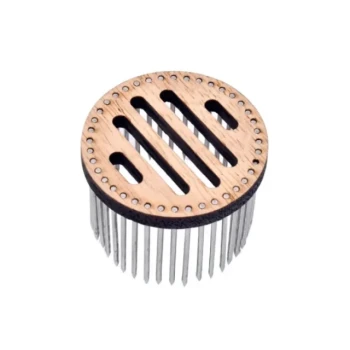
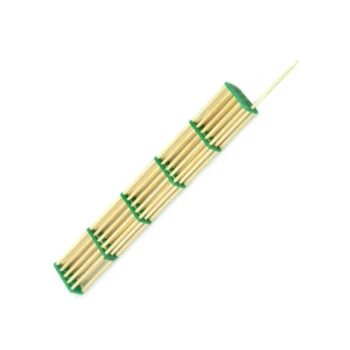
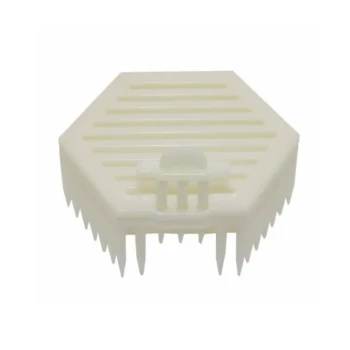
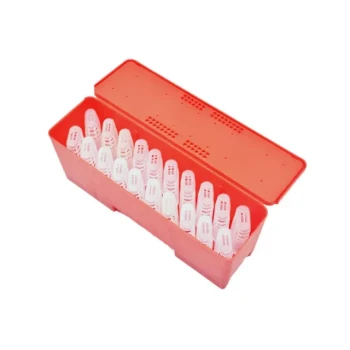
A specialized queen cage acts as a critical biological buffer. It facilitates colony management by acting as a temporary physical barrier that separates a new queen from established worker bees. This separation protects the queen from lethal aggression while the mesh structure allows for the gradual diffusion of her pheromones, enabling the colony to acclimate to her scent before direct contact occurs.
By converting a sudden intrusion into a gradual transition, the queen cage mitigates the colony’s natural defense mechanisms. It ensures the queen's survival during the volatile initial period of introduction, securing the colony's long-term stability and productivity.
The Mechanisms of Successful Integration
The Physical Barrier
The immediate danger to any new queen is rejection by the colony's worker bees, who may view her as an intruder.
The cage provides a rigid defensive perimeter. This prevents workers from "balling" (surrounding and overheating) or stinging the queen, ensuring she remains physically safe during the most aggressive phase of introduction.
Pheromone Acclimation
The primary driver of colony cohesion is the queen's unique pheromone signature.
The mesh design of specialized cages allows air to circulate, carrying the queen's scent into the hive. This creates a period of chemical negotiation, where the colony gradually accepts the new pheromone profile as their own, significantly reducing hostility once the cage is opened.
Controlled Release Timing
Standard cages often utilize a sugar candy tube as a release mechanism.
Worker bees must eat through this candy plug to release the queen, a process that typically takes one to three days. This built-in delay ensures the release does not happen until the pheromone acclimation process is complete and the colony’s aggression has subsided.
Specialized Management Scenarios
Increasing Acceptance via Egg Laying
Certain specialized tools, such as the push-in cage, offer distinct advantages for difficult introductions.
These cages allow the queen to roam a small patch of comb and begin laying eggs while still protected. Because a laying queen is biologically more valuable and desirable to the colony than a non-laying one, this method significantly increases the probability of a successful acceptance.
Managing Virgin Queens
During artificial rearing or colony splitting, tools like the Titov queen cage are essential.
These cages isolate emerging virgin queens to prevent them from fighting and killing one another. They also provide space for emergency feed (honey or sugar candy) at the base, maintaining the queen's physiological vitality until she can be placed in a mating nucleus or new colony.
Safe Transportation
Beyond introduction, specialized cages are vital for the logistics of apiary management.
Designed with high-strength ventilation mesh, these cages ensure sufficient air circulation to prevent overheating. This makes them essential for long-distance transit, ensuring the queen arrives healthy and ready for introduction.
Common Pitfalls to Avoid
Premature Release
The most common error is introducing the queen too quickly.
Releasing a queen before the colony has fully acclimated to her pheromones usually results in immediate rejection or death. The colony requires sufficient time—often dictated by the consumption rate of the candy plug—to adjust its social structure.
Neglecting Environmental Factors
Success relies on more than just the cage itself.
Failure to provide adequate hive ventilation or failing to monitor the colony after introduction can lead to stress. Additionally, neglecting to check that the colony is actually queenless before introduction will almost always result in the death of the new queen.
Making the Right Choice for Your Goal
To ensure the stability of your apiary, select the introduction method that aligns with the specific state of your colony and the queen.
- If your primary focus is routine queen replacement: Rely on standard cages with a candy release plug to automate the three-day acclimation delay.
- If your primary focus is high-value or difficult introductions: Utilize a push-in cage to allow the queen to establish her value by laying eggs prior to full release.
- If your primary focus is breeding and rearing: excessive use of isolation cages like the Titov model is necessary to protect virgin queens from lethal rivalry upon emergence.
Success in queen management is not about forcing acceptance, but about engineering the time and conditions required for biological harmony.
Summary Table:
| Feature | Function | Primary Benefit |
|---|---|---|
| Physical Mesh | Biological barrier | Protects queen from worker aggression/balling |
| Pheromone Diffusion | Chemical negotiation | Allows colony to acclimate to queen's scent |
| Candy Release Plug | Controlled timing | Automates 1-3 day delay for safer integration |
| Push-in Design | Egg-laying space | Increases acceptance by demonstrating queen value |
| Isolation Chamber | Rivalry prevention | Protects virgin queens during breeding/rearing |
Maximize Your Apiary Productivity with HONESTBEE
Successful queen management is the backbone of a thriving colony. HONESTBEE specializes in supporting commercial apiaries and distributors with premium beekeeping solutions designed for scale and efficiency. From high-strength ventilation queen cages to advanced honey-filling machinery, our comprehensive wholesale catalog ensures your operations remain stable and profitable.
Why partner with HONESTBEE?
- Full Spectrum Supply: We provide everything from specialized hardware to essential industry consumables.
- Commercial-Grade Quality: Our tools are engineered to handle the rigors of professional beekeeping and long-distance transport.
- Global Distribution: We cater to distributors with competitive wholesale offerings and honey-themed cultural merchandise.
Don't leave your queen's survival to chance. Contact us today to discover how our professional tools can streamline your management processes!
References
- Asfaw Albore, Daniel Abraham. Adoption and intensity of adoption of beekeeping technology by farmers: The case of Sheko Woreda of Bench-Maji Zone, South West Ethiopia. DOI: 10.15421/2019_716
This article is also based on technical information from HonestBee Knowledge Base .
Related Products
- Durable Galvanized Steel Spring Queen Bee Cage
- Professional Queen Bee Introduction and Transport Cage
- Classic Wooden and Mesh California Queen Cage
- Professional Queen Cage with Sliding Gate and Feeder Plug
- Professional Multi-Compartment Queen Cage with Sliding Lid
People Also Ask
- Why are specialized queen bee cages used for the banking of mated queen bees? Maximize Commercial Apiary Storage Efficiency
- What is the mechanism of action for using temporary queen bee cages? Master Successful Queen Introduction
- What is the step-by-step process for installing a queen bee's cage onto a frame? Ensure Hive Acceptance Safely
- What is the optimal placement for a queen bee cage? Essential Strategies for Successful Re-queening
- What are the advantages and disadvantages of introducing a queen bee by embedding the cage? Boost Your Queen Acceptance