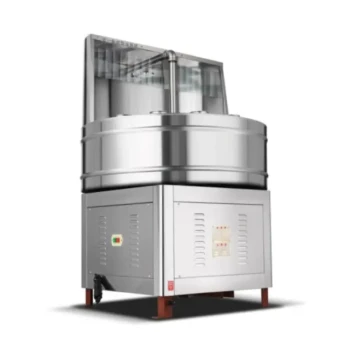
The vacuum rotary evaporator is the primary defense against thermal degradation during the extraction of bee pollen. By reducing the pressure within the system, it allows extraction solvents to boil and evaporate at significantly lower temperatures—often as low as 35°C. This capability enables the gentle concentration of the extract, ensuring that the active ingredients are recovered without being destroyed by the heat typically required for evaporation at atmospheric pressure.
By decoupling evaporation from high heat, this technology safeguards the biological activity of delicate compounds while optimizing the efficiency and yield of the entire isolation process.
Preserving Bioactive Integrity
The Physics of Gentle Extraction
The core function of the rotary evaporator is to create a vacuum environment. This lowers the boiling point of solvents like methanol.
Instead of requiring high temperatures to remove the solvent, the system allows evaporation to occur at a mild 35°C. This ensures the extract is concentrated effectively but gently.
Protecting Heat-Sensitive Compounds
Bee pollen contains valuable bioactive components that are highly susceptible to thermal damage.
The vacuum process specifically prevents the degradation of tocopherols and carotenoids. By avoiding high-temperature exposure, the natural biological activity of these nutrients is effectively preserved.
Ensuring Compositional Accuracy
Maintaining the chemical structure of the extract is vital for reliable analysis.
Low-temperature evaporation protects phenolic compounds from breaking down. This ensures that the final extract represents the true composition of the original pollen, guaranteeing the accuracy of any subsequent bioactive analyses.
Optimizing Process Efficiency
Improving Precipitation Dynamics
The utility of the rotary evaporator extends beyond simple preservation; it prepares the sample for downstream processing.
By concentrating the supernatant (the liquid lying above the solid residue), the device reduces the total volume of the solution. This concentration significantly improves the precipitation efficiency when the extract is later treated with ethanol.
Reducing Resource Consumption
Processing bee pollen extracts often involves multiple solvent stages.
By reducing the volume of the solution early in the process, the evaporator substantially decreases the amount of absolute ethanol required for subsequent steps. This reduction cuts costs and minimizes chemical waste.
Increasing Recovery Rates
The efficiency gains in the concentration phase have a direct impact on the final yield.
Specifically, the improved precipitation conditions lead to a higher recovery rate of soluble dietary fiber from rapeseed bee pollen, making the overall process more productive.
Understanding the Trade-offs
Operational Throughput
While rotary evaporators are excellent for quality, they are typically batch-process devices.
For high-volume industrial applications, the stop-and-start nature of filling and emptying the flask can create a bottleneck compared to continuous flow evaporation systems.
Solvent Trapping Precision
The efficiency of the vacuum relies heavily on the cooling capacity of the condenser.
If the vacuum pressure is set too low for the condenser's temperature, solvent vapors may be sucked into the pump rather than condensing. This requires precise monitoring to prevent equipment damage and solvent loss.
Making the Right Choice for Your Goal
To maximize the utility of a vacuum rotary evaporator in your specific workflow, consider your primary objective:
- If your primary focus is Bioactivity: Prioritize maintaining the bath temperature at or below 35°C to strictly protect tocopherols, carotenoids, and phenolics.
- If your primary focus is Process Efficiency: Focus on the aggressive reduction of supernatant volume to minimize absolute ethanol usage in the next stage.
Ultimately, the vacuum rotary evaporator is not just a drying tool; it is a critical control point for ensuring both the chemical quality and economic viability of your bee pollen extracts.
Summary Table:
| Feature | Impact on Bee Pollen Extraction | Key Benefit |
|---|---|---|
| Vacuum Pressure | Lowers solvent boiling point to ~35°C | Prevents thermal degradation of nutrients |
| Gentle Evaporation | Protects phenolic compounds & carotenoids | Preserves biological activity and accuracy |
| Volume Reduction | Concentrates supernatant efficiently | Increases yield of soluble dietary fiber |
| Solvent Recovery | Recycles extraction solvents | Reduces absolute ethanol consumption & costs |
Elevate Your Bee Product Processing with HONESTBEE
At HONESTBEE, we understand that preserving the delicate bioactivity of bee pollen requires precision-engineered equipment. Whether you are a commercial apiary scaling up production or a distributor seeking high-end machinery, we provide the full spectrum of tools you need to succeed.
Our portfolio includes high-efficiency vacuum rotary evaporators, honey-filling machines, and specialized hive-making equipment designed to optimize your yield and maintain product integrity. Partner with us to access professional-grade hardware and essential industry consumables that give your business a competitive edge.
Ready to optimize your extraction efficiency? Contact our expert team today to discuss how our wholesale solutions can grow your apiary operation.
References
- J. Sattler, Ligia Bicudo de Almeida‐Muradian. Impact of origin on bioactive compounds and nutritional composition of bee pollen from southern Brazil: A screening study. DOI: 10.1016/j.foodres.2015.09.013
This article is also based on technical information from HonestBee Knowledge Base .
Related Products
- Heavy Duty 12V Oxalic Acid Evaporator Vaporizer for Bee Varroa Mite Treatment Beekeeping Fumigator Atomizer
- 12V Bee Mite Removal Evaporator Oxalic Acid Vaporizer for Bee Fumigation Treatment 180W Atomization
- Durable 12V Oxalic Acid Vaporizer for Varroa Mite Treatment Beehive Beekeeping Tool
- HONESTBEE 24 Head Rotary Bottle Washing Machine
- Adjustable Formic and Acetic Acid Dispenser for Bee Mite Treatment
People Also Ask
- How can oxalic acid treatment be applied effectively when capped brood is present? Master the 3-Stage Vapor Protocol
- What are the main advantages of using oxalic acid vaporization for Varroa mite control? Achieve 90%+ Efficacy Safely
- What is the process of using an oxalic acid vaporizer? A Step-by-Step Guide to Safe Varroa Control
- How can oxalic acid vaporization be used effectively in a hive that contains brood? Master Multi-Stage Mite Control
- Why is it necessary to control varroa mite infestations? Protect Your Colony with Oxalic Acid Vaporizers