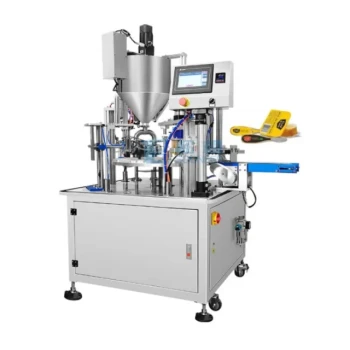
Automated filling machines serve as the critical infrastructure that transitions Trigona sp. honey from a perishable, artisanal item to a viable commercial product. By replacing manual handling with sterile, mechanized precision, these systems directly address the unique high-moisture characteristics of stingless bee honey, minimizing air exposure and significantly extending shelf life for formal retail markets.
The Core Value Proposition The commercial success of Trigona sp. honey hinges on stabilization. Automated filling machines do not just package the product; they preserve it by strictly controlling hygiene and reducing oxidation, allowing high-moisture honey to meet the rigorous consistency and safety standards required for supermarket shelves and export.
Solving the Preservation Challenge
The primary barrier to commercializing Trigona honey is its stability. Unlike standard honey, stingless bee honey has unique chemical properties that require specialized handling.
Managing High Moisture Content
Trigona sp. honey naturally contains high moisture levels, making it prone to fermentation. Automated machines execute the filling process rapidly to minimize the honey's exposure to air. By reducing the time the honey is in contact with the environment, the risk of moisture absorption and subsequent spoilage is drastically lowered.
Eliminating Secondary Contamination
Manual packaging inevitably introduces human contact and environmental contaminants. Automated systems utilize sterile filling environments and hermetic sealing technologies. This creates a "closed loop" that prevents secondary contamination, ensuring the honey remains pure from the vat to the final sealed bottle.
Extending Product Shelf Life
The combination of reduced air exposure and sterile processing directly contributes to a longer shelf life. For commercial retailers, shelf life is a non-negotiable requirement. Automation ensures the product remains safe and stable long enough to move through supply chains and sit on store shelves without fermenting.
Achieving Market-Ready Standardization
Beyond preservation, commercialization requires a product that looks and behaves consistently. Retailers and consumers demand uniformity.
Precision in Volume and Weight
Manual filling leads to variance; some bottles are overfilled, others underfilled. Automated machines use precise metering controls to ensure every unit contains the exact same volume. This consistency is essential for meeting legal labeling requirements and building consumer trust in the brand.
Professional Presentation
To compete with established brands or synthetic alternatives, Trigona honey must look professional. Automation integrates filling with specialized sealing and packaging processes. This results in a standardized, clean final product that meets the aesthetic and physical requirements of high-end domestic and international markets.
Scalability and Efficiency
Manual labor limits production capacity. Automated machines remove this bottleneck, allowing for high-speed, large-scale production. This efficiency allows producers to meet the bulk volume demands of commercial distributors without sacrificing the hygiene standards established in smaller batches.
Understanding the Operational Trade-offs
While automation is superior for commercialization, it introduces new dynamics to the production floor that must be managed.
Loss of "Hand-Packed" Flexibility
Manual labor allows for easy adjustment between very different jar sizes or irregular shapes on the fly. Automated systems are optimized for consistency and speed. Switching between different packaging formats usually requires re-tooling or calibration time, which can reduce flexibility for small, custom batches.
The Shift to Technical Maintenance
Replacing manual labor with mechanical systems changes the skill set required in the facility. While you reduce the errors associated with manual handling, you introduce a need for technical oversight to maintain the metering accuracy and hygiene of the machine itself.
Making the Right Choice for Your Goal
When integrating automation into your Trigona honey operation, align your equipment choice with your specific commercial objectives.
- If your primary focus is Shelf Life: Prioritize machines with advanced sealing technologies and minimal air-headspace designs to combat fermentation in high-moisture honey.
- If your primary focus is Retail Access: Prioritize machines with high-precision metering and weighing certifications to strictly meet legal labeling standards for supermarkets.
- If your primary focus is Scale: Prioritize high-speed systems that integrate filling and sealing in a continuous line to maximize throughput and minimize manual bottlenecks.
Success in the commercial honey market relies on transforming a natural raw material into a standardized, stable consumer product.
Summary Table:
| Feature | Impact on Commercialization | Primary Benefit |
|---|---|---|
| Rapid Filling | Minimizes air exposure and moisture absorption | Prevents fermentation |
| Hermetic Sealing | Eliminates secondary environmental contamination | Extends product shelf life |
| Precise Metering | Ensures uniform volume and weight across all units | Meets legal labeling standards |
| High-Speed Output | Removes manual labor bottlenecks | Enables bulk supply to distributors |
Elevate Your Honey Brand with HONESTBEE Professional Solutions
Transitioning from artisanal production to a global commercial scale requires equipment that guarantees stability and precision. HONESTBEE specializes in supporting commercial apiaries and distributors by providing the industry's most reliable honey-filling and hive-making machinery.
Our comprehensive wholesale offering includes everything from automated production lines to essential beekeeping consumables and honey-themed cultural merchandise. We help you transform raw Trigona honey into a shelf-stable, premium retail product that meets international export standards.
Ready to scale your apiary operations?
Contact our technical experts today to discover how our specialized machinery can optimize your production efficiency and market reach.
References
- Daud Irundu, Sartika Sartika. Persepsi Masyarakat Kth Buttu Puang Untuk Pengembangan Budidaya Trigona Sp. Di Desa Mirring Kabupaten Polman. DOI: 10.46918/eboni.v5i1.1854
This article is also based on technical information from HonestBee Knowledge Base .
Related Products
- Automatic Honey Filling and Filtering Machine for Beekeeping Bottle Filling
- Fully Automatic Honey Filling Packaging Machine for Processing Line
- Manual Honey Filling Machine Bottling Machine for Honey
- Precision Automated Packaging Turntable Honey Spoon Filling Sealing Packing Machine
- Precision Durable Efficient HONESTBEE Rotary Honey Filling Machine
People Also Ask
- What process advantages do professional honey filtering and filling machines provide? Optimize Your Organic Honey Output
- How do honey filling and filtering machines increase product value? Turn Raw Honey into Premium Export-Grade Goods
- How do honey filtration and filling machinery contribute to industrialization? Scale Your Commercial Honey Production
- What specific issues do industrial filtration and automated filling machinery address? Ensure Honey Quality & Compliance
- How does the use of professional honey filtration and filling machinery facilitate international honey exports?