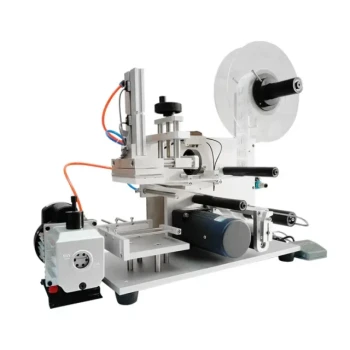
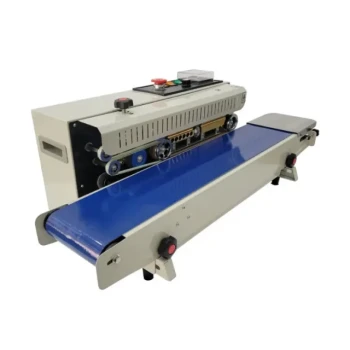
In short, an automatic labeling machine reduces labor costs by replacing the repetitive, manual task of applying labels with a highly efficient automated process. This allows a small number of operators to manage a workload that would otherwise require a large team, significantly cutting direct payroll expenses and the indirect costs associated with training and supervision.
The true value of an automatic labeler isn't just about eliminating jobs; it's about optimizing your workforce. By automating low-skill, error-prone tasks, you can reallocate your team to higher-value activities that drive greater productivity and quality.
The Mechanics of Automated Cost Reduction
An automatic labeling machine is engineered to perform a single, repetitive task with extreme speed and precision, directly removing the need for human intervention at that stage of production.
Eliminating Direct Manual Labor
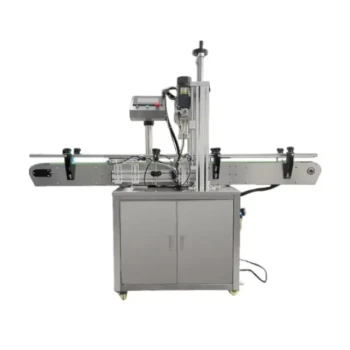
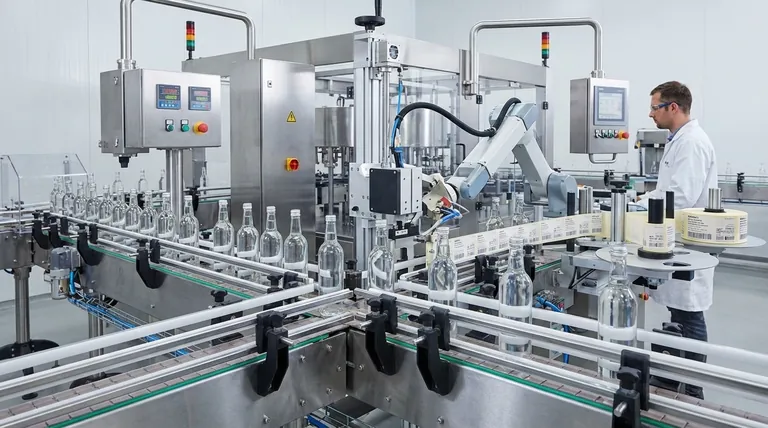
The core function is simple and effective. A product moves along a conveyor belt into the labeling area. A sensor detects the product's presence, triggering the machine to dispense a label from a roll and apply it to a precise, pre-determined location. This single, automated action replaces the entire manual sequence of a worker picking up a product, a label, and applying it by hand.
Reducing the Need for a Large Workforce
Because the machine handles the physical application of every label, a large team of manual labelers becomes unnecessary. A single operator can typically oversee the machine's function, replenish label rolls, and ensure the line runs smoothly. This consolidation of labor means one or two employees can manage the output of what might have previously taken a dozen or more people.
Slashing Indirect Labor Costs
The cost of labor extends beyond salaries. A larger workforce requires more significant investment in training, supervision, and human resources management. By automating the labeling process, you drastically reduce these associated overhead expenses.
Beyond Payroll: The Ripple Effect on Productivity
The financial benefits of automation go far beyond a smaller payroll. The real impact is seen in overall operational efficiency and quality control.
Enhancing Throughput and Consistency
Automated machines work at a consistent, high speed without breaks or fatigue. This guarantees a predictable and significantly higher output compared to a manual process, allowing you to produce more in less time with the same or fewer staff members.
Minimizing Costly Errors
Manual labeling is prone to human error, resulting in crooked, misplaced, or incorrect labels. These mistakes lead to wasted materials, product rework, and potential rejection by quality control or customers. An automatic labeler applies each label with mechanical precision, virtually eliminating these costly errors and the labor required to fix them.
Reallocating Human Capital to Higher-Value Tasks
Perhaps the most strategic benefit is the ability to re-purpose your workforce. Instead of performing a repetitive task, employees can be reallocated to more productive roles that require critical thinking, such as quality assurance, machine maintenance, logistics, or complex assembly. This shift allows you to leverage your team’s skills more effectively, boosting overall business productivity.
Understanding the Trade-offs
While highly effective, an automatic labeler is not a universally perfect solution. It is a strategic investment with its own set of considerations.
Initial Capital Investment
The most obvious trade-off is the significant upfront cost of purchasing the machine. This capital expenditure must be weighed against the projected long-term savings in labor and increased efficiency to calculate a return on investment (ROI).
Maintenance and Technical Skill
An automatic machine requires routine maintenance and skilled oversight. This shifts the labor need from a large, low-skill workforce to a smaller number of technically proficient operators and maintenance personnel. While the overall labor cost is lower, you must ensure you have access to the necessary technical skills.
Limited Flexibility for Small, Custom Batches
Automated systems are optimized for high-volume, repetitive runs. Setting up the machine for a very small or highly customized batch of products can be inefficient compared to the flexibility of a manual process.
Making the Right Investment for Your Goal
The decision to invest in an automatic labeling machine should be driven by your specific production goals.
- If your primary focus is scaling high-volume production: An automatic labeler is a foundational investment for reducing per-unit labor costs and achieving the necessary throughput.
- If your primary focus is improving quality and consistency: Automation is the most reliable way to eliminate application errors, reduce waste, and ensure a professional finish on every product.
- If your primary focus is optimizing your existing workforce: This technology frees your employees from repetitive tasks, enabling you to assign them to roles that add more strategic value to the business.
Ultimately, adopting an automatic labeling machine is a strategic move to lower direct labor costs while simultaneously unlocking higher levels of productivity and quality across your operation.
Summary Table:
| Cost Reduction Area | How Automation Helps |
|---|---|
| Direct Labor | Replaces multiple manual labelers with one machine operator. |
| Indirect Labor | Reduces costs for training, supervision, and HR management. |
| Error Reduction | Minimizes costly rework and waste from misapplied labels. |
| Throughput | Increases output speed and consistency without adding staff. |
Ready to reduce your labeling labor costs and optimize your workforce?
As HONESTBEE, a trusted supplier of beekeeping supplies and equipment for commercial apiaries and distributors, we understand the critical need for efficiency. An automatic labeling machine is a key investment in streamlining your operation, ensuring your products are market-ready with precision and speed.
Let our wholesale-focused expertise help you select the right equipment to cut costs and boost your productivity. Contact our team today to discuss your needs and get a personalized solution!
Visual Guide

Related Products
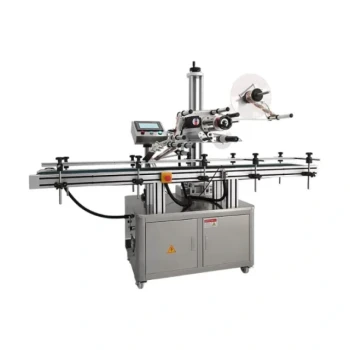
- Automatic In-Line Flat Surface Labeling Machine
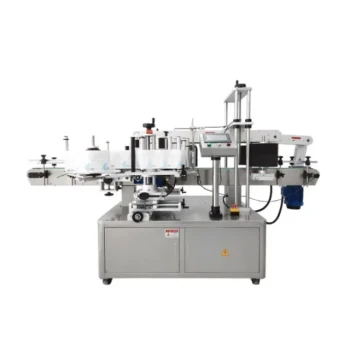
- Automatic Dual Sided In Line Labeling Machine
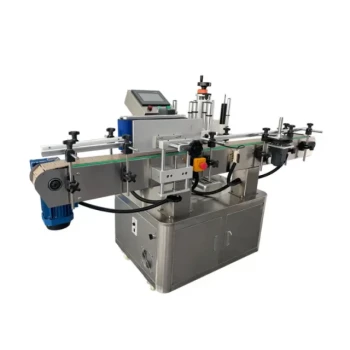
- Automatic In-Line Round Bottle Labeling Machine
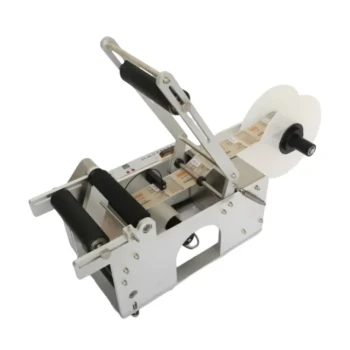
- Semi Automatic Round Bottle Labeling Machine
- HONESTBEE Pneumatic Flat Surface Labeling Machine
People Also Ask
- What are the key components of an automatic labeling machine? Unlock High-Speed, Precision Labeling
- What are the efficiency benefits of an automatic labeling machine? Boost Speed, Accuracy & Consistency
- How does an automatic labeling machine operate? Achieve High-Speed, Precise Product Labeling
- How do automated labeling systems contribute to building consumer trust for honey producers? Gain Brand Credibility
- What is the role of automatic labeling equipment in PDO honey? Secure Compliance and Premium Branding