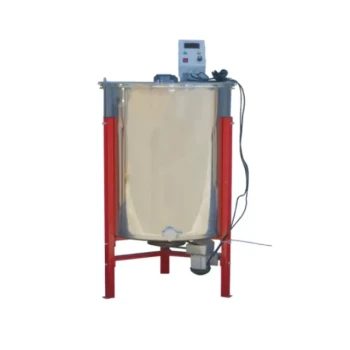
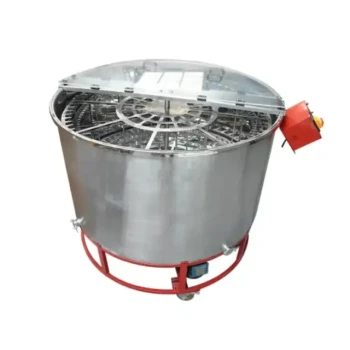
An industrial centrifuge operating at 4500 rpm serves as the critical concentration mechanism in the analysis workflow. It functions by applying high-velocity centrifugal force to a liquid solution—typically a wash containing pollen washed from bee bodies—to rapidly force suspended pollen grains to the bottom of the tube. This process converts a dilute suspension into a high-density sediment, which is essential for preparing slides with adequate sampling density.
Core Takeaway The centrifuge does not simply separate materials; it solves the problem of dilution. By compacting scattered pollen grains into a dense sediment, the 4500 rpm operation maximizes the detection rate, ensuring that the microscopic sample is rich enough to yield statistically significant data regarding plant origins.
The Mechanics of Concentration
Rapid Sedimentation
The primary challenge in analyzing pollen from a bee's body surface is that the pollen is initially suspended in a liquid wash.
At 4500 rpm, the centrifuge generates sufficient force to overcome the buoyancy and drag of the microscopic grains.
This forces the pollen out of the suspension and packs it into a distinct "pellet" or sediment at the bottom of the tube, leaving the liquid (supernatant) clear for removal.
Enhancing Detection Rates
Without this high-speed concentration, a microscopic slide might contain only a few scattered grains, making analysis statistically unreliable.
The centrifuge ensures that the resulting sediment contains a high concentration of material.
This allows researchers to view a dense field of grains, significantly improving the efficiency and accuracy of the detection process.
Enabling Downstream Analysis
Facilitating Palynological Evaluation
Once the pollen is concentrated into a sediment, it undergoes palynological analysis to determine its origin.
Because the sample is dense, analysts can quantitatively evaluate the proportions of pollen from various plant families, such as Brassicaceae, Polygonaceae, Fabaceae, and Asteraceae.
This step is fundamental for understanding the bees' foraging patterns and the environmental diversity they interact with.
Preparing for Digital Identification
The sediment produced by the centrifuge is the raw material used by industrial video microscopes.
High-definition images of these concentrated grains are captured and transmitted to analysis software.
The software then uses image overlay technology to compare the grains against a standard pollen database, a process that requires the clean, concentrated samples that the centrifuge provides.
Understanding the Necessity of Speed
The Dilution Problem
The core problem this specific RPM addresses is the low natural density of pollen in a wash solution.
attempting to analyze the liquid directly without centrifugation would result in "empty" slides and missed data points.
The Precision Threshold
Operating at 4500 rpm is a specific calibration designed to maximize yield without damaging the sample.
It ensures that lighter pollen grains, which might remain suspended at lower speeds, are successfully captured in the sediment.
This consistency is a critical prerequisite for advanced tasks, such as analyzing heavy metals or nutritional components attached to the pollen.
Making the Right Choice for Your Goal
When integrating centrifugation into your analysis workflow, consider your specific analytical targets:
- If your primary focus is Quantitative Profiling: Ensure the centrifugation cycle is complete to capture all pollen families, allowing for accurate proportional counts of plant types like Fabaceae or Asteraceae.
- If your primary focus is Automated Identification: Prioritize the clarity of the sediment; the concentration must be high enough for video microscopes to capture distinct parameters for software database matching.
The 4500 rpm centrifuge is the bridge that turns a raw biological wash into a data-rich scientific sample.
Summary Table:
| Feature | Function in Pollen Analysis | Impact on Results |
|---|---|---|
| 4500 RPM Speed | Overcomes grain buoyancy/drag | Ensures capture of light and heavy pollen grains |
| Rapid Sedimentation | Compresses suspension into a pellet | Creates high-density samples for statistical significance |
| Supernatant Removal | Isolates concentrated grains | Eliminates liquid interference for clearer slide prep |
| Digital Integration | Prepares raw material for video microscopes | Enables automated identification against databases |
Elevate Your Apiary’s Scientific Capabilities with HONESTBEE
At HONESTBEE, we specialize in empowering commercial apiaries and beekeeping distributors with the advanced tools needed for professional-grade analysis and honey production. Whether you are looking for high-precision centrifuges and industrial video microscopes for pollen analysis, or require industrial honey-filling and hive-making machinery, we provide the comprehensive wholesale solutions your business demands.
Our extensive portfolio covers everything from essential beekeeping consumables to specialized hardware and honey-themed cultural merchandise. Partner with us to enhance your operational efficiency and product quality.
Ready to scale your beekeeping operation? Contact us today to explore our wholesale offerings!
References
- S. Rateb, Eslam M. Omar. Seasonal Diversity and Species Richness of Pollen Through Body Surface Pollen Analysis of Honey Bees.. DOI: 10.21608/eajbsa.2022.275288
This article is also based on technical information from HonestBee Knowledge Base .
Related Products
- Manual Hand Crank 4 Frame Honey Extractor Centrifuge for Beekeeping
- Professional 4 Frame Self Reversing Electric Honey Extractor for Beekeeping
- HONESTBEE 72 Frame Industrial Electric Honey Extractor for Beekeeping
- electric honey extractor honey centrifuge 3 frame honey extractor stainless steel honey frame extractor
- Heavy-Duty Ergonomic Grip Galvanized Pollen Shovel
People Also Ask
- What are some tips for achieving efficient honey extraction with a centrifuge extractor? Maximize Your Yield & Efficiency
- What is the proper procedure for maintaining a centrifuge honey extractor? Expert Tips for Longevity and Hygiene
- What are the advantages of using a centrifuge honey extractor? Maximize Yields and Protect Your Honeycombs
- Which type of honey extractor is generally more durable? Focus on Material & Build Quality for Longevity
- What is a manual honey extractor? The Essential Guide to Cost-Effective Beekeeping for Beginners