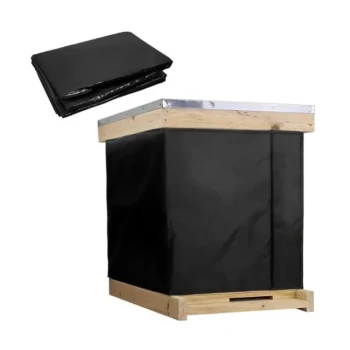
Insulation functions as a critical thermal barrier during summer, preventing external heat from radiating into the colony effectively compared to standard 3/4-inch wood boards. By stabilizing the internal temperature, the colony is relieved of excessive cooling duties, allowing bees to redirect that energy toward foraging and nectar collection.
Core Takeaway Beehives are energy systems; every calorie spent cooling the hive is a calorie not spent producing honey. Insulation is not just about keeping bees warm in winter—it is a productivity tool in summer that maximizes a colony's foraging efficiency by minimizing thermal stress.
The Mechanics of Heat Regulation
The Thermal Shield Effect
Standard wooden hives offer limited protection against intense summer sun.
Insulated hives act as a radiant barrier. Much like a basement stays cool because it is insulated by the surrounding earth, an insulated hive prevents solar heat from penetrating the nest. This creates a stable, cooler internal atmosphere distinct from the volatile outside air.
Reducing the Cooling Load
Bees must maintain a specific internal climate to survive.
Without insulation, the colony must actively combat heat transfer. By blocking heat entry, the insulation drastically reduces the workload required to lower the hive's temperature. The passive structure does the work so the bees don't have to.
The Impact on Colony Productivity
Energy Allocation Efficiency
A bee colony has a finite amount of daily energy.
When a hive overheats, nurse bees and foragers must stay home to fan the comb and fetch water for evaporative cooling. Insulation frees up this workforce. Because the hive stays naturally cooler, these bees can remain in the field gathering nectar and pollen.
Protecting Larval Development
Thermoregulation is a biological imperative, not just a comfort.
The supplementary data indicates that colonies strive to maintain a constant core temperature of approximately 37 degrees Celsius. This specific temperature is a "hardware guarantee" required for successful larval development. Insulation ensures this target is met with minimal stress on the colony's resources.
Understanding the Distinctions (Trade-offs)
Passive Protection vs. Active Cooling
It is important to understand what insulation cannot do.
Insulation does not actively generate cold air (like an air conditioner). It simply slows the rate of temperature change. If a hive is opened frequently in high heat or lacks proper ventilation, insulation can trap internal heat. The benefit relies on the barrier remaining intact to block solar radiation.
The Limitation of Standard Wood
Standard 3/4-inch wood is the baseline, but it is thermally inefficient.
While traditional, thin wood boards allow heat to radiate directly into the nest. Beekeepers using standard equipment must accept that their colonies will expend significantly more energy on thermoregulation than those in insulated environments.
Making the Right Choice for Your Goal
To maximize the potential of your apiary, consider how insulation aligns with your specific objectives:
- If your primary focus is Honey Production: Prioritize insulation to minimize the number of bees required for in-hive cooling, maximizing the foraging workforce.
- If your primary focus is Colony Health: Use insulation to stabilize the core temperature at 37°C, ensuring optimal conditions for sensitive larval development.
By treating insulation as an energy-management tool rather than just weather protection, you transform your hive from a simple shelter into a high-efficiency production environment.
Summary Table:
| Feature | Standard Wooden Hive (3/4") | Insulated Beehive |
|---|---|---|
| Thermal Barrier | Low; heat radiates into the nest | High; blocks solar radiation |
| Energy Allocation | High energy spent on fanning/cooling | Energy redirected to foraging |
| Internal Temp Stability | Volatile; follows external air | Stable; protects core at ~37°C |
| Workforce Utility | More bees stay home to fetch water | More bees in the field gathering nectar |
| Productivity Impact | Limited by thermal stress | Maximized via energy management |
Maximize Your Apiary’s Productivity with HONESTBEE
At HONESTBEE, we understand that every calorie your bees spend cooling the hive is a calorie lost in honey production. We provide commercial apiaries and distributors with high-performance insulated hives, advanced hive-making machinery, and professional honey-filling equipment designed for maximum efficiency.
Whether you are looking to upgrade your wholesale inventory or scale your commercial operations with specialized hardware and essential consumables, our comprehensive portfolio has you covered.
Ready to transform your colony's efficiency? Contact us today to explore our full spectrum of beekeeping solutions!
Related Products
- Professional Insulated Plastic Bee Hives
- Professional Insulated Winter Hive Wrap for Beekeeping
- Inner Beehive Cover for Beekeeping Bee Hive Inner Cover
- Stainless Steel Round Beehive Air Vents for Ventilation
- Wholesales Dadant Size Wooden Bee Hives for Beekeeping
People Also Ask
- What are the advantages of plastic bee hives? Boost Efficiency & Durability for Your Apiary
- Are plastic bee hives any good? Unlock Durability & Efficiency for Your Apiary
- How do plastic bee hives compare to wooden hives in handling? Reduce Strain & Boost Efficiency
- Are plastic bee hives good? Durable, Low-Maintenance Hives for Modern Apiaries
- What are the disadvantages of plastic beehives? Key Operational and Environmental Risks Exposed