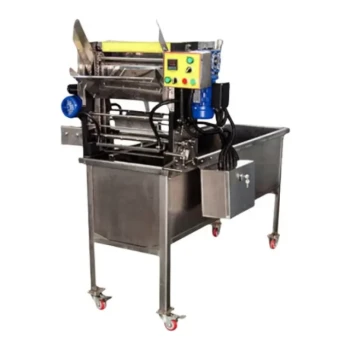
Automated honey-filling equipment preserves mountain forest honey by integrating precision metering with strictly enclosed, hygienic environments. This approach drastically minimizes the honey's exposure to air and contaminants, ensuring that the delicate volatile compounds responsible for the honey's unique aroma and flavor remain intact.
Core Takeaway The preservation of premium honey quality relies on minimizing physical stress and environmental exposure. Automated systems achieve this through enclosed filling loops and anti-shear mechanics that protect the honey's biological enzymes and sensory profile from oxidation, moisture, and heat damage.
The Mechanics of Flavor and Aroma Preservation
Automated filling is not just about speed; it is about maintaining the chemical stability of a complex natural product. Mountain forest honey is particularly valued for its unique sensory profile, which requires specific handling protocols.
Minimizing Air Contact and Oxidation
The primary threat to the sensory value of honey is oxidation. Automated systems utilize enclosed filling environments that isolate the product from the surrounding atmosphere. By reducing contact with oxygen, these machines prevent the degradation of the honey's subtle floral and woody notes.
Preventing Moisture Absorption
Honey is naturally hygroscopic, meaning it absorbs moisture from the air. Automated equipment seals the filling pathway, protecting the honey from atmospheric humidity. This maintains the honey's natural viscosity and prevents fermentation risks associated with excess water content.
Eliminating Cross-Contamination
Manual handling introduces biological risks. Industrial-grade machines operate with rigorous hygiene controls in a closed loop. This significantly reduces the risk of microbial contamination or the introduction of foreign particles, meeting strict organic product standards.
Protecting Biological Integrity
Beyond flavor, premium honey contains sensitive biological components like enzymes. The physical handling of the honey during packaging is critical to preserving these health-promoting properties.
Anti-Shear Technology
High-speed pumping can create shear forces that physically damage the honey's structure. Advanced filling machines employ anti-shear internal components. These reduce mechanical friction, ensuring that sensitive enzymes—such as diastase and invertase—are not denatured during the pumping process.
Precise Temperature Regulation
Viscosity management often requires warming the honey, but excess heat destroys quality. Integrated temperature control systems maintain the honey at the optimal flow temperature without overheating. This prevents thermal damage to volatile aromatic compounds and preserves the raw qualities of the product.
Enhancing Visual Quality and Shelf Life
The visual appeal of honey is a key indicator of its quality to consumers. Automated systems address physical defects that manual pouring cannot avoid.
Controlling Crystallization and Bubbles
Turbulence during filling can trap air bubbles or create crystallization nuclei. Machines equipped with vacuum anti-drip designs ensure a smooth, bubble-free flow. This results in a clear, visually appealing product that resists premature crystallization.
Consistent Sealing
Preservation continues after the fill. Automated systems pair precise dosing with reliable sealing machinery. This creates an airtight environment immediately after filling, locking in the honey’s physicochemical stability throughout its shelf life.
Understanding the Trade-offs
While automation offers superior quality control, it introduces technical complexities that producers must manage.
Complexity of Viscosity Management
Honey viscosity changes drastically with slight temperature shifts. If the machine's temperature controls are not perfectly calibrated, you risk bottlenecks (too cold) or heat damage (too hot). Operators must be skilled in adjusting these parameters for different honey batches.
Maintenance and Cleaning Rigor
The enclosed nature of these systems makes them excellent for hygiene but challenging to clean. Residue in pumps or nozzles can crystallize and cause blockages. Strict clean-in-place (CIP) protocols are mandatory to prevent cross-batch contamination, which adds to operational downtime.
Making the Right Choice for Your Goal
To select the right equipment, you must prioritize your specific production objectives.
- If your primary focus is Enzyme Preservation (Raw/Organic): Prioritize machines with anti-shear positive displacement pumps and low-temperature heating jackets to minimize biological stress.
- If your primary focus is Shelf Appeal and Clarity: Look for systems with vacuum anti-drip nozzles and bottom-up filling capabilities to eliminate air bubbles and foam.
- If your primary focus is Regulatory Compliance: Ensure the equipment features precision flow control technology to guarantee net content accuracy and reduce material waste.
Ultimately, the value of automated filling lies in its ability to handle honey as a delicate biological substance rather than a simple fluid.
Summary Table:
| Feature | Protection Mechanism | Quality Benefit |
|---|---|---|
| Enclosed Filling Loops | Minimizes air and moisture contact | Preserves aroma and prevents fermentation |
| Anti-Shear Pumps | Low-friction mechanical handling | Protects sensitive enzymes (diastase/invertase) |
| Precision Heating | Constant, low-temperature regulation | Prevents thermal damage to raw honey profiles |
| Vacuum Anti-Drip | Bubble-free and laminar flow | Enhances visual clarity and resists crystallization |
| Airtight Sealing | Immediate post-fill containment | Extends shelf life and maintains chemical stability |
Elevate Your Honey Production with HONESTBEE
Maximize the market value of your harvest with professional-grade machinery designed for biological integrity. HONESTBEE specializes in supporting commercial apiaries and distributors with high-performance honey-filling machines, hive-making equipment, and a full spectrum of beekeeping tools.
Whether you are looking to scale your wholesale operations or refine your packaging quality, our expert team provides the specialized hardware and consumables you need to succeed.
Ready to optimize your facility?
Contact HONESTBEE today for a tailored equipment consultation.
References
- Galina Nenasheva, О. В. Денисенко. Melliferous resources in Charyshsky district (Altai Krai). DOI: 10.15421/2019_121
This article is also based on technical information from HonestBee Knowledge Base .
Related Products
- Fully Automatic Honey Filling Packaging Machine for Processing Line
- Automatic Honey Filling and Filtering Machine for Beekeeping Bottle Filling
- Precision Durable Efficient HONESTBEE Rotary Honey Filling Machine
- Semi Automatic Small Honey Bottle Filling Machine Honey Filler
- Precision Automated Packaging Turntable Honey Spoon Filling Sealing Packing Machine
People Also Ask
- Why are fully automatic honey filling and packaging lines essential? Boost Your Honey's Market Value and Quality
- What is a fully-automatic honey filler? Streamline Your Production with High-Precision Automation
- How do automated honey filling and packaging machines affect profitability? Boost Margins with HONESTBEE Technology
- How do automated honey filling and packaging machines contribute to the market value of honey products? Maximize Your ROI
- How do industrial-grade automated honey filling and packaging machines mitigate the risk of physical contamination?