Bee temperament directly determines how safely, efficiently, and predictably an apiary can be managed. Docile, selectively bred colonies make inspections, queen introduction, swarm control, and honey harvesting easier, while defensive colonies increase protective-equipment needs, labor time, and stinging risk. To select and maintain gentle, productive stock, beekeepers need a controlled queen-rearing system built around grafting tools, queen cells, mating nucs, isolation equipment, and accurate colony records.
The central management principle is simple: temperament and productivity must be selected together. Professional queen-rearing equipment gives beekeepers the control needed to reproduce desirable queens, replace aggressive queens, and build manageable colonies without depending on uncontrolled swarms or risky outside genetics.
Why Bee Temperament Matters in Apiary Management
Temperament Changes Daily Operating Risk
Defensive colonies can respond strongly to routine disturbances, including opening the hive, removing frames, or moving brood boxes. Excessive stinging and persistent following behavior create safety concerns for workers, nearby customers, and neighboring apiaries.
Docile colonies generally allow routine work to be completed with less disruption. This is particularly valuable for commercial operations managing many colonies or working in areas with high apiary density.
Temperament Affects Labor Efficiency
Aggressive colonies often require more smoke, heavier protective clothing, slower inspections, and additional worker precautions. These requirements increase handling time and can reduce the number of colonies a team can manage during a workday.
Gentle stock simplifies tasks such as frame inspection, queen introduction, hive-box stacking, and honey harvesting. The operational benefit is not only improved safety but also more consistent labor planning.
Temperament Influences Apiary Expansion
As colony numbers increase, small differences in handling difficulty become significant. A manageable strain supports more efficient use of standardized hive hardware, extraction equipment, and trained staff.
More defensive stock may require enhanced protective gear and specialized handling procedures. Distributors and commercial buyers should therefore evaluate bee genetics alongside hive equipment, safety supplies, and seasonal management requirements.
How Selective Breeding Improves Colony Performance
Select From Proven Colonies
Queen-rearing programs should begin with colonies that demonstrate the desired combination of gentle temperament, honey productivity, disease resistance, and manageable swarming behavior.
Selecting only for honey yield can preserve undesirable defensive traits. Selecting only for gentleness can overlook production, resilience, or seasonal performance.
Maintain Genetic Control
Uncontrolled mating and unmanaged swarming can make colony behavior less predictable. Controlled queen production, mating management, and queen isolation help breeders maintain clearer selection criteria.
Local conditions also matter. Italian, Russian, Buckfast, and other lines can differ in defensive behavior, productivity, seasonal development, and environmental adaptation. Stock should be evaluated in the climate, forage conditions, and management system where it will be used.
Replace Problem Queens Systematically
A persistently defensive colony may require queen replacement rather than repeated attempts to manage its behavior through handling technique alone. Introducing a selected queen can help move the colony toward more desirable characteristics over time.
Replacement decisions should consider the colony’s productivity, disease condition, brood pattern, and likely genetic contribution. Queen-rearing equipment makes this process more systematic and scalable.
Queen-Rearing Equipment for Selecting Better Stock
Grafting Tools
Grafting tools are used to transfer young larvae into queen cell cups. Fine, precise tools help reduce handling damage and improve consistency during queen-rearing work.
For commercial breeders, tool quality affects throughput as well as reliability. Comfortable, well-made grafting tools support repeated production runs and reduce operator fatigue.
Queen Cell Cups and Cell Bars
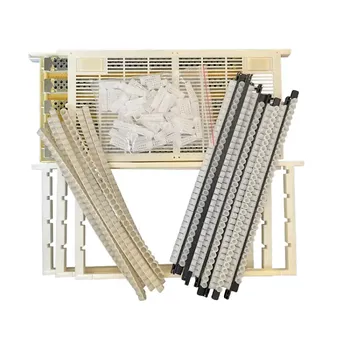
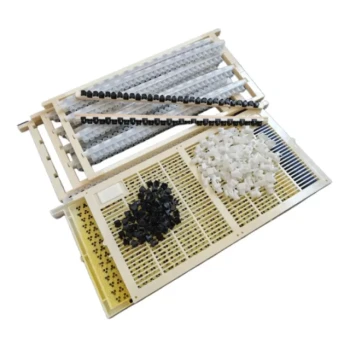
Queen cell cups provide the starting structure in which selected larvae can be raised as queens. Cell bars hold multiple cups in an organized frame, allowing breeders to manage batches efficiently.
Standardized cups and bars also support compatibility with queen-rearing systems, transport containers, and cell protectors. Consistent sizing simplifies ordering and reduces interruptions caused by incompatible components.
Mating Nucs
Mating nucs provide small colonies where virgin queens can mature, mate, and begin laying. They allow breeders to manage more queens with less space and fewer resources than full-sized production colonies.
A suitable mating-nuc program is essential for evaluating whether selected queens establish properly before they are introduced into larger colonies. Distributors serving commercial apiaries should treat mating nucs as core production equipment rather than optional accessories.
Queen Isolation Cages and Cell Protectors
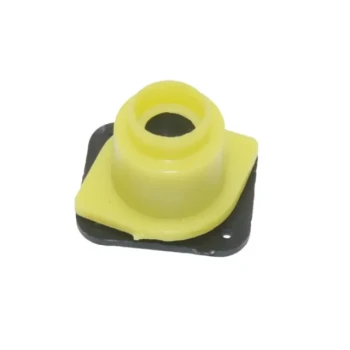
Isolation cages help protect queens during introduction, transport, and specific stages of colony management. Queen cell protectors reduce the risk of damage from worker bees or handling during movement between colonies.
These products are particularly useful when breeders need to prevent premature queen release, protect developing cells, or separate queens during colony transitions.
Queen Marking Pens and Marking Cages
Marking pens and queen marking cages help identify queens by colony, breeding line, introduction date, or production year. Clear identification improves inspections and supports accurate replacement decisions.
For commercial operations, marking is part of traceability. It connects a queen to performance records, mating information, customer orders, and future breeding selections.
Supporting Hive Hardware
Queen-rearing equipment works best with standardized brood frames, modular brood chambers, reliable cell bars, and compatible hive components. Consistent hardware makes it easier to move queens, manage brood space, and organize colonies at scale.
Disease-monitoring supplies, protective clothing, smokers, and suitable hive-handling tools are also important. Queen quality cannot compensate for poor colony hygiene, inadequate inspection, or unsuitable equipment.
Connecting Temperament With Productivity
Evaluate the Whole Colony
A productive queen should not be judged by honey yield alone. Breeders should also observe colony gentleness, brood pattern, disease resistance, swarming tendency, seasonal buildup, and survival under local conditions.
This broader evaluation reduces the risk of propagating a high-producing colony that is difficult or unsafe to manage.
Match Stock to Local Conditions
A bee line that performs well in one environment may not perform equally well elsewhere. Climate, nectar availability, winter conditions, disease pressure, and local mating populations all influence results.
For example, some lines are valued for docility and strong honey production, while others may offer greater hardiness in demanding climates. Equipment and management plans should reflect those biological differences.
Manage Swarming Pressure
Swarming can interrupt honey production and reduce predictable colony growth. Queen management, modular brood chambers, adequate space, and timely inspections help beekeepers manage colony division before it becomes an unscheduled event.
Mating nucs and queen-rearing supplies also give commercial operators more control over planned increases and queen replacement.
Understanding the Trade-offs
Pure Strains and Hybrids Require Careful Evaluation
Hybridization can produce useful traits, but it may also result in inconsistent temperament, increased defensiveness, or objectionable following behavior. The outcome depends on the specific genetics and mating conditions rather than on the label “hybrid” alone.
Breeders should assess actual colony performance instead of assuming that every pure strain or hybrid line will behave identically.
More Protective Equipment Does Not Solve Genetic Problems
Veils, gloves, suits, smokers, and specialized hive tools reduce exposure during handling. They do not remove the labor burden or long-term management difficulty associated with consistently defensive stock.
Protective equipment is essential, but selective queen replacement is the more direct tool for improving inherited temperament.
Equipment Cannot Replace Good Breeding Records
Grafting tools and cell cups enable queen production, but they do not establish selection quality by themselves. Without records linking queens to colony behavior and productivity, a breeding program can reproduce undesirable traits as efficiently as desirable ones.
Commercial operators should track queen identity, source colony, mating information where available, introduction date, and performance observations.
Biosecurity Limits Uncontrolled Sourcing
Honeybee movement and imports may be restricted because of pathogen, invasive-species, and aggressive-strain risks. Relying on uncontrolled outside colonies can introduce both biological and regulatory problems.
Localized, documented queen-rearing programs help apiaries maintain genetic control while supporting compliance and colony health.
Making the Right Choice for Your Goal
The appropriate equipment package depends on whether the priority is routine production, genetic improvement, or commercial distribution.
- If your primary focus is safer routine management: Prioritize queens from proven docile colonies, queen marking supplies, isolation cages, protective equipment, and standardized hive hardware.
- If your primary focus is higher honey productivity: Combine colony performance records with grafting tools, queen cell cups, cell bars, mating nucs, and reliable brood-management equipment.
- If your primary focus is selective breeding: Build a complete system with precision grafting tools, protected queen cells, mating nucs, marking equipment, isolation hardware, and detailed colony records.
- If your primary focus is commercial apiary expansion: Source compatible, standardized equipment in volume and maintain rapid access to consumables, replacement queens, protective gear, and disease-monitoring supplies.
- If your primary focus is distributor or reseller service: Offer a full-spectrum queen-rearing portfolio supported by consistent specifications, responsive technical assistance, dependable fulfillment, and equipment compatibility guidance.
A disciplined queen-rearing program turns temperament and productivity from uncertain colony traits into measurable, manageable breeding objectives.
Summary Table:
| Factor | Impact on Apiary Management | Equipment/Strategy to Address |
|---|---|---|
| Safety | Aggressive colonies increase stinging risk and require heavier protective gear. | Select docile queens; use protective clothing and smokers. |
| Labor Efficiency | Defensive colonies slow inspections and increase handling time. | Rearing with grafting tools and mating nucs to produce gentle stock. |
| Colony Expansion | Difficult stock complicates scaling up operations. | Use standardized hive hardware and systematic queen replacement. |
| Selective Breeding | Choosing only for honey yield may preserve defensiveness. | Keep detailed records; mark queens for traceability. |
| Genetic Control | Uncontrolled mating leads to unpredictable behavior. | Use isolation cages and controlled mating nucs. |
| Swarming Management | Swarms reduce productivity and disrupt plans. | Manage space with modular brood chambers and timely queen management. |
Ready to enhance your apiary with docile, high-performing queens? At HONESTBEE, we supply comprehensive queen-rearing equipment—from grafting tools to mating nucs—tailored for commercial apiaries and distributors. Our full-spectrum portfolio ensures you get everything you need for genetic selection, with rapid delivery and dedicated support. Contact us today to discuss your requirements and discover how we can help you achieve gentler, more productive colonies—efficiently and reliably. Contact us to get started.
Related Products
- Retractable Chinese Queen Rearing Grafting Tools Equipment
- HONESTBEE Improved No Grafting Queen Rearing Kit For Queen Rearing and Royal Jelly Production
- No Grafting Queen Rearing Kit: System for Royal Jelly Production and Queen Rearing
- Premium Nicot Style Queen Rearing Kit with Hair Roller Bee Cages
- Nicot Queen Rearing Kit for Beekeeping and Grafting in Nicot System
People Also Ask
- Which specialized tools are necessary for implementing standardized queen rearing? Scale Your High-Yield Apiary
- How does selective queen rearing benefit an apiary? Discover Essential Tools for High-Quality Queen Bees
- Why are specialized queen rearing tools necessary to mitigate winter hive losses? Boost Apiary Survival and Recovery
- What operational workflows and queen rearing tools are required for implementing instrumental insemination and isolated mating in commercial queen breeding programs?
- How do queen-rearing tools facilitate the sustainability and expansion of a commercial apiary? Drive Scalable Growth