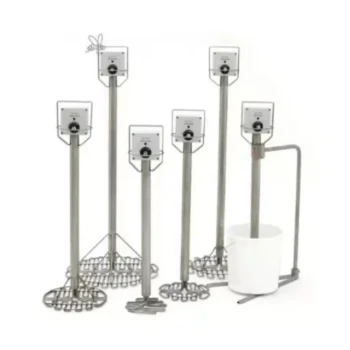
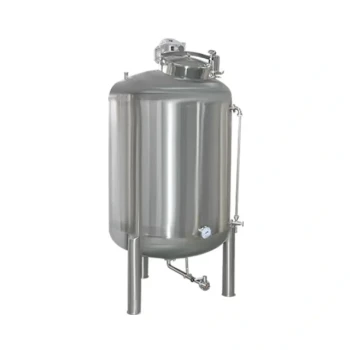
Indirect heating equipment operating between 60°C and 70°C serves as a critical processing tool designed to balance the physical handling of honey with its biological stability. By utilizing constant temperature water baths or jacketed kettles, this method applies uniform heat to drastically reduce viscosity, dissolve microscopic crystal nuclei, and inhibit fermentation-causing microorganisms, thereby preparing the honey for precision filtration and automated bottling.
The Core Insight: The use of indirect heat at this specific temperature range is not just about warming the product; it is a calculated technical measure to achieve commercial shelf stability and efficient flow without subjecting the honey to the scorching risks associated with direct heating.
The Mechanics of Viscosity and Flow
Uniform Thermal Transfer
Indirect heating systems, such as jacketed heating kettles, avoid direct contact between the heat source and the honey. This prevents dangerous "hot spots" that can locally burn sugars.
Instead, the equipment uses a medium (like water) to transfer heat evenly. This ensures every portion of the batch reaches the target temperature of 60°C to 70°C simultaneously.
Facilitating Precision Filtration
At ambient temperatures, honey is often too thick to pass through fine filters. Heating the honey to this range significantly reduces its viscosity.
This liquefaction allows the honey to pass through precision filters, removing physical contaminants and debris that could impact the final product quality.
Enabling Automated Bottling
Modern production lines rely on consistent flow rates. Cold honey moves too slowly and unpredictably for high-speed machinery.
Maintaining the honey within this heated range ensures it remains fluid, allowing for rapid, accurate, and automated packaging without clogging equipment.
Stabilization and Shelf Life Extension
Dissolving Crystal Nuclei
Honey naturally tends to crystallize over time, a process accelerated by microscopic sugar crystals acting as "seeds."
Operating at 60°C to 70°C is sufficient to dissolve these microscopic nuclei. Removing these seeds effectively resets the crystallization timeline, preventing the honey from becoming gritty or solidifying on the shelf.
Eliminating Fermentation Risks
Yeast is the primary antagonist of honey shelf life, leading to fermentation and spoilage.
Indirect heating at these temperatures acts as a preservation step by eliminating microorganisms responsible for fermentation. This allows the honey to remain stable during long-term storage without stratifying or spoiling.
Moisture Control
Controlled heat treatment in this range can also aid in reducing moisture content. Lower moisture levels significantly enhance the honey's natural preservative capabilities and further discourage fermentation.
Understanding the Trade-offs: Heat vs. Quality
The Risk of HMF Accumulation
While 60°C to 70°C is effective for processing, honey is extremely heat-sensitive. Prolonged exposure to these temperatures can lead to a spike in Hydroxymethylfurfural (HMF).
High HMF levels are a primary indicator of thermal damage and can negatively impact the commercial grading of the honey.
Enzyme Inactivation
Beneficial enzymes, specifically Diastase and Invertase, are fragile. Industrial pasteurization often pushes temperatures to 75°C to ensure total yeast destruction, but this can reduce Invertase activity by over 70%.
Processing at 60°C to 70°C is "milder," but strict time controls are still required. The equipment’s temperature stability is the deciding factor in preserving nutritional activity.
Making the Right Choice for Your Goal
To maximize quality, you must tailor the heating duration to your specific objective.
- If your primary focus is Commercial Shelf Life: Prioritize holding the temperature long enough to fully dissolve crystal nuclei and lower moisture, ensuring the product remains liquid for months.
- If your primary focus is Nutritional Integrity: Minimize the dwell time at 60°C–70°C to process the honey quickly, preserving the maximum amount of Diastase and Invertase enzymes.
The superior quality of the final product is ultimately determined by the precision and stability of your thermal control system.
Summary Table:
| Process Objective | Mechanism | Key Benefit |
|---|---|---|
| Viscosity Reduction | Uniform thermal transfer via jacketed kettles | Faster filtration and high-speed automated bottling |
| Crystallization Control | Dissolving microscopic sugar nuclei | Prevents solidifying and ensures long-term shelf liquidity |
| Microbial Stability | Elimination of yeast and microorganisms | Prevents fermentation and spoilage during storage |
| Quality Preservation | Precise temperature monitoring | Balances effective processing with minimal enzyme loss |
Elevate Your Honey Production with HONESTBEE
Maximize your honey's quality and shelf stability with professional-grade thermal solutions. HONESTBEE provides commercial apiaries and distributors with high-precision indirect heating systems, honey-filling machines, and advanced hive-making equipment.
Our comprehensive wholesale offering includes everything from specialized hardware to essential industry consumables, ensuring your facility operates with peak efficiency and minimal heat damage. Whether you are scaling up your bottling line or sourcing durable beekeeping tools, we are here to support your growth.
Contact HONESTBEE Today to Discuss Your Equipment Needs
References
- Misbhauddin Khan, M Balasubramanyam. Chemical Characteristics of Honey of Indigenous Giant Bee Apis Dorsata F. and Hive Bee Apis Cerana Indica. DOI: 10.24214/jcbps.b.13.2.20109
This article is also based on technical information from HonestBee Knowledge Base .
Related Products
- Stainless Steel Heated Honey Tank Warming Heating Tank
- 0.5T Capacity Honey Dehumidifier Dryer with Vacuum Heating and Thickening Filtering Machine
- Honey Concentrating Vacuum Heating Thickening Machine Dehumidifier for Honey
- Silicone Rubber Honey Drum Heating Belt
- Honey Tank Heater Drum Heating Blanket for Honey Barrel
People Also Ask
- What are the benefits of precise temperature control in honey heating tanks? Preserve Quality and Efficiency
- How do honey heating tanks offer scalability for growing beekeeping operations? Strategic Equipment Growth Solutions
- What features of a honey heating tank contribute to hygiene? Ensure Purity with Stainless Steel & Sanitary Design
- What is the primary role of a honey heating tank? Enhance Your Honey Processing Flow and Quality
- What is the purpose of using heating tanks or constant temperature water baths in honey dehydration? Optimize Purity & Flow