Industrial-grade hive manufacturing equipment fundamentally transforms commercial beekeeping by enabling the high-precision mass production of standardized components. This machinery ensures total interchangeability of frames and hive bodies across thousands of colonies, creating a consistent hardware ecosystem. By providing this infrastructure, operators can streamlined critical tasks like splitting, merging, and harvesting while possessing the capacity to rapidly replenish colonies in response to high annual loss rates.
Core Takeaway The primary value of industrial hive manufacturing is not just production speed, but the creation of a standardized logistical framework. It enables commercial apiaries to treat hives as interchangeable assets rather than individual units, allowing for mechanized workflows, lower unit costs, and the resilience needed to manage large populations effectively.
The Strategic Role of Standardization
Achieving Total Interchangeability
The most critical function of this equipment is ensuring every hive body, frame, and bottom board is dimensionally identical.
In a large-scale operation, components must be swapped seamlessly between thousands of different colonies without modification.
This precision eliminates friction during maintenance, allowing apiarists to mix and match hardware instantly.
Enabling Mechanization and Logistics
Standardized dimensions are required for modern warehousing logic and palletized transportation.
Uniform hives stack securely for transport, maximizing space on trucks for migratory beekeeping.
Furthermore, automated honey extraction lines require precise frame dimensions to function without jamming or damaging equipment.
Operational Efficiency and Colony Management
Accelerating Routine Operations
Industrial machinery produces hardware that supports fast-paced field operations.
Tasks such as colony splitting (creating new hives) and merging (combining hives) become significantly faster when parts fit together perfectly every time.
This efficiency allows fewer staff to manage a larger number of hives, directly impacting labor costs.
Supporting Rapid Replenishment
Commercial beekeeping often faces high annual colony loss rates.
To recover, operations must rapidly split surviving colonies to rebuild their numbers.
Industrial manufacturing provides the immediate hardware infrastructure needed to house these new splits, ensuring the apiary can bounce back to full capacity quickly.
Economic Implications and Scalability
Reducing Unit Production Costs
Automated manufacturing processes, such as CNC cutting and molding, lower the cost per hive compared to manual methods.
By producing large batches of components using wood or composite materials, operations achieve significant economies of scale.
Facilitating In-House Expansion
Owning specialized hive-making machinery allows apiaries to produce equipment in-house.
This reduces the capital investment required to expand colony sizes, as the operator pays for raw materials rather than finished retail products.
It provides the technical foundation necessary for maintaining high-density beekeeping industries and moving toward export-oriented models.
Understanding the Trade-offs
Initial Capital vs. Long-Term Savings
While industrial machinery lowers the unit cost of hives, the initial acquisition cost of the manufacturing equipment is significant.
Operators must balance this upfront capital expenditure against the long-term savings in hive procurement and labor efficiency.
Maintenance and Technical Skill
Transitioning from manual repair to industrial manufacturing requires new technical competencies.
Maintaing high-precision woodworking or molding equipment introduces a new layer of infrastructure maintenance costs.
Success depends on having the technical support to keep these production lines running.
Making the Right Choice for Your Goal
To determine how to integrate this technology into your operation, consider your primary strategic objective:
- If your primary focus is Rapid Expansion: Leverage in-house manufacturing to minimize the capital investment per new colony established.
- If your primary focus is Operational Efficiency: Prioritize equipment that guarantees high-precision standardization to enable automated harvesting and palletized transport.
- If your primary focus is Risk Management: Use the machinery to build a surplus inventory of interchangeable hardware, ensuring you can immediately recover from high colony losses.
Industrial hive manufacturing is the hardware backbone that allows beekeeping to shift from a craft to a scalable industry.
Summary Table:
| Feature | Strategic Benefit for Commercial Apiaries | Operational Impact |
|---|---|---|
| High-Precision Standardization | Total interchangeability of frames and hive bodies | Seamless maintenance and faster field operations |
| Mass Production Speed | Rapid replenishment of colony hardware | Quick recovery from annual colony losses |
| Dimensional Uniformity | Compatibility with automated extraction & palletization | Optimized logistics and lower labor costs |
| In-house Manufacturing | Reduction in unit production costs | Scalable expansion with lower capital investment |
Scale Your Apiary with HONESTBEE Industry Solutions
Transitioning from a craft to a scalable industry requires more than just tools—it requires an integrated hardware ecosystem. HONESTBEE specializes in empowering commercial apiaries and distributors with the high-precision machinery needed to dominate the market.
From CNC hive-making machines and automated honey-filling lines to a comprehensive range of professional beekeeping tools and essential consumables, we provide the technical foundation for your success. Whether you are looking to lower your unit costs or expand your colony count, our wholesale offerings are designed to grow with you.
Ready to modernize your operation? Contact us today to discover how HONESTBEE can streamline your production and boost your operational efficiency.
References
- Fabrice Réquier, Karina Antúnez. First large-scale study reveals important losses of managed honey bee and stingless bee colonies in Latin America. DOI: 10.1038/s41598-024-59513-6
This article is also based on technical information from HonestBee Knowledge Base .
Related Products
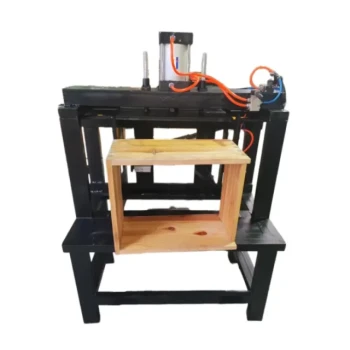
- High-Efficiency Pneumatic Bee Hive Making Machine for Rapid Box Assembly
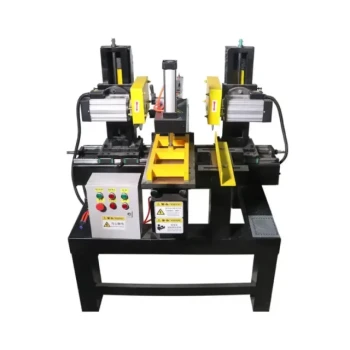
- Beehive Machine Double End Saw for Precision Hive Component Manufacturing
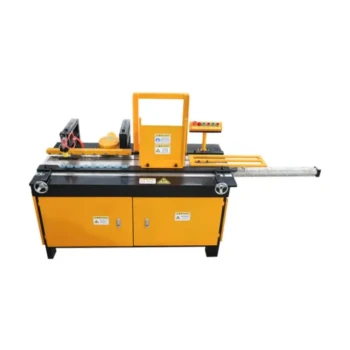
- Beehive Handle and Frame Rest Cutting Machine: Your Specialized Hive Machine
- Professional Grade Foldable Beehive Handles
- Mini Desktop Bee Hive Frame Forming Making Machine
People Also Ask
- How does the introduction of professional beehive-making machinery benefit sustainable beekeeping? Scale Your Apiary
- Why is specialized beehive-making machinery critical for low-defense breeding? Enhance Selection with Precision Tools
- How does the introduction of specialized beehive making machinery contribute to increasing the scale of regional beekeeping industries?
- What is the importance of specialized beehive making machinery in a circular bio-economy? Build Local Sustainability
- Why is specialized beehive-making machinery essential? Scale Your Apiary with Precision Industrial Standards