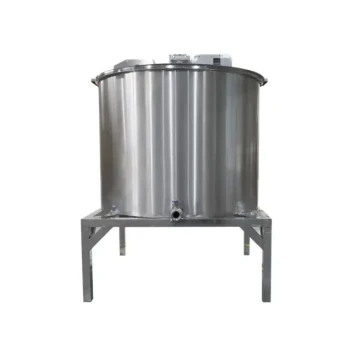
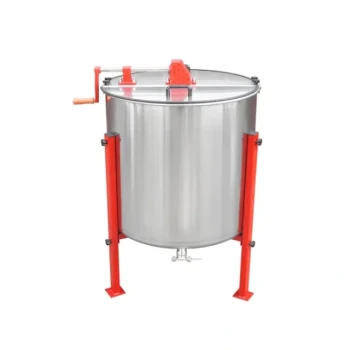
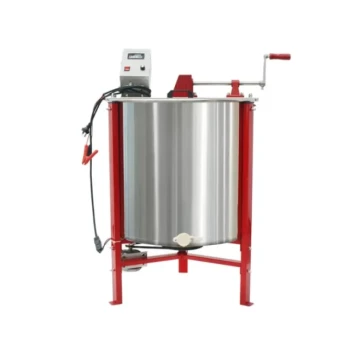
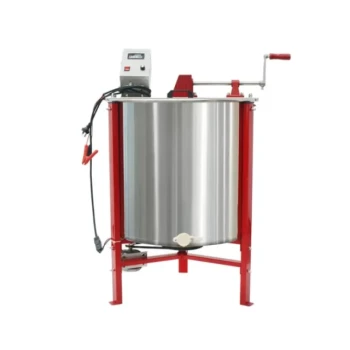
Industrial-grade honey extraction machinery facilitates monofloral collection by providing the rapid processing capacity necessary to handle the explosive production surges characteristic of specific bee breeds during short flowering windows.
This equipment aligns mechanical throughput with biological peak performance. By processing high volumes instantly, it allows beekeepers to capitalize on the brief availability of nectar sources like linden or buckwheat, ensuring the harvest is secured before the season changes or the nectar flow dilutes.
Core Takeaway The value of industrial machinery in monofloral honey production lies in synchronization with nature. It enables the rapid harvest of nectar from highly efficient bee breeds during fleeting bloom periods, while simultaneously preserving the honeycomb to allow immediate reuse by the colony for maximum yield.
Synchronizing Mechanics with Bee Genetics
Matching the Speed of Efficient Breeds
Certain bee breeds, such as the Central Russian bee, are genetically predisposed to utilize concentrated nectar sources with extreme efficiency.
These breeds generate massive yields rapidly when specific plants bloom.
Industrial machinery provides the high-capacity throughput required to process these surges without creating a bottleneck in the operation.
Capturing Short Nectar Flows
Monofloral honey relies on a single dominant plant source, such as linden or buckwheat.
These plants often have very short, intense flowering windows.
High-speed extraction ensures that peak production yields are processed immediately, allowing the apiary to maximize output during this limited timeframe.
optimizing the Biological Cycle
Preserving the Honeycomb Structure
Modern industrial systems primarily utilize centrifugal force to separate honey from the frame.
Unlike traditional squeezing methods, this technique leaves the physical structure of the wax comb intact.
This is critical for efficiency, as it allows the frame to be returned to the hive immediately.
Energy Conservation for the Colony
Building wax requires significant energy and time from the bee colony.
By returning intact frames (emptied by centrifugal extractors), the bees are spared the task of rebuilding the honeycomb.
This allows the specific bee breed to focus its energy entirely on foraging and nectar collection, significantly increasing the volume of monofloral honey gathered during the short bloom.
Quality Control and Standardization
Maintaining Monofloral Purity
Industrial machinery often features sealed designs to prevent environmental cross-contamination.
This isolation is essential for preserving the unique flavor profiles and biological characteristics that define monofloral varieties like litchi or eucalyptus honey.
Hygiene and Export Compliance
For operations targeting international markets, hygiene is paramount.
Automated filling and processing machines eliminate manual handling, reducing the risk of antibiotic or bacterial contamination.
This ensures the final product meets the stringent physical property stability and hygiene standards required for global export.
Understanding the Trade-offs
Capital Investment vs. Operational Window
While industrial machinery maximizes yield, it represents a significant upfront cost.
This investment is most logical for operations located in regions with high annual production or intense, short-duration nectar flows.
For smaller operations with extended, low-intensity flows, the ROI on high-throughput machinery may be lower.
Dependency on Uniformity
Industrial extractors work best with standardized frames and hives.
This requires the beekeeper to maintain a uniform apiary infrastructure.
Variations in frame size or comb structure can reduce the efficiency of automated un-capping and extraction lines.
Making the Right Choice for Your Goal
To determine if industrial extraction is the right approach for your monofloral production, consider your specific operational targets:
- If your primary focus is maximizing volume during short blooms: Prioritize high-capacity centrifugal extractors to keep pace with efficient breeds like the Central Russian bee.
- If your primary focus is organic certification and export: Focus on sealed, automated processing lines that guarantee hygiene and prevent cross-contamination.
- If your primary focus is colony health and turnover: Select equipment that emphasizes gentle centrifugal action to preserve comb integrity and reduce colony energy expenditure.
Ultimately, industrial machinery is not just a processing tool, but a strategic asset that converts the biological efficiency of your bees into a viable commercial timeline.
Summary Table:
| Feature | Industrial Impact on Monofloral Production | Key Benefit |
|---|---|---|
| High Throughput | Processes massive surges from efficient breeds like Central Russian bees | Prevents bottlenecks during short blooms |
| Centrifugal Action | Extracts honey while leaving the wax comb structure intact | Saves colony energy; allows immediate frame reuse |
| Sealed Design | Prevents environmental cross-contamination and flavor mixing | Preserves unique monofloral purity and taste |
| Automation | Eliminates manual handling and reduces contamination risks | Ensures compliance for international export |
Maximize Your Apiary's Commercial Potential with HONESTBEE
At HONESTBEE, we understand that in the world of professional beekeeping, timing is everything. Whether you are a commercial apiary or a global distributor, our comprehensive wholesale solutions are designed to synchronize your operations with nature’s peak performance.
We provide a full spectrum of high-capacity beekeeping tools and machinery—from automated honey-filling systems and precision hive-making machines to essential consumables. Our industrial-grade extraction equipment ensures you capture every drop of premium monofloral honey while preserving your colony's health and productivity.
Ready to scale your production and dominate the market? Contact us today to explore our wholesale offerings
References
- Susanna Arestovna Pashayan, E.A. Pshenichnaya. Productive qualities of bees of the Central Russian and Carpathian breeds. DOI: 10.1051/bioconf/202413910001
This article is also based on technical information from HonestBee Knowledge Base .
Related Products
- HONESTBEE 72 Frame Industrial Electric Honey Extractor for Beekeeping
- 32 Frame Commercial Electric Honey Extractor for Beekeeping and Honey Production
- Stainless Steel Manual 8 Frame Radial Honey Extractor Machine for Beehives
- Commercial 48-Frame Stainless Steel Honey Extractor
- Commercial Electric 12 Frame Honey Extractor Spinner Motorized Honey Extractor
People Also Ask
- What is the importance of balancing honeycomb frames within a honey extractor? Ensure Stability and Protect Machinery
- How is honey separated from the frames after they are uncapped? Efficient Extraction Methods for High Yields
- What are the main benefits of using a honey extractor? Maximize Yields and Protect Your Honeycomb
- What are the recommended methods for removing honey from the honeycomb? Top Extraction Techniques for Maximum Efficiency
- How do manual honey extractors compare to electric honey extractors? Choosing the Right Tool for Your Apiary Growth