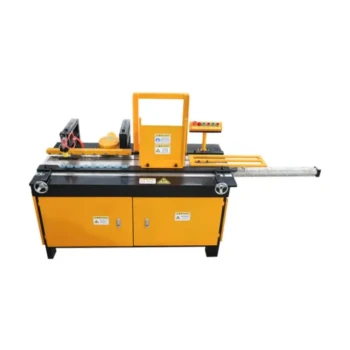
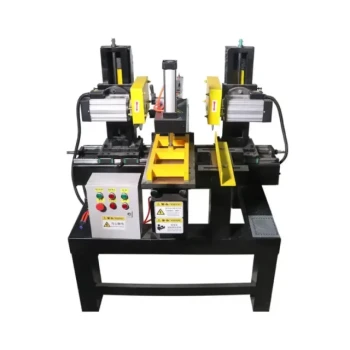
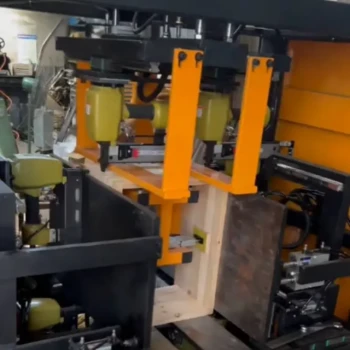
Industrial hive-making machinery acts as the logistical backbone for disaster response in apiculture. It supports recovery by enabling the rapid, standardized, and large-scale manufacturing of beehives to replace infrastructure destroyed by events like hurricanes. By eliminating the bottleneck of manual construction, these machines allow commercial apiaries to rebuild housing capacity immediately, which is the prerequisite for restoring honey output and stabilizing market prices.
The loss of bee colonies during a disaster is a biological crisis, but the loss of hives is an infrastructural one. Industrial machinery solves the infrastructure problem, ensuring that when bee populations recover or are replaced, the physical housing required for production is already available.
Rapid Restoration of Production Capacity
Bridging the Infrastructure Gap
Natural disasters frequently destroy both commercial apiaries and wild bee nests. The immediate bottleneck to recovery is often not the lack of bees, but the lack of hives to house them. Industrial machinery allows producers to generate housing inventory at a speed that manual carpentry cannot match, ensuring the physical foundation for recovery is laid quickly.
Mitigating Market Volatility
When hive capacity is lost, honey supply drops, leading to sharp price volatility. By accelerating the deployment of new hives, industrial machinery helps producers return to full operational capacity faster. This speed is critical for stabilizing the honey supply chain and preventing long-term economic disruption in the local market.
The Strategic Value of Standardization
Optimizing the Habitat
Recovery is not just about quantity; it is about consistency. Specialized hive-making machinery produces high-precision, uniform hardware. This standardization provides a controlled habitat that supports colony health more effectively than hastily constructed, irregular improvised hives.
Facilitating Mechanized Operations
Standardized hives produced by industrial machines are essential for modern workflow integration. Uniform dimensions allow for the use of automated harvesting equipment and transport vehicles. This compatibility is vital for migratory beekeeping, allowing recovering apiaries to move colonies to optimal forage zones without logistical friction.
Enhancing Bioactivity Control
Precise hive construction improves the sealing and management of the colony. This helps beekeepers control foraging more strictly, reducing the mixing of non-target pollens. This precision preserves the specific floral profile and bioactivity of premium honeys, ensuring that recovered production meets high-quality standards.
Economic Efficiency and Scaling
Reducing Capital Expenditure
Industrial-scale machinery enables enterprises to achieve self-sufficiency in hive production. This significantly lowers the cost per unit compared to purchasing hand-made hives or outsourcing. For an apiary attempting to rebuild after a financial loss, this reduction in capital expenditure is a crucial survival mechanism.
Enabling Labor Allocation
Automating hive construction releases human labor from repetitive woodworking tasks. Staff can be redeployed to high-value biological management tasks, such as queen rearing or colony health monitoring. This shift increases the overall management level and economic returns of the enterprise.
Understanding the Trade-offs
High Upfront Investment
While the cost per hive drops over time, the machinery itself represents a significant initial capital outlay. Small-scale apiaries may find the cost of industrial-grade equipment prohibitive compared to traditional methods, potentially limiting this solution to larger cooperatives or commercial enterprises.
Reliance on Technical Infrastructure
Shifting to industrial production introduces a dependency on mechanical maintenance and power. Operational resilience now depends on equipment uptime. If the disaster that destroyed the hives also damaged the power grid or the manufacturing facility, the capacity to recover is temporarily paralyzed.
Making the Right Choice for Your Goal
To leverage hive-making technology effectively, align your equipment choice with your specific recovery or production objectives.
- If your primary focus is Rapid Disaster Recovery: Prioritize high-throughput machinery that maximizes the volume of standard hive bodies to re-house colonies immediately.
- If your primary focus is Premium Honey Quality: Select precision machinery capable of creating tight-tolerance seals to control internal hive conditions and isolate floral sources.
- If your primary focus is Cost Management: Invest in versatile machinery that allows for self-sufficiency in manufacturing, reducing long-term dependence on external hardware suppliers.
Ultimately, industrial hive-making machinery transforms hive construction from a craft constraint into a scalable logistical advantage.
Summary Table:
| Recovery Aspect | Role of Industrial Machinery | Strategic Benefit |
|---|---|---|
| Capacity | Rapid, large-scale manufacturing of hive bodies | Bridges the infrastructure gap quickly |
| Consistency | Standardized, high-precision hardware production | Supports colony health and mechanized workflow |
| Cost | Reduces per-unit capital expenditure | Improves long-term ROI and self-sufficiency |
| Labor | Automates woodworking and hive assembly | Frees staff for queen rearing and colony management |
Rebuild Your Apiary with Industrial Precision
Natural disasters shouldn't paralyze your production. HONESTBEE empowers commercial apiaries and distributors to overcome logistical bottlenecks with our professional-grade hive-making and honey-filling machinery.
Whether you are scaling up operations or recovering from infrastructure loss, our comprehensive wholesale offering provides everything from specialized hardware to essential industry consumables. Partner with us to ensure your honey production remains resilient, standardized, and profitable.
Ready to scale your beekeeping infrastructure?
References
- Samuel Luis-Rojas, Benito Ramírez Valverde. INTERVENTION AND FORECAST MODELS FOR THE PRICE PAID TO PRODUCER OF BEE (Apis mellifera L.) HONEY IN MEXICO. DOI: 10.47163/agrociencia.v56i3.2807
This article is also based on technical information from HonestBee Knowledge Base .
Related Products
- High-Efficiency Pneumatic Bee Hive Making Machine for Rapid Box Assembly
- Beehive Handle and Frame Rest Cutting Machine: Your Specialized Hive Machine
- Beehive Machine Double End Saw for Precision Hive Component Manufacturing
- Automatic High-Speed Bee Hive Box Stapling Machine
- Mini Desktop Bee Hive Frame Forming Making Machine
People Also Ask
- How does the introduction of professional beehive-making machinery benefit sustainable beekeeping? Scale Your Apiary
- Why is specialized beehive-making machinery critical for low-defense breeding? Enhance Selection with Precision Tools
- How does the introduction of specialized beehive making machinery contribute to increasing the scale of regional beekeeping industries?
- What is the importance of specialized beehive making machinery in a circular bio-economy? Build Local Sustainability
- Why is specialized beehive-making machinery essential? Scale Your Apiary with Precision Industrial Standards