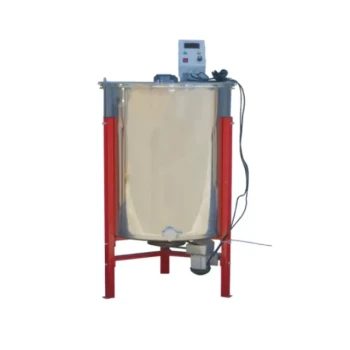
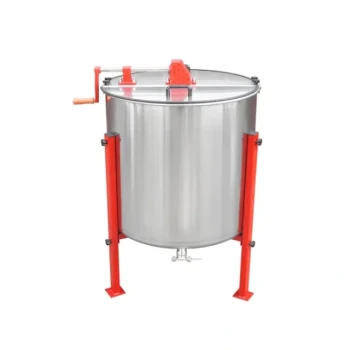
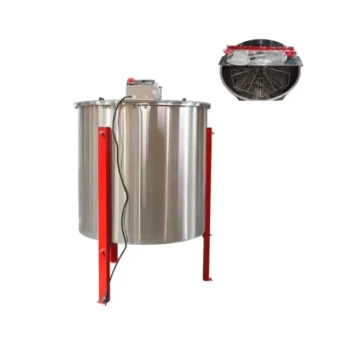
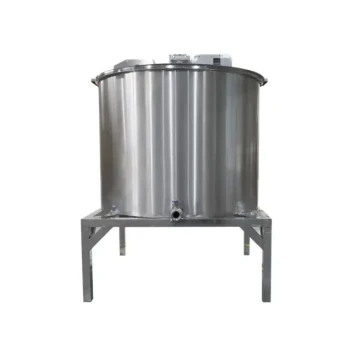
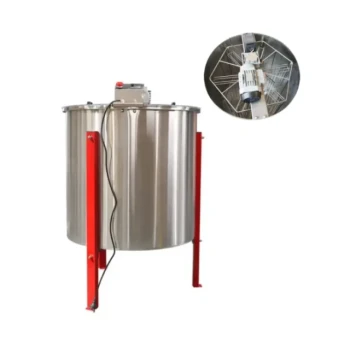
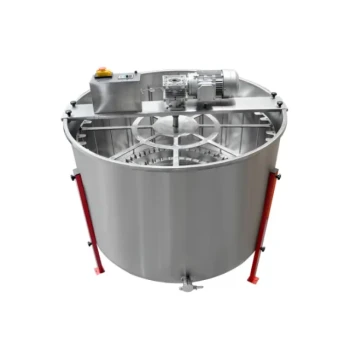
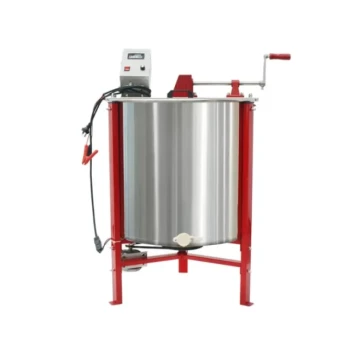
Mechanized honey extraction relies on centrifugal force to harvest honey while keeping the structural integrity of the honeycomb intact. This process serves as a dual-function strategy: it protects your most valuable physical asset—the drawn wax comb—while necessitating specific post-harvest protocols to mitigate pest risks like wax moths.
Core Insight Mechanized extraction transforms the honeycomb from a consumable resource into a renewable asset by separating honey without destroying the wax structure. However, preserving these wet frames creates a biological vulnerability; without strict post-extraction processing, the reusable combs can easily become breeding grounds for pests.
The Mechanism of Asset Protection
Preservation via Centrifugal Force
The primary value of mechanized extraction is the use of centrifugal force. Unlike traditional crush-and-strain methods, this technology spins the honey out of the frame without destroying the honeycomb structure.
This ensures the high-value wax combs are preserved. By maintaining the physical integrity of the comb, the apiary retains a critical production asset that would otherwise take significant time and resources to rebuild.
Reducing Biological Energy Expenditure
Protecting the physical asset directly benefits the biological asset: the bee colony. When honeycombs are recycled rather than destroyed, bees are spared the energy-intensive process of secreting new wax.
This allows the colony to redirect energy toward nectar collection and brood rearing. Consequently, this leads to a substantial increase in annual honey yield per hive and enhances overall production efficiency.
Managing Pest Risks in Preserved Assets
The Wax Moth Vulnerability
While preserving combs is economically advantageous, it introduces a specific pest control challenge. The primary reference highlights that residual cells in extracted frames can become attractive breeding grounds for wax moths if not managed correctly.
Because the comb is left intact, it retains scents and organic matter that attract pests. If these frames are stored improperly after extraction, an infestation can destroy the very asset you worked to preserve.
Standardization as a Control Measure
To mitigate this risk, extracted frames must be processed according to standard protocols. Mechanized equipment supports this by standardizing the extraction workflow, ensuring frames are cleared of honey efficiently and prepared for treatment or storage.
Intensive processing ensures that frames are handled under hygienic conditions. This reduces the likelihood of biological residue lingering long enough to attract pests before the frames are secured in storage.
Understanding the Trade-offs
Storage vs. Destruction
The decision to use mechanized extraction involves a clear trade-off. You gain production speed and higher yields by reusing combs, but you inherit the logistical burden of protecting those empty combs during the off-season.
Maintenance Overhead
While the machinery reduces labor during the harvest, it shifts some labor toward equipment maintenance and storage hygiene. Failing to follow through on post-extraction protocols negates the benefit of the machinery; a preserved comb destroyed by moths in storage is a total loss.
Making the Right Choice for Your Goal
To maximize the benefits of mechanized extraction while minimizing pest risks, align your workflow with your specific operational focus:
- If your primary focus is Maximizing Yield: Prioritize centrifugal extractors that handle frames gently to ensure the highest percentage of combs can be immediately returned to the hive for refilling.
- If your primary focus is Asset Longevity: Implement a strict post-extraction protocol immediately after spinning, treating or freezing frames to neutralize potential wax moth eggs before long-term storage.
Mechanization transforms the honeycomb from a disposable by-product into a permanent capital asset, provided you commit to the hygiene standards required to protect it.
Summary Table:
| Feature | Impact on Asset Protection | Impact on Pest Control |
|---|---|---|
| Centrifugal Force | Preserves structural integrity of high-value wax combs. | Minimizes organic residue through efficient clearing. |
| Comb Reusability | Eliminates the need for bees to secrete new wax; saves energy. | Requires strict post-harvest storage protocols to prevent infestation. |
| Standardized Workflow | Increases annual honey yield by keeping frames production-ready. | Reduces biological vulnerability through hygienic, fast processing. |
| Operational Focus | Transforms disposable honeycomb into a permanent capital asset. | Mitigates wax moth risks via immediate treatment or freezing. |
Maximize Your Colony Productivity with HONESTBEE
At HONESTBEE, we understand that your wax combs are a vital capital asset. As a leading provider for commercial apiaries and distributors, we offer the full spectrum of mechanized honey extraction machinery and beekeeping tools designed to protect your assets while maximizing yield.
Whether you need industrial-grade honey-filling machines or specialized hive-making equipment, our comprehensive wholesale portfolio is built to scale your operations. Let us help you optimize your harvest and safeguard your investment—contact us today for a wholesale consultation!
References
- Bénéwendé Aristide Kaboré, Adrien Marie Gaston Bélem. Prevalence and risk factors of wax moth in bee colonies in the Central and Central-West regions of Burkina Faso: pilot study. DOI: 10.4314/ijbcs.v15i4.14
This article is also based on technical information from HonestBee Knowledge Base .
Related Products
- electric honey extractor honey centrifuge 3 frame honey extractor stainless steel honey frame extractor
- Manual Hand Crank 4 Frame Honey Extractor Centrifuge for Beekeeping
- Professional 4 Frame Self Reversing Electric Honey Extractor for Beekeeping
- 24 Frame Honey Extractor Commercial Radial Honey Frame Extraction Machine
- Electric 4 Frame Tangential Honey Extractor
People Also Ask
- What are the characteristics of electric honey extractors? Boost Your Apiary Efficiency with Automated Technology
- What are the disadvantages of using an electric honey extractor? Weighing Cost, Power, and Comb Safety
- What are the advantages of an electric honey extractor? Boost Efficiency and Scale Your Honey Production
- What are the technical advantages of electric honey extractors? Maximize Yield and Protect Your Bee Colony
- How does an electric honey extractor affect the quality of honey? Preserve Flavor & Purity with Precision Extraction