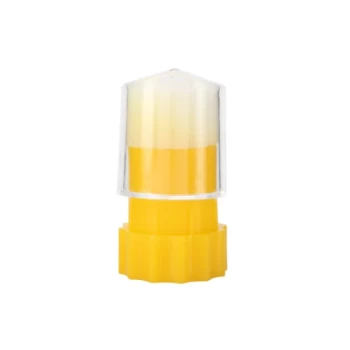
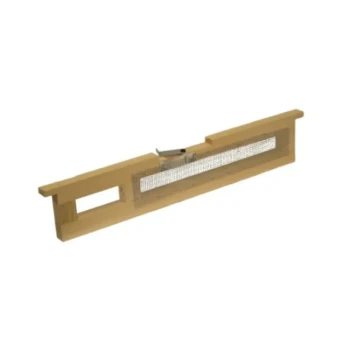
Queen bee artificial insemination equipment functions as a precision mechanism for genetic control. It assists in breeding and research by creating a completely closed mating environment, allowing operators to bypass the inherent randomness of open-air mating. By mechanically controlling the insemination process, breeders achieve absolute authority over drone lineages to analyze, fix, and replicate specific genetic traits.
Core Takeaway: By eliminating the uncertainty of natural mating, this technology transforms breeding from a game of probability into a predictable science. It enables the isolation and stabilization of complex genetic traits, ensuring that desirable characteristics like disease resistance and productivity are accurately passed down to future generations.
Establishing Absolute Genetic Control
Bypassing Natural Randomness
The primary function of this equipment is to provide a completely closed mating environment. In nature, a queen mates with random drones, introducing genetic variables that are impossible to track. Artificial insemination removes this variable entirely, giving the breeder total control over the genetic input.
The Mechanics of Precision
High-precision instruments utilize specific tools, such as ventral and sting hooks, to manipulate the queen's anatomy safely. These tools open the sting chamber and allow a capillary to bypass anatomical obstacles like the valve fold. This mechanical assistance ensures semen is injected directly into the oviducts, a level of delivery precision impossible to achieve naturally.
Accelerating Trait Fixation and Strain Development
Targeting Specific Phenotypes
This technology is critical for fixing desirable characteristics within a population. Breeders can select for specific traits—such as high honey yield, gentle temperament, or foraging activity—and ensure they are inherited. Without the risk of uncontrolled hybridization, these traits can be concentrated and stabilized much faster than through open mating.
Cultivating Disease Resistance (VSH)
The equipment is the core technical tool for maintaining high concentrations of Varroa Sensitive Hygiene (VSH) genes. By mating virgin queens with drones from specific, mite-resistant backgrounds, breeders can create "pure" lineages. This is essential for developing commercial breeding stocks that are naturally resilient to pests.
Enhancing Research Reliability
Controlling Experimental Variables
In laboratory settings, minimizing variables is essential for valid data. Artificial insemination allows researchers to control not just the source of the semen, but also the injection volume and composition. This ensures that all experimental queens share a consistent genetic background.
Improving Reproducibility
When studying complex mechanisms, such as colony adaptation to climate change or egg-laying capacity, researchers need repeatable results. By excluding environmental interference and genetic variability associated with natural mating, this equipment significantly improves the reliability and repeatability of genetic evaluations.
Understanding the Constraints
Technical Complexity and Skill Requirements
While effective, this approach requires high-precision instrumentation and skilled operation. The process involves navigating delicate anatomy (such as the valve fold) to prevent injury to the queen. It is not a passive solution but a hands-on technical intervention.
Dependency on Systemic Management
Using this equipment shifts the apiary away from natural queen replacement toward systematic intervention. It requires a structured breeding program to be effective; the equipment is only as valuable as the genetic selection strategy behind it.
Making the Right Choice for Your Goal
To maximize the value of artificial insemination equipment, align its use with your specific objectives:
- If your primary focus is Commercial Productivity: Prioritize the equipment to cultivate queens with fixed high-yield and gentle temperament traits, ensuring long-term apiary efficiency.
- If your primary focus is Disease Resistance: Use the "closed environment" capability to mate specific lineages for VSH traits, creating a stock that reduces reliance on chemical treatments.
- If your primary focus is Scientific Research: Leverage the control over semen volume and source to eliminate variables, ensuring your data on genetic expression is statistically valid.
Ultimately, artificial insemination equipment is not just about reproduction; it is the fundamental tool for engineering the genetic future of the honey bee.
Summary Table:
| Feature | Function in Breeding | Research & Commercial Benefit |
|---|---|---|
| Closed Mating Environment | Eliminates natural drone randomness | Enables absolute authority over drone lineages and trait fixation. |
| Precise Semen Delivery | Bypasses the valve fold with capillaries | Ensures consistent injection volume and high success rates. |
| Trait Isolation | Targets specific phenotypes (VSH, yield) | Accelerates the development of disease-resistant and productive stocks. |
| Variable Control | Standardizes genetic backgrounds | Improves data reliability and reproducibility in scientific studies. |
Elevate Your Breeding Program with HONESTBEE Precision Equipment
At HONESTBEE, we empower commercial apiaries and distributors with the professional-grade tools needed to engineer the future of beekeeping. Whether you are stabilizing Varroa Sensitive Hygiene (VSH) traits or scaling high-yield honey production, our comprehensive wholesale portfolio has you covered.
We supply everything from high-precision artificial insemination instruments to specialized hardware like hive-making and honey-filling machines, ensuring your operation benefits from the latest industry technology. Partner with us to bring world-class beekeeping machinery and essential consumables to your market.
Ready to optimize your genetic research and apiary efficiency?
Contact HONESTBEE Today to explore our wholesale solutions and expert equipment support.
References
- Anne Lauvie, Geneviève Michon. La gestion des populations d’abeilles inscrite dans des milieux. L’exemple de l’abeille corse. DOI: 10.1051/nss/2020018
This article is also based on technical information from HonestBee Knowledge Base .
Related Products
- Queen Bee Artificial Insemination Instrument Equipment for Instrumental Insemination
- Portable Queen Bee Incubator with 12V Car Adapter for Safe Transport
- Nicot Queen Rearing Kit for Beekeeping and Grafting in Nicot System
- Stainless Steel Beekeeping Queen Grafting Tool for Honey Bee Rearing
- Retractable Chinese Queen Rearing Grafting Tools Equipment
People Also Ask
- Why is maintaining sanitary conditions important during artificial insemination? Protect Your Queen from Fatal Infections
- Why are artificial insemination instruments critical in bee hybridization? Master Genetic Control & Pure Breeding
- What is the core value of bee artificial insemination instruments in breed improvement? Achieve Precise Genetic Control
- Why is professional bee artificial insemination equipment considered a core tool for genetic control in honeybee breeding? Ensure 100% Purity
- Why is high-purity CO2 used for queen bee artificial insemination? Unlock Precision Breeding & Faster Egg-Laying