The choice of honey extraction equipment directly determines both beeswax yield and processing speed. Standard frame uncapping typically produces about 1 to 2 pounds of beeswax per 100 pounds of harvested honey, while a honey press recovers substantially more wax from the comb. Centrifugal extractors prioritize honey recovery, comb preservation, and throughput, whereas presses and crush-and-strain systems prioritize wax recovery.
The central trade-off is straightforward: equipment that preserves reusable comb usually maximizes long-term honey production and workflow efficiency, while equipment that breaks down or presses the comb generally produces more beeswax but requires more processing and comb replacement.
How Equipment Changes Beeswax Yield
Standard Frame Uncapping Produces Limited Wax
When beekeepers use standard frame uncapping equipment, most of the comb remains intact. The wax yield generally comes from cappings and small pieces removed during handling, averaging 1 to 2 pounds per 100 pounds of honey.
This approach produces relatively little wax, but the remaining comb can be placed back into the hive after extraction.
Honey Presses Recover More Wax
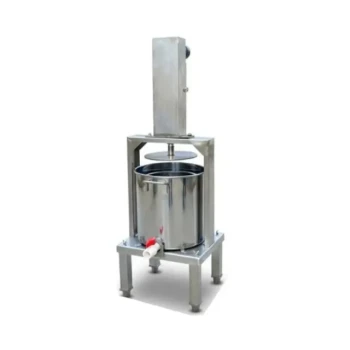
A honey press crushes or compresses comb to remove residual honey. Because more of the comb is processed, it yields a noticeably larger quantity of beeswax than ordinary frame uncapping.
The additional wax comes with a corresponding operational cost: pressed comb is no longer immediately reusable in its original structure and may require melting, cleaning, and replacement with new foundation or drawn comb.
Crush-and-Strain Systems Maximize Wax Recovery
The crush-and-strain method also destroys the original comb, resulting in higher beeswax production than centrifugal extraction. It can be practical for small operations, surplus comb, or beekeepers who place a high value on wax recovery.
For commercial operations, however, the extra wax must be weighed against the time and biological resources required for bees to rebuild the comb.
How Equipment Changes Processing Efficiency
Centrifugal Extractors Preserve the Production Cycle
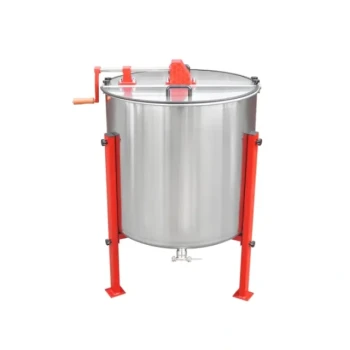
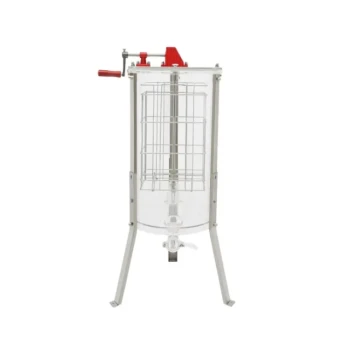
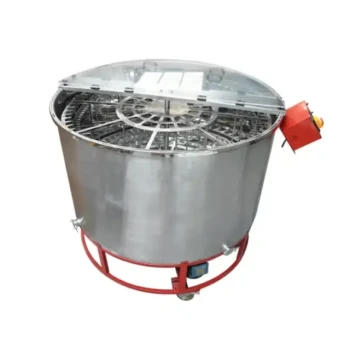
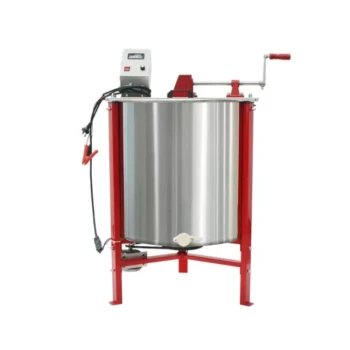
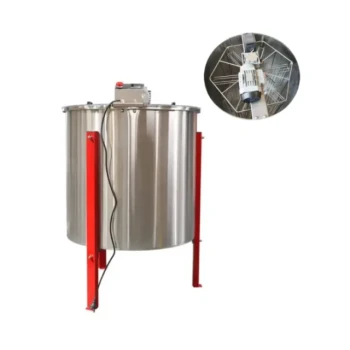
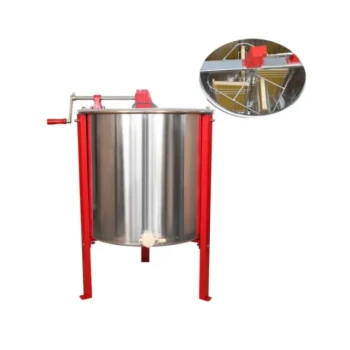
A honey extractor uses centrifugal force to remove honey while maintaining the physical structure of the honeycomb. The extracted frames can usually be returned to the hive for immediate reuse.
This reduces the colony's need to produce replacement wax and can shorten the recovery cycle between harvests. For large-scale operations, preserving comb can support higher annual honey output even though it generates less beeswax per harvest.
Double Uncapping Tanks Improve Residual Honey Recovery
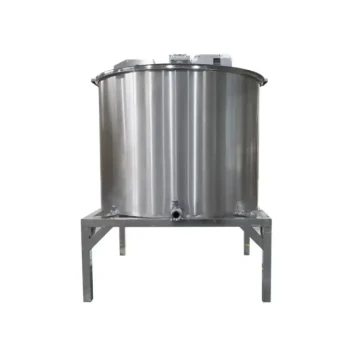
Double uncapping tanks allow residual honey to drain from cappings and other wax material by gravity. This recovers additional honey before the wax moves to washing or rendering.
The result is a cleaner separation between honey and wax, less product loss, and a more continuous workflow during busy harvest periods.
Honey Strainers Improve Wax Preparation
Dedicated honey strainers help remove honey and other impurities from wax before rendering. Washing or straining the wax more effectively supports the production of cleaner, higher-purity beeswax blocks.
This step also improves downstream handling by reducing contamination in rendering equipment and making the final product more consistent for commercial sale.
Integrated Equipment Reduces Labor Bottlenecks
A complete extraction line can include uncapping equipment, extractors, tanks, strainers, settling equipment, and filling machinery. Coordinating these components reduces manual transfers and prevents one slow stage from limiting the entire operation.
For distributors and commercial beekeepers, equipment compatibility is as important as the performance of any individual machine.
Choosing Between Honey Recovery and Wax Recovery
Choose an Extractor for Reusable Comb
A centrifugal extractor is generally the stronger choice when the priority is efficient honey harvesting, reusable comb, reduced seasonal labor, and sustained production capacity.
It is particularly valuable for commercial apiaries that need to process large volumes quickly while minimizing damage to comb structure.
Choose a Press for Maximum Beeswax Output
A honey press is better suited to operations where beeswax is a major revenue stream or where old, damaged, or surplus comb is already scheduled for replacement.
It can recover more wax, but the operation must also plan for rendering, cleaning, storage, and the cost of replacing the destroyed comb.
Use a Mixed Equipment Strategy
Many operations benefit from using an extractor for sound drawn comb and a press for cappings, damaged frames, or comb that has reached the end of its useful life.
This approach preserves high-value comb where practical while recovering additional beeswax from material that cannot efficiently return to the hive.
Understanding the Trade-offs
Higher Wax Yield Can Reduce Long-Term Honey Efficiency
More beeswax per harvest does not automatically mean greater overall profitability. When comb is destroyed, bees must consume resources and time to rebuild it instead of concentrating on honey production.
The correct measure is total system output: honey, beeswax, labor, equipment capacity, and colony recovery time.
Faster Extraction Does Not Guarantee Better Wax Quality
High-speed extraction improves throughput, but wax quality still depends on how cappings and comb are separated, filtered, washed, and rendered.
Poor filtration can leave honey, debris, or other impurities in the wax, reducing its value and making it harder to produce consistent blocks.
Equipment Delays Create Peak-Season Risk
If extractors, uncapping systems, or essential accessories are unavailable during harvest, processing may be delayed. Delays increase the risk of product deterioration and can reduce both honey quality and total recovery.
Reliable sourcing, rapid response, and fast order fulfillment are therefore operational requirements, not merely purchasing conveniences.
Equipment Must Match the Operation
A machine designed for a small apiary may create labor and capacity constraints in a commercial facility. Conversely, oversized equipment can create unnecessary capital, maintenance, and space costs for a smaller beekeeper.
Selection should account for harvest volume, frame format, labor availability, product mix, cleaning requirements, and future expansion.
How to Apply This to Your Operation
The most effective equipment choice depends on whether your priority is reusable comb, maximum wax recovery, or a balanced commercial workflow.
- If your primary focus is maximum honey throughput: Choose centrifugal extraction equipment that preserves drawn comb and pair it with efficient uncapping, draining, and filtration systems.
- If your primary focus is beeswax production: Use a honey press or crush-and-strain process for surplus, damaged, or replaceable comb, followed by dedicated straining and rendering equipment.
- If your primary focus is balanced profitability: Combine centrifugal extraction for reusable frames with pressing for cappings and waste comb.
- If your primary focus is reliable commercial fulfillment: Source compatible extractors, uncapping tanks, strainers, and downstream processing equipment through suppliers able to provide rapid support and timely delivery.
The right extraction system is the one that aligns beeswax recovery with honey quality, comb reuse, labor efficiency, and the long-term productivity of the apiary.
Summary Table:
| Equipment Type | Beeswax Yield | Comb Reusability | Processing Efficiency |
|---|---|---|---|
| Centrifugal Extractor | 1-2 lbs per 100 lbs honey | High | High |
| Honey Press | Higher | Low | Moderate |
| Crush-and-Strain | Highest | Low | Low |
| Double Uncapping Tank | Moderate | High | High |
Explore our comprehensive range of honey extraction equipment designed to optimize your yields. From centrifugal extractors to presses, we offer solutions for every beekeeping operation. Contact us today for professional advice and fast delivery! #ContactForm
Related Products
- Electric 8 Frame Honey Spinner Extractor Equipment for Beekeeping
- 6 Frame Manual Stainless Steel Honey Extractor Beekeeping Equipment
- HONESTBEE 2 Frame Manual Acrylic Honey Extractor Beekeeping Equipment
- HONESTBEE 72 Frame Industrial Electric Honey Extractor for Beekeeping
- 32 Frame Commercial Electric Honey Extractor for Beekeeping and Honey Production
People Also Ask
- What are the advantages of an electric honey extractor? Boost Efficiency and Scale Your Honey Production
- What are the characteristics of electric honey extractors? Boost Your Apiary Efficiency with Automated Technology
- What are the disadvantages of using an electric honey extractor? Weighing Cost, Power, and Comb Safety
- What are the features of an electric honey extractor? Boost Your Apiary's Productivity with Motorized Efficiency
- What are the technical advantages of electric honey extractors? Maximize Yield and Protect Your Bee Colony