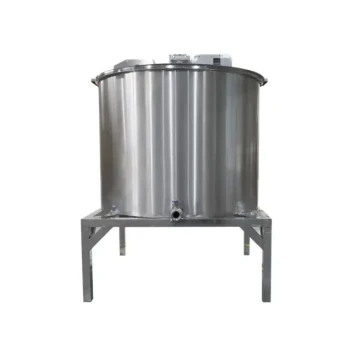
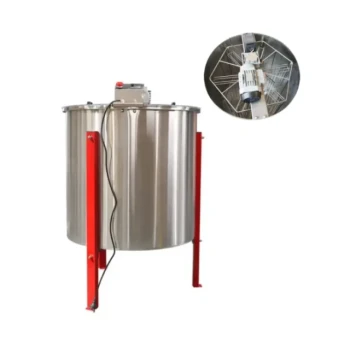
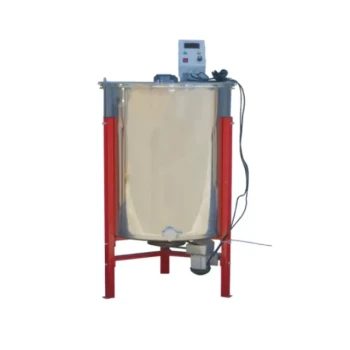
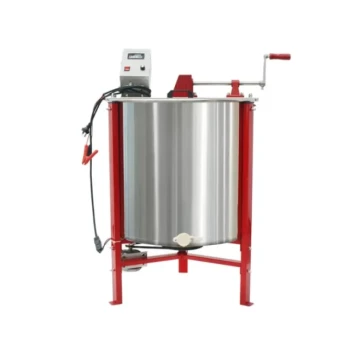
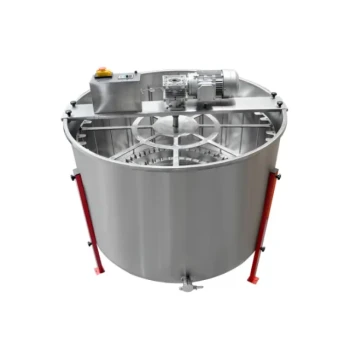
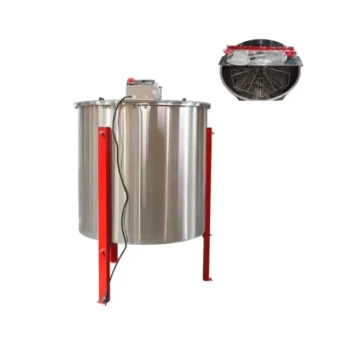
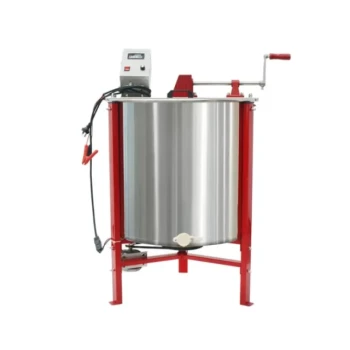
Electric honey extractors streamline operations through automation, but this convenience comes with distinct financial and operational drawbacks. The primary disadvantages are a significantly higher upfront cost, absolute dependency on a power source, and a lack of tactile control, which increases the risk of damaging delicate honeycombs during high-speed spins.
While electric extractors eliminate physical labor, they introduce logistical complexity regarding power and maintenance. The decision often centers on whether your volume of honey justifies the increased cost and reduced portability.
The Financial and Logistical Barriers
Higher Initial Investment
Electric extractors are generally more expensive than their manual counterparts. The inclusion of a motor, speed controller, and more complex gearing drives up the manufacturing cost, representing a significant barrier for hobbyist beekeepers.
Absolute Reliance on Power
Unlike manual cranks that work anywhere, electric models require a consistent electricity source. This dependency limits where you can set up your extraction station and makes the equipment impractical for remote apiaries or off-grid locations.
Increased Maintenance Requirements
The addition of technological components creates more points of potential failure. Motors and electrical connections require regular maintenance and may incur repair costs that simple mechanical gears do not.
Storage and Cleaning Complexity
Electric units are often heavier and more cumbersome to store than manual models. Furthermore, cleaning is more challenging because you must carefully protect the motor and electrical components from water damage during the wash-down process.
Operational Risks and Compatibility
Loss of Tactile Feedback
The primary reference highlights that users have less precise control over the spin compared to manual models. When cranking by hand, you can physically feel the weight and balance of the frames, allowing you to adjust speed instinctively. Electric motors eliminate this feedback loop.
Risk of Comb Damage
Because the motor provides constant force without tactile feedback, it is easier to accidentally spin the basket too quickly. If the centrifugal force is too high, it can blow out or fracture delicate wax honeycombs, rendering them unusable for future seasons.
Limited Hive Compatibility
Most standard electric extractors are designed for Langstroth frames. They are frequently unsuitable for alternative hive designs, such as top bar or Warre hives, without significant modification or specialized equipment.
Understanding the Trade-offs
Efficiency vs. Risk
The core trade-off with electric extractors is exchanging physical effort for process management. While you save your arm muscles, you must remain vigilant in monitoring the machine's speed settings to prevent comb blowouts.
Volume vs. Portability
For large-scale operations, the efficiency gains usually outweigh the disadvantages. However, for small-scale beekeepers, the setup time, power requirements, and cleaning hassles often make electric models less efficient than simply hand-cranking a few frames.
Making the Right Choice for Your Goal
Before investing in electric equipment, evaluate your specific constraints and apiary goals.
- If your primary focus is budget or small-scale hobbyist beekeeping: Stick to a manual extractor to save money, retain tactile control over delicate combs, and simplify your cleaning process.
- If your primary focus is harvesting in remote locations: Choose a manual model to ensure you can operate independently of power grids or generators.
- If your primary focus is high-volume efficiency: Accept the higher cost and maintenance of an electric extractor to dramatically reduce processing time and physical fatigue.
The best tool is the one that fits your environment, not just the one with the most power.
Summary Table:
| Disadvantage | Impact on Beekeeping | Consideration for Choice |
|---|---|---|
| High Initial Cost | Significant upfront investment | Better for high-volume commercial use |
| Power Dependency | Requires electricity or generator | Impractical for remote or off-grid apiaries |
| Maintenance | Motors/electronics require upkeep | Higher long-term repair complexity |
| Cleaning & Storage | Heavy and water-sensitive parts | Requires careful washing and more space |
| Comb Damage Risk | High speeds can fracture wax | Manual models offer better tactile control |
Scale Your Honey Production with HONESTBEE
Choosing the right extraction equipment is critical for balancing efficiency with honeycomb preservation. At HONESTBEE, we specialize in supporting commercial apiaries and distributors with a robust selection of professional-grade beekeeping tools. Whether you need high-capacity honey-filling machines, specialized hive-making equipment, or durable extraction hardware, we provide the wholesale solutions you need to grow.
Partner with HONESTBEE today to access premium equipment and industry consumables tailored for the modern beekeeping business. Contact us now to discuss how our portfolio can optimize your harvest and enhance your distribution reach!
Related Products
- HONESTBEE 72 Frame Industrial Electric Honey Extractor for Beekeeping
- Electric 4 Frame Tangential Honey Extractor
- 32 Frame Commercial Electric Honey Extractor for Beekeeping and Honey Production
- HONESTBEE 6 Frame Self Reversing Electric Honey Extractor for Beekeeping
- electric honey extractor honey centrifuge 3 frame honey extractor stainless steel honey frame extractor
People Also Ask
- What is the importance of balancing honeycomb frames within a honey extractor? Ensure Stability and Protect Machinery
- How is honey separated from the frames after they are uncapped? Efficient Extraction Methods for High Yields
- What are the main benefits of using a honey extractor? Maximize Yields and Protect Your Honeycomb
- What are the recommended methods for removing honey from the honeycomb? Top Extraction Techniques for Maximum Efficiency
- How do manual honey extractors compare to electric honey extractors? Choosing the Right Tool for Your Apiary Growth