The honey pressing method allows for significant flexibility in hive management because it decouples the extraction process from the physical structure of the honeycomb. Unlike radial extractors, which require combs to be built straight within frames to withstand spinning, pressing involves crushing the comb to release the honey. This renders the alignment, straightness, or structural integrity of the wax irrelevant to the success of the harvest.
The core advantage of pressing is that it eliminates the functional necessity of frames. Because the comb is destined to be broken apart, beekeepers can ignore common structural issues like cross-comb and bypass labor-intensive management tasks designed to force straight building.
The Liberation from Frame Dependencies
The Constraints of Standard Extraction
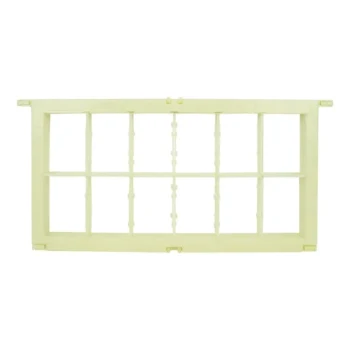
Radial or centrifugal extractors rely on spinning frames at high speeds. For this to work, the comb must be perfectly contained within a frame to maintain structural integrity.
How Pressing Removes the Constraint
Honey pressing does not require the comb to stay intact. The method works by physically crushing the wax to separate it from the honey.
Because the final step involves breaking the comb, the initial container—whether it is a frame, a top bar, or no container at all—does not dictate the harvestability of the honey.
Simplifying Hive Management
The Irrelevance of Alignment
In traditional beekeeping, "cross-comb"—where bees build wax bridges connecting different frames—is a significant problem. It makes removing frames for inspection or extraction nearly impossible without damaging the hive.
With the pressing method, cross-comb does not pose a problem for the harvest. Since the comb will be cut out or scraped off anyway, the fact that it crosses frame boundaries is functionally irrelevant.
Reducing Maintenance Chores
Beekeepers often spend considerable time manipulating frames and using guides to encourage bees to build straight.
If you plan to press your honey, you can skip these specific chores. You are free to let the bees build according to their natural preferences without worrying that a crooked comb will ruin your ability to extract honey later.
Understanding the Trade-offs
The Cost of Destruction
While pressing offers flexibility during the growing season, it is a destructive harvest method. You cannot return drawn comb to the hive after the honey is removed.
Impact on Colony Resources
Because the comb is destroyed, the bees must secrete new wax to rebuild their storage infrastructure. This requires significant energy and honey consumption that would otherwise go toward surplus production.
Making the Right Choice for Your Goal
To decide if the flexibility of pressing outweighs the costs, consider your primary objectives:
- If your primary focus is low-maintenance management: Utilize pressing to eliminate the need for frequent interventions to correct comb alignment and cross-comb issues.
- If your primary focus is maximum honey yield: Avoid pressing, as the reuse of drawn comb in standard extraction significantly increases production speed and volume.
Ultimately, honey pressing trades the efficiency of reusable infrastructure for the simplicity of unmanaged hive architecture.
Summary Table:
| Feature | Radial/Centrifugal Extraction | Honey Pressing Method |
|---|---|---|
| Comb Requirement | Must be straight and frame-bound | Any shape (cross-comb is acceptable) |
| Extraction Process | High-speed spinning (centrifugal) | Physical crushing and filtration |
| Equipment Need | Radial extractor and frames | Honey press or straining bags |
| Post-Harvest | Drawn comb is returned to hive | Comb is destroyed for wax recovery |
| Maintenance | High (managing straight comb build) | Low (bees build naturally) |
| Primary Goal | Maximum honey yield | Low-maintenance & wax production |
Streamline Your Apiary with HONESTBEE Solutions
Are you looking to scale your honey production or simplify your extraction workflow? HONESTBEE specializes in supporting commercial apiaries and distributors with a full spectrum of professional beekeeping machinery and tools. Whether you need high-capacity honey presses, hive-making equipment, or honey-filling machines, we provide the industrial-grade solutions required to grow your business.
Why Partner with HONESTBEE?
- Comprehensive Wholesale Range: From specialized hardware to essential consumables.
- Commercial Scale Support: We cater to the high-volume needs of large-scale beekeeping operations.
- Efficiency & Innovation: Equipment designed to reduce labor and maximize your output.
Ready to upgrade your beekeeping infrastructure? Contact us today to discuss your wholesale requirements!
Related Products
- Stainless Steel Manual Honey Press with Guard for Pressing Honey and Wax
- Stainless Steel Honey Press Wax Press with Tank
- Easy Use Manual Stainless Steel Honey Press for Honey Comb
- Electric Honey Press Machine for Squeezing Honey Comb Press Equipment
- 10L Stainless Steel Electric Honey Press Machine
People Also Ask
- What other functions can a honey press serve besides honey extraction? Discover Versatile Multi-Purpose Uses
- How does the honey press preserve the quality of honey during extraction? Maintain Pure Enzymes and Flavor
- What materials are used to construct the honey press? Choose Durable, Food-Grade Solutions for Your Apiary
- What are the fundamental differences between manual honey presses and centrifugal honey extractors? A Guide for Pros
- What are some general features of a honey press? Maximize Your Yield with Durable Extraction Tools