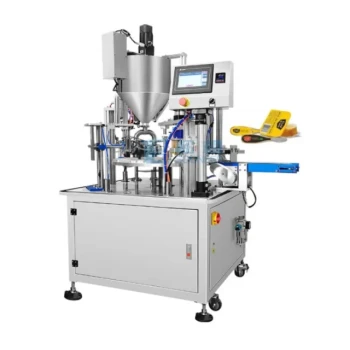
The introduction of advanced packaging and quality assurance machinery serves as the definitive operational threshold between small-scale beekeeping and a viable commercial enterprise. These technologies fundamentally alter production by automating the filling process to guarantee strict hygiene standards, eliminating the risk of secondary contamination, and ensuring the precise packaging specifications required for high-end international export.
Core Takeaway While manual methods may suffice for local distribution, advanced machinery is the only path to meeting the rigorous quality control and standardization requirements of global markets. It transforms honey production from a variable agricultural activity into a precision manufacturing process capable of satisfying import regulations in major economies like the US, UK, and Germany.
Mastering Hygiene and Market Compliance
Eliminating Secondary Contamination
The primary impact of these machines is the creation of a sterile, closed filling environment.
Manual handling inherently introduces the risk of human contact and environmental impurities. Advanced machinery mitigates this by isolating the honey during the bottling process. This is critical for maintaining the purity of organic honey and preventing bacterial introduction that could spoil the product.
Meeting Rigorous Export Standards
Accessing premium international markets requires more than just good honey; it requires standardized consistency.
Countries such as Belgium, Germany, and the United States enforce strict quality controls regarding hygiene and packaging uniformity. Automated machinery produces standardized packaging that meets these international trade requirements, allowing producers to bypass the limitations of local markets and enter global distribution channels.
Preserving Chemical Integrity and Shelf Life
Controlling HMF and Oxidation
Honey is chemically sensitive; it is hygroscopic (absorbs moisture from the air) and degrades when exposed to oxygen.
Automated filling lines significantly reduce the time honey is exposed to air. This speed is vital for controlling the increase of Hydroxymethylfurfural (HMF), a compound that indicates heat damage or age. By minimizing exposure, machinery maximizes the preservation of sensory characteristics and medicinal active ingredients.
Precision Dosage and Waste Reduction
Honey’s high viscosity makes it difficult to measure accurately by hand.
Industrial-grade machinery utilizes precision piston or weighing systems to ensure every bottle contains an exact volume. This ensures compliance with strict market measurement regulations and minimizes raw material waste, directly impacting the bottom line.
Understanding the Operational Trade-offs
High-Volume Necessity
These systems are designed for industrial-scale expansion and peak harvest demands.
Implementing this technology is generally only cost-effective when production volume is high enough to justify the capital investment. For smaller operations, the efficiency gains may not outweigh the initial cost and maintenance requirements of the equipment.
Operational Complexity
Transitioning to advanced machinery shifts the skill set required for production.
While these machines replace manual filling labor, they require operators skilled in calibration and maintenance. The focus shifts from purely agricultural knowledge to managing a technical production line to ensure the metering systems and sealing technologies function correctly.
Making the Right Choice for Your Goal
To determine if advanced packaging machinery is the right step for your operation, consider your target market:
- If your primary focus is Local or Artisanal Sales: Manual or semi-automatic methods often suffice, as the lower volume does not demand the strict standardization of global trade.
- If your primary focus is International Export: Investment in automated, closed-loop machinery is mandatory to meet the hygiene and consistency regulations of the US and European markets.
- If your primary focus is Maximizing Yield Efficiency: High-precision machinery is essential to eliminate the "overfill" waste associated with viscous fluids and reduce raw material loss.
Ultimately, advanced packaging machinery is not just a tool for speed; it is the infrastructure required to turn a natural resource into a globally tradable commodity.
Summary Table:
| Feature | Manual/Small-Scale Production | Advanced Commercial Machinery |
|---|---|---|
| Hygiene Standard | High risk of secondary contamination | Sterile, closed-loop filling environment |
| Market Reach | Primarily local and artisanal sales | Global export (US, EU, UK compliance) |
| Dosage Accuracy | Variable; higher risk of overfill waste | Precision piston/weighing systems |
| Chemical Integrity | Higher HMF risk due to air exposure | Minimal oxidation; preserves active enzymes |
| Primary Goal | Low-volume, low-overhead operations | Industrial-scale expansion and yield efficiency |
Elevate Your Honey Production to Global Standards
Transitioning from local beekeeping to a commercial enterprise requires more than just high-quality honey—it requires precision, hygiene, and industrial-scale efficiency. At HONESTBEE, we specialize in empowering commercial apiaries and distributors with the tools needed to dominate the market.
From high-precision honey-filling machines that eliminate waste to specialized hive-making equipment and essential consumables, our comprehensive wholesale portfolio is designed to meet the rigorous demands of the US and European markets.
Ready to scale your operation and secure international export success?
Contact HONESTBEE Today to discover how our end-to-end beekeeping machinery and expert hardware solutions can transform your business bottom line.
References
- Khushdeep Dharni, Deepak Goel. Startup operations and problems of honey bee entrepreneurs: experience from India. DOI: 10.1504/ijesb.2013.052520
This article is also based on technical information from HonestBee Knowledge Base .
Related Products
- Double Nozzle Small Honey Filling Machine Honey Sachet Packing Packaging Equipment
- Fully Automatic Honey Filling Packaging Machine for Processing Line
- Precision Automated Packaging Turntable Honey Spoon Filling Sealing Packing Machine
- Economy Small Honey Filling Machine Honey Bottle Filler Packaging Machine
- Honey Stick Filler Vertical Paste Sachet Packing Machine for Honey Sachets
People Also Ask
- How does industrial honey-filling machinery support Robinia pseudoacacia stands? Maximize Your Acacia Honey Yield
- What value do retail packaging equipment and filling technologies provide in the honey distribution process? Maximize ROI
- How does specialized honey filling equipment contribute to honey distribution? Scale Your Wholesale Efficiency Today
- Why is precision temperature control necessary for red honey filling? Preserve Amorpha fruticosa Color and Aroma
- How does high-precision honey filling equipment protect honey's biological activity? Safeguard Purity & Premium Value