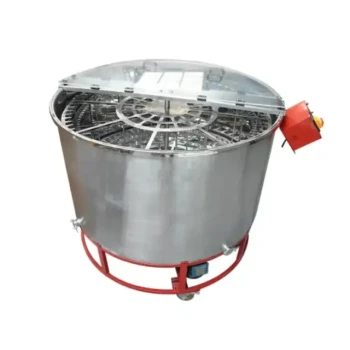
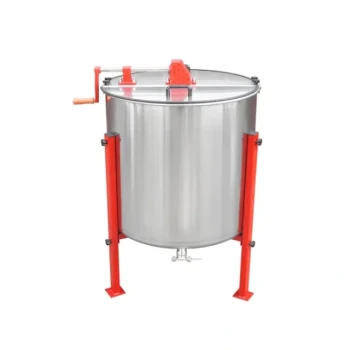
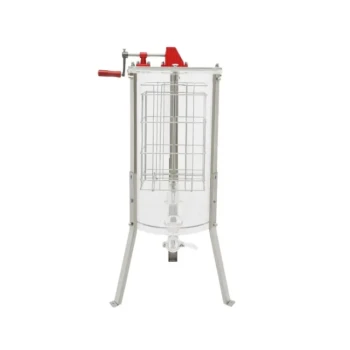
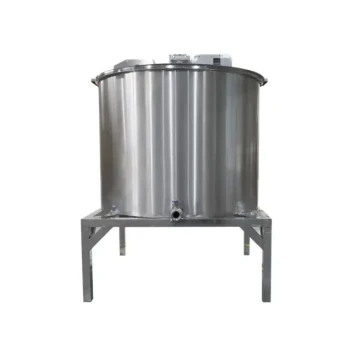
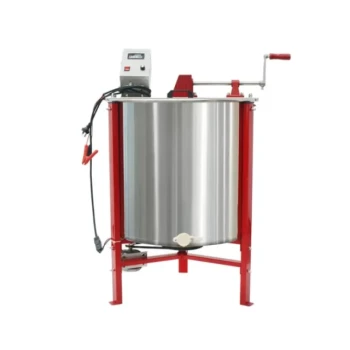
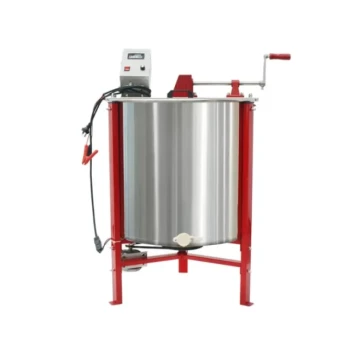
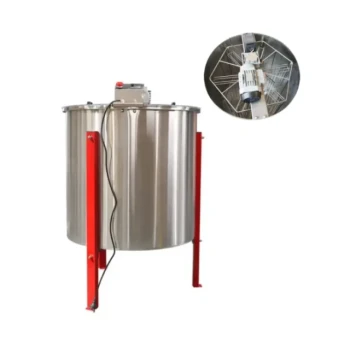
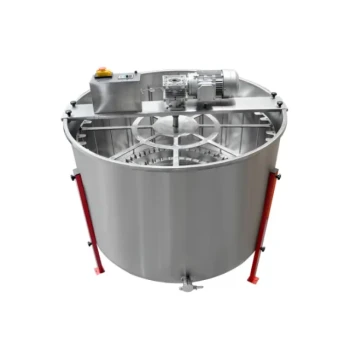
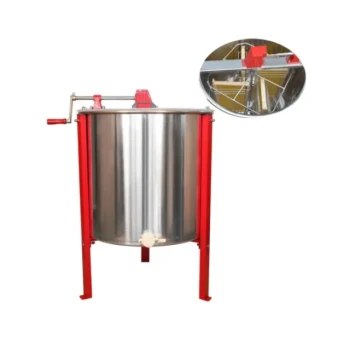
The operation of industrial honey extraction equipment functions as a distinct external intervention within colony resource models, fundamentally altering the energy balance of the hive. To ensure accuracy, the model must incorporate specific data points—namely the exact date of extraction and the precise volume of honey removed—to account for the sudden artificial depletion of resources.
To validate a model of a managed honeybee colony, you cannot treat it as a purely biological, closed system. You must simulate the mechanical removal of resources to accurately predict colony strength and ensure sufficient stores remain for long-term survival.
Simulating Human Management
Quantifying External Intervention
In a wild setting, honey stores fluctuate based on forage availability and consumption. However, industrial extraction introduces a sudden, non-biological reduction in resources.
Accurate modeling requires treating the equipment operation not just as a harvest, but as a specific variable that resets the colony's available energy.
Specifying Critical Parameters
Precision is paramount when inputting extraction data. You must specify the exact date the equipment is operated to correlate with the colony's seasonal lifecycle.
Equally important is defining the volume extracted versus the volume retained. The model often requires a parameter that ensures a specific weight of honey is left behind for colony consumption, rather than total depletion.
Impact on Colony Dynamics
Reflecting Realistic Colony Strength
When extraction is properly modeled, the simulation provides a realistic reflection of colony strength.
By accounting for the loss of resources, the model can adjust its projections for brood rearing and worker activity, which are dependent on the remaining food stores.
Predicting Long-Term Survival
The ultimate goal of resource modeling is often to predict whether a colony can survive adverse conditions, such as winter.
Simulating the use of extraction equipment allows you to stress-test the colony. You can determine if the remaining resources, post-intervention, are sufficient to support the hive through periods of scarcity.
Understanding the Trade-offs
The Risk of Static Inputs
A common pitfall is using static averages for extraction volumes in a dynamic model.
If the simulation assumes a standard industrial harvest volume without accounting for a poor forage season, the model may predict colony collapse where a human beekeeper would have intervened to take less.
Complexity vs. Usability
Adding precise extraction parameters increases the complexity of the data entry.
While this improves accuracy, it requires rigorous record-keeping. If the input data regarding dates and retained weights is estimated rather than measured, the model's predictive value regarding survival rates diminishes significantly.
Making the Right Choice for Your Goal
To maximize the utility of your resource modeling, tailor your inputs to your specific management objectives:
- If your primary focus is Overwintering Success: Prioritize the accuracy of the "retained weight" parameter to ensure the model correctly simulates the energy buffer needed for survival.
- If your primary focus is Yield Optimization: Focus on manipulating the "extraction date" variable to see how timing impacts both immediate harvest volume and subsequent colony recovery.
Precise data entry regarding mechanical extraction transforms a theoretical simulation into a practical tool for sustainable apiary management.
Summary Table:
| Parameter Type | Impact on Model | Key Data Required |
|---|---|---|
| Temporal Data | Correlates harvest with colony lifecycle | Exact date of extraction |
| Quantitative Data | Resets energy balance & available stores | Volume/Weight of honey removed |
| Survival Buffer | Predicts colony strength & overwintering | Minimum weight of honey retained |
| Biological Feedback | Adjusts brood rearing & worker activity | Post-extraction resource levels |
Maximize Your Apiary Productivity with HONESTBEE
Precise resource modeling requires both accurate data and high-performance hardware. At HONESTBEE, we empower commercial apiaries and distributors with a comprehensive range of professional beekeeping solutions. From high-capacity honey-extraction equipment and automated honey-filling machines to durable hive-making machinery, we provide the tools needed to scale your operations efficiently.
Whether you are looking to optimize yield or ensure long-term colony survival, our wholesale portfolio of beekeeping tools and essential industry consumables is designed to meet the rigorous demands of industrial apiculture.
Ready to upgrade your commercial setup? Contact HONESTBEE today to explore our wholesale equipment and specialized machinery solutions.
References
- Annika Agatz, Thomas G. Preuß. An Evaluation of the BEEHAVE Model Using Honey Bee Field Study Data: Insights and Recommendations. DOI: 10.1002/etc.4547
This article is also based on technical information from HonestBee Knowledge Base .
Related Products
- HONESTBEE 72 Frame Industrial Electric Honey Extractor for Beekeeping
- Electric 8 Frame Honey Spinner Extractor Equipment for Beekeeping
- 6 Frame Manual Stainless Steel Honey Extractor Beekeeping Equipment
- HONESTBEE 2 Frame Manual Acrylic Honey Extractor Beekeeping Equipment
- 32 Frame Commercial Electric Honey Extractor for Beekeeping and Honey Production
People Also Ask
- What is the importance of balancing honeycomb frames within a honey extractor? Ensure Stability and Protect Machinery
- How is honey separated from the frames after they are uncapped? Efficient Extraction Methods for High Yields
- What are the main benefits of using a honey extractor? Maximize Yields and Protect Your Honeycomb
- What are the recommended methods for removing honey from the honeycomb? Top Extraction Techniques for Maximum Efficiency
- How do manual honey extractors compare to electric honey extractors? Choosing the Right Tool for Your Apiary Growth