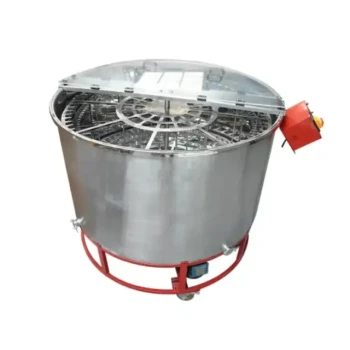
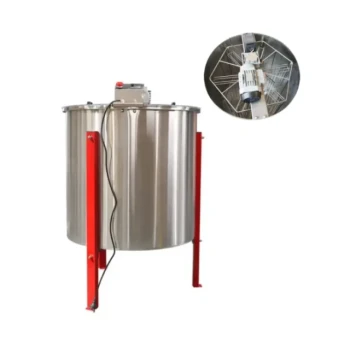
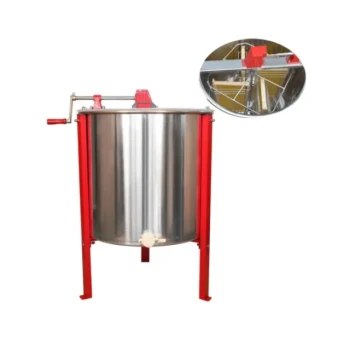
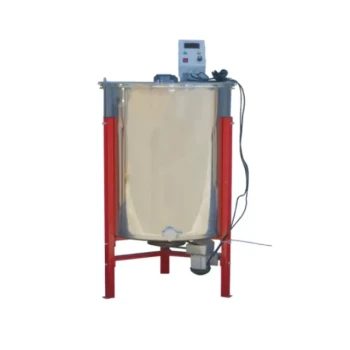
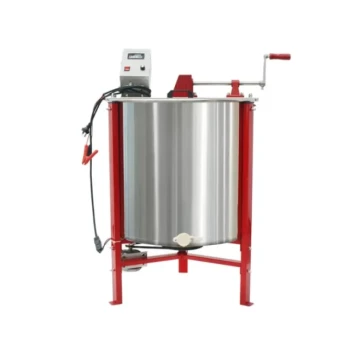
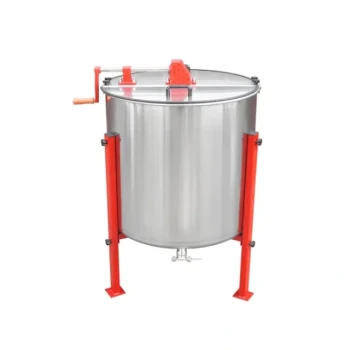
The impact on the honeycomb depends largely on speed control rather than the power source itself. While both manual and electric extractors use centrifugal force to preserve the comb, the primary risk to honeycomb integrity comes from the sudden application of torque. Electric extractors, if started immediately at full speed, generate enough force to fracture the delicate wax structure, whereas manual extraction offers granular control over the initial spin to mitigate this damage.
Preserving the honeycomb is crucial for the hive's health, as it saves bees the significant energy required to rebuild wax structures. While electric extractors offer superior speed and consistency, manual extractors provide the intuitive control necessary to prevent comb "blowouts" during the critical start-up phase.
The Mechanics of Extraction and Comb Integrity
The Role of Centrifugal Force
Both manual and electric extractors utilize centrifugal force to expel honey. This mechanical process is distinct from pressing or crushing, as it is designed to separate the liquid honey without destroying the comb.
Under optimal conditions, this force allows the wax structure to remain intact. This enables beekeepers to return the drawn comb to the hive, allowing the colony to focus on honey production rather than wax secretion.
The Risk of Electric Torque
The primary reference highlights a specific danger associated with electric models: the potential for immediate high-speed rotation. If an operator engages an electric extractor at full power from a standstill, the sudden force can rip the comb apart.
While automated and industrial extractors are designed to be gentle, the operator must ensure the machine does not ramp up too quickly. The consistency of the electric motor is a benefit for extraction speed, but a liability for comb integrity if the speed is not regulated carefully.
Manual Control and Tactile Feedback
Manual extractors inherently provide the operator with greater control over the acceleration process. Because the user is physically cranking the device, they can feel the resistance of the heavy, honey-filled frames.
This tactile feedback encourages a slower start. By gradually increasing the speed, the user ensures the honey begins to flow before maximum force is applied, significantly reducing the stress on the wax cells.
Understanding the Trade-offs
Physical Effort vs. Comb Safety
While manual extractors are excellent for protecting the comb through speed modulation, they are physically demanding. Processing frames manually is time-consuming and requires significant exertion, roughly 30 minutes for 2-4 frames.
Efficiency vs. Risk Management
Electric extractors are the clear choice for volume and efficiency. An industrial electric setup can process up to 100 frames in minutes, handling hundreds of pounds of honey with little physical effort.
However, this efficiency introduces the risk of "set it and forget it" operation. To match the safety of a manual extractor, an electric model requires a variable speed controller or a disciplined operator who consciously starts the machine at a low RPM.
Making the Right Choice for Your Goal
To balance the health of your honeycomb with your operational needs, consider these guidelines:
- If your primary focus is preserving delicate combs or small-scale extraction: Choose a manual extractor to utilize intuitive speed control and ensure the gentlest possible handling of the wax.
- If your primary focus is processing high volumes efficiently: Choose an electric extractor with variable speed settings, ensuring you ramp up the RPMs slowly to protect the comb while maximizing throughput.
By matching the extraction speed to the structural limits of the wax, you ensure the longevity of your equipment and the sustainability of your hive.
Summary Table:
| Feature | Manual Extractor | Electric Extractor |
|---|---|---|
| Control Mechanism | Tactile, user-defined cranking | Variable speed motor/settings |
| Comb Safety | High (intuitive speed modulation) | Moderate (risk of high-torque damage) |
| Processing Speed | Slow (approx. 30 mins for 4 frames) | High (up to 100 frames in minutes) |
| Physical Effort | High exertion required | Minimal exertion |
| Best For | Hobbyists & delicate wax preservation | Commercial apiaries & high-volume production |
Scale Your Honey Production with HONESTBEE
Whether you are a commercial apiary or a honey equipment distributor, HONESTBEE provides the precision machinery and high-grade consumables you need to succeed. From variable-speed electric extractors that protect your delicate honeycomb to advanced honey-filling machines and hive-making equipment, our wholesale solutions are designed for industrial-grade efficiency.
Let us help you optimize your operations and maximize your yields. Contact our experts today to discover how our comprehensive range of beekeeping tools and hardware can drive your business forward!
Related Products
- HONESTBEE 72 Frame Industrial Electric Honey Extractor for Beekeeping
- Commercial Electric 12 Frame Honey Extractor Spinner Motorized Honey Extractor
- HONESTBEE 6 Frame Self Reversing Electric Honey Extractor for Beekeeping
- HONESTBEE 3-Frame Manual Acrylic Honey Extractor
- Stainless Steel Manual 8 Frame Radial Honey Extractor Machine for Beehives
People Also Ask
- What is the importance of balancing honeycomb frames within a honey extractor? Ensure Stability and Protect Machinery
- How is honey separated from the frames after they are uncapped? Efficient Extraction Methods for High Yields
- What are the main benefits of using a honey extractor? Maximize Yields and Protect Your Honeycomb
- What are the recommended methods for removing honey from the honeycomb? Top Extraction Techniques for Maximum Efficiency
- How do manual honey extractors compare to electric honey extractors? Choosing the Right Tool for Your Apiary Growth