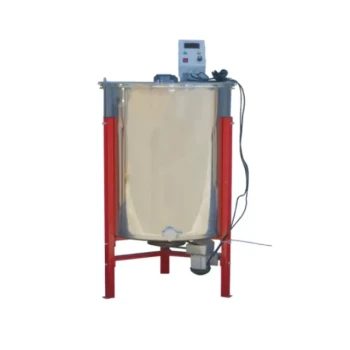
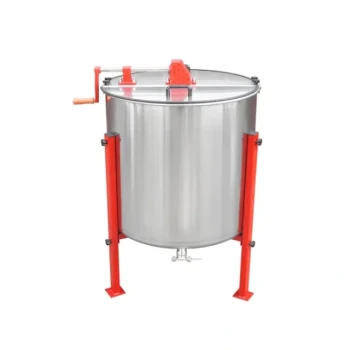
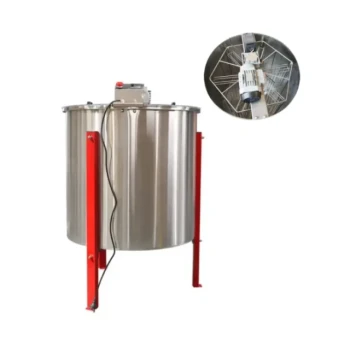
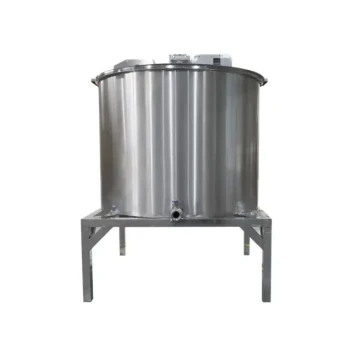
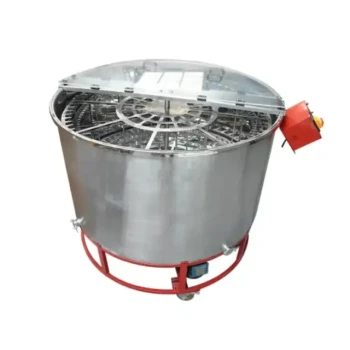
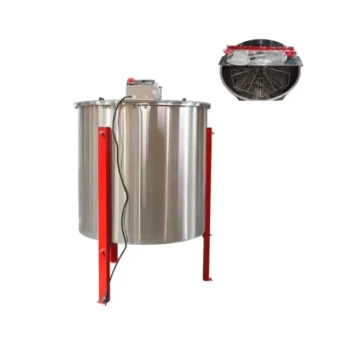
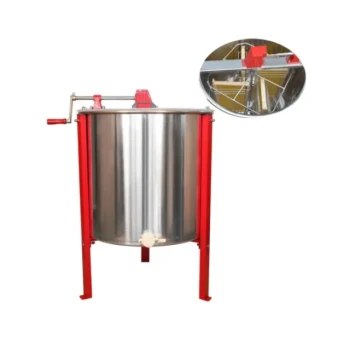
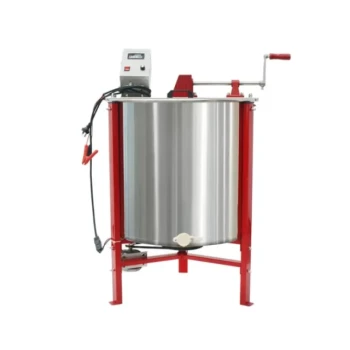
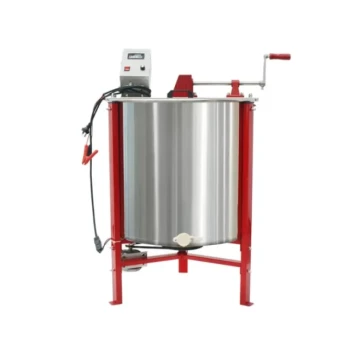
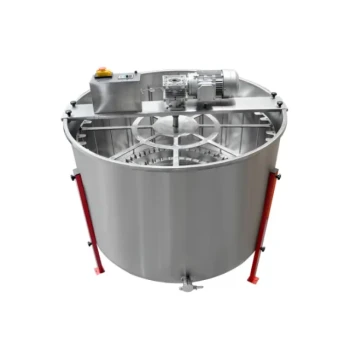
The use of a centrifugal honey extractor is critical for maintaining the scientific integrity of pollen research. By utilizing physical centrifugal force rather than thermal processing or crushing, this method preserves the original pollen composition within the honey. It eliminates the data bias often caused by heating or fine filtration, ensuring that pollen spectrum analysis remains objective and statistically valid.
Core Takeaway Centrifugal extraction is the preferred method for scientific analysis because it mechanically separates honey without altering its botanical fingerprint. Unlike methods that destroy the comb or require heat, it preserves the natural ratio of pollen grains required for accurate spectrum analysis.
The Mechanics of Data Preservation
Eliminating Thermal Bias
For pollen research, temperature control is paramount. A centrifugal extractor operates using mechanical force—specifically rotation—rather than heat to separate honey from the comb.
This prevents the degradation of heat-sensitive compounds. More importantly, it ensures the pollen grains are not altered or destroyed, which can happen during high-heat processing often used to reduce viscosity in other extraction methods.
Avoiding Filtration Distortion
The integrity of a pollen spectrum relies on the presence of all natural particles. Centrifugal extraction spins the honey out, allowing it to flow freely without the need for fine filtration.
Filtration processes, often used to clarify honey for commercial aesthetics, can inadvertently strip out pollen grains. By bypassing this step, centrifugal extraction maintains the natural pollen richness necessary for accurate botanical origin determination.
Preventing Sample Contamination
Centrifugal extractors are hygienic and precise. Unlike traditional crushing methods, which pulverize the entire comb, centrifugal force extracts only the fluid honey.
This separation prevents impurities, such as larvae or wax debris, from mixing into the sample. This purity is essential for researchers, as it ensures the biological material being analyzed is strictly the honey and its pollen payload, not extraneous hive matter.
Operational Benefits for Research
Preserving the Honeycomb Structure
The defining feature of this equipment is its ability to leave the wax comb intact. Because the comb is not crushed, the structural integrity of the cells is preserved.
For researchers studying hive dynamics alongside honey composition, this is vital. It allows for the study of the same comb over multiple cycles without the destructive interference of crushing.
Enhancing Production Efficiency
While research integrity is the primary goal, the efficiency of the process supports consistent sampling. By returning intact empty combs to the hive, bees are spared the energy-intensive process of secreting new wax.
This allows the colony to focus on honey production, significantly shortening the production cycle. For researchers, this means faster turnover rates and the ability to gather more data points within a single flowering season.
Understanding the Trade-offs
Mechanical Force vs. Absolute Diversity
While the primary reference highlights the superiority of centrifugal extraction for avoiding bias, it is important to note a nuance regarding pollen diversity.
Some supplementary data suggests that manual squeezing or crushing methods might release a higher absolute diversity of pollen, potentially because they force out pollen trapped deep in the wax or "bee bread." However, this comes at the cost of high contamination (wax/larvae).
Industrial Standardization
Industrial-grade centrifugal extractors are excellent for efficiency and hygiene. However, the speed of rotation must be calibrated correctly.
If the centrifugal force is too weak, heavier pollen grains may remain in the comb. If it is too strong, it could damage the comb. Consistent calibration is required to ensure the pollen spectrum in the harvested honey truly represents the floral sources.
Making the Right Choice for Your Goal
To select the correct extraction method for your specific needs, consider the following:
- If your primary focus is Scientific Objectivity: Use a centrifugal extractor. It avoids the altering effects of heat and filtration, providing the most accurate representation of the natural pollen spectrum for analysis.
- If your primary focus is Colony Health & Turnover: Use a centrifugal extractor to preserve wax combs. This minimizes the metabolic stress on bees, allowing them to rebuild stores quickly for future sampling.
- If your primary focus is Maximum Botanical Diversity: Acknowledge that while centrifugal extraction is cleaner, manual pressing methods might yield a denser, albeit less pure, pollen count for specific functional honey products.
Ultimately, centrifugal extraction serves as the industry standard for research because it balances efficient harvesting with the preservation of the honey's natural botanical identity.
Summary Table:
| Feature | Centrifugal Extraction | Manual Crushing/Pressing | Impact on Research |
|---|---|---|---|
| Mechanism | Mechanical Centrifugal Force | Physical Squeezing/Crushing | Preserves pollen morphology |
| Heat Usage | None (Cold Processing) | Often requires heat | Prevents thermal degradation |
| Filtration | Coarse (Preserves Pollen) | Fine (Strips Pollen) | Maintains botanical fingerprint |
| Comb State | Intact & Reusable | Destroyed | Allows longitudinal hive studies |
| Purity | High (No wax/larvae) | Low (Debris contamination) | Ensures data objectivity |
Elevate Your Beekeeping Operation with HONESTBEE
Precision matters in both scientific research and commercial honey production. At HONESTBEE, we empower commercial apiaries and distributors with the high-performance tools needed to maintain product integrity and maximize yield. From calibrated centrifugal honey extractors that preserve the delicate pollen spectrum to industrial honey-filling machines and hive-making equipment, our comprehensive wholesale catalog covers every stage of the beekeeping lifecycle.
Whether you are scaling a professional apiary or supplying the industry with premium consumables and cultural merchandise, HONESTBEE provides the engineering excellence you deserve. Contact us today to discuss our wholesale offerings and discover how our specialized machinery can streamline your production and safeguard your honey's natural value.
References
- Elizabete Satsuki Sekine, Augusta C. C. C. Moreti. Melliferous flora and pollen characterization of honey samples of Apis mellifera L., 1758 in apiaries in the counties of Ubiratã and Nova Aurora, PR. DOI: 10.1590/s0001-37652013005000017
This article is also based on technical information from HonestBee Knowledge Base .
Related Products
- electric honey extractor honey centrifuge 3 frame honey extractor stainless steel honey frame extractor
- Manual Hand Crank 4 Frame Honey Extractor Centrifuge for Beekeeping
- Professional 4 Frame Self Reversing Electric Honey Extractor for Beekeeping
- Electric 4 Frame Tangential Honey Extractor
- 24 Frame Honey Extractor Commercial Radial Honey Frame Extraction Machine
People Also Ask
- What are the characteristics of electric honey extractors? Boost Your Apiary Efficiency with Automated Technology
- What are the disadvantages of using an electric honey extractor? Weighing Cost, Power, and Comb Safety
- What are the advantages of an electric honey extractor? Boost Efficiency and Scale Your Honey Production
- What are the technical advantages of electric honey extractors? Maximize Yield and Protect Your Bee Colony
- How does an electric honey extractor affect the quality of honey? Preserve Flavor & Purity with Precision Extraction