Standardized artificial honey pots act as the fundamental bridge between organic chaos and mechanical order. By utilizing industrial molds to produce honey pots with identical dimensions and fixed array structures, producers eliminate the geometric randomness of natural hives. This uniformity creates a predictable "hardware interface," allowing automated systems—specifically uncapping equipment and high-efficiency centrifuges—to interact with the hive components without the need for delicate manual intervention.
The mechanization of stingless beekeeping is not merely about faster tools, but about establishing a consistent geometry. Artificial honey pots provide the prerequisite standardization that transforms a hive from a biological irregularity into a machine-readable unit.
The Engineering Challenge: Geometry vs. Machinery
Overcoming Natural Randomness
In a natural setting, stingless bees construct honey pots in irregular clusters. This creates a significant barrier to industrialization because machines require predictable coordinates to operate effectively.
Manual harvesting of natural pots requires individual attention to avoid damaging the brood or contaminating the honey. Standardized pots replace this variability with a fixed grid system.
Creating a Standard Interface
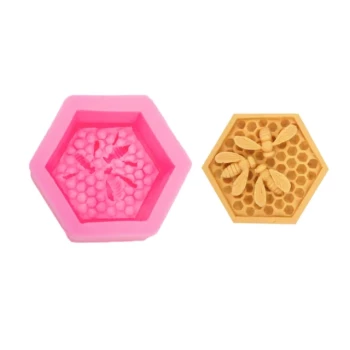
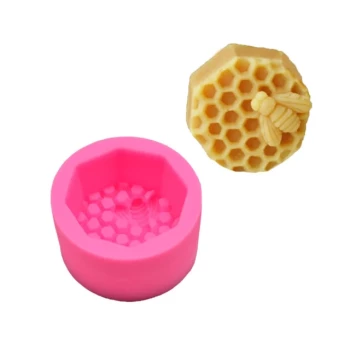
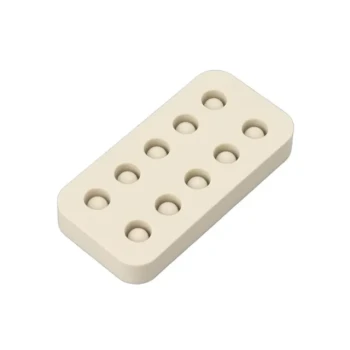
Industrial molds produce pots that are identical in size, shape, and spacing. This converts the hive internal structure into a standardized array.
Just as shipping containers revolutionized logistics by standardizing shape, these pots revolutionize extraction by ensuring every honey reservoir is exactly where the machine expects it to be.
How Uniformity Enables Specific Machinery
Automated Uncapping
With natural pots, uncapping is a tedious, manual process of piercing individual cells.
With a standardized array, the height and surface area of every pot are uniform. This allows automated uncapping equipment to slice or pierce the entire array in a single, rapid pass, drastically reducing labor time.
High-Efficiency Centrifugation
Centrifuges rely on balance and consistent distribution of mass. Natural comb structures are often too fragile or irregular for high-speed spinning.
Mold-produced arrays are structurally reinforced and balanced. They fit seamlessly into industrial centrifuges, allowing for rapid extraction that maximizes yield while preserving the integrity of the comb for reuse.
The Downstream Impact on Processing
Seamless Integration with Filling Systems
While the primary impact of the pots is on extraction, this standardization ripples down the production line. Consistent extraction volumes feed directly into industrial honey filling machines.
Because stingless bee honey is a high-value, low-yield commodity, the precision afforded by mechanized extraction ensures a steady supply to quantitative packaging equipment, minimizing waste of expensive raw materials.
Hygiene and Traceability
Manual harvesting often involves open-air handling, which increases contamination risks.
Standardized pots allow for an enclosed, "untouched by human hands" workflow. From the automated uncapping to the filling machine, the product remains within a controlled environment, meeting the hygiene standards required for high-end pharmaceutical or cosmetic markets.
Understanding the Trade-offs
High Capital Investment
Transitioning to standardized pots moves the cost center from labor to capital. While operational costs (labor) decrease over time, the upfront investment in industrial molds, specialized centrifuges, and filling machinery is significant.
The Biological Variable
While engineering prefers standardization, biology prefers adaptation. There is a risk that rigid, standardized structures may not suit every colony's specific behavior or climate needs compared to the adaptability of natural wax structures.
Making the Right Choice for Your Goal
When considering the adoption of standardized artificial honey pots, align your decision with your operational scale:
- If your primary focus is rapid scaling: Prioritize the adoption of molded pot arrays to unlock the use of high-volume centrifuges and uncapping machines.
- If your primary focus is premium market entry: Leverage the standardization to implement enclosed, automated filling lines that guarantee the hygiene and consistency required for high-end retail.
- If your primary focus is yield maximization: Use the mechanical stability of artificial pots to utilize higher-speed extraction methods that recover more honey per harvest than manual pressing.
Standardization is not just a convenience; it is the operational prerequisite for turning stingless beekeeping into a scalable industry.
Summary Table:
| Feature | Natural Honey Pots | Standardized Artificial Pots |
|---|---|---|
| Geometry | Irregular & Random | Uniform & Machine-Readable |
| Uncapping | Manual & Time-Consuming | Automated (Single-Pass) |
| Extraction | Low-Speed / Manual Press | High-Efficiency Centrifugation |
| Hygiene | Higher Contamination Risk | Enclosed / Sterile Workflow |
| Scalability | Limited by Labor | High Industrial Potential |
Revolutionize Your Apiary with HONESTBEE
Transitioning from manual labor to industrial efficiency requires the right hardware. HONESTBEE specializes in empowering commercial apiaries and distributors with the tools needed to scale. From precision industrial molds for honey pots to high-speed honey-filling machines and specialized extraction equipment, we provide the full spectrum of beekeeping technology.
Ready to transform your operation into a high-yield, mechanized industry leader? Contact us today to explore our comprehensive wholesale offerings and specialized hardware solutions tailored for the global stingless bee market.
References
- G. C. Venturieri, Giorgini Augusto Venturieri. Honey production of the “uruçu-cinzenta” stingless bee (<i>Melipona fasciculata</i>) after offering cerumen in natural form or as artificially made pots. DOI: 10.1080/00218839.2017.1339520
This article is also based on technical information from HonestBee Knowledge Base .
Related Products
- 3D Square Honeycomb Pillar Silicone Candle Molds for Making Beeswax Candles
- Honeycomb and Bee Silicone Soap Mold for DIY Handmade Soaps
- Hexagonal Bee Honeycomb Silicone Soap Mold by HONESTBEE
- Round Honeycomb Pillar Silicone Candle Molds for Candles
- Honeycomb Hexagonal Pillar Silicone Candle Mold for Candle Making
People Also Ask
- Is spray release necessary when using silicone molds for candle making? Master the Art of Flawless Demolding
- Why are silicone molds preferred over tin or plastic molds for beeswax candles? Boost Efficiency & Quality
- What is the first tip for pouring beeswax into a silicone mold? Ensure a Perfect Release
- Which specific shapes and designs are commonly available for beeswax candle molds? Choose the Best Molds for Production
- How do you secure a silicone mold for candle making? Prevent Leaks and Achieve Perfect Candles