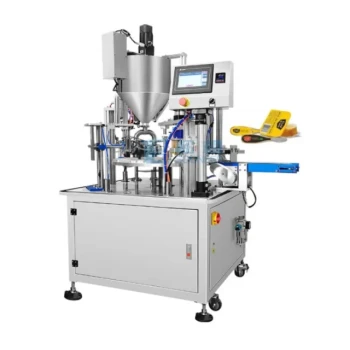
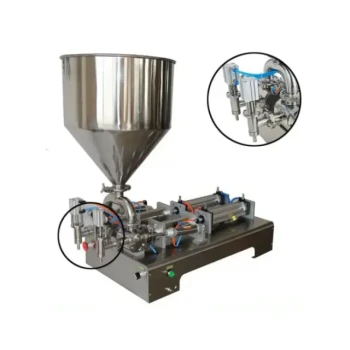
Honey’s high viscosity necessitates distinct engineering interventions compared to standard liquid fillers, specifically requiring precision mechanisms to overcome significant flow resistance and surface tension. To guarantee continuous flow and accurate volume control, machinery must integrate specialized nozzles and robust pressure regulators. These components work in tandem to maintain fluidity and prevent interruptions, ensuring the honey is applied uniformly to the container.
The core engineering challenge lies in balancing the mechanical force required to move a resistant fluid against the need for precise, uniform application. Machinery must dynamically account for flow resistance to prevent production bottlenecks or inconsistent dosing.
Managing Flow Dynamics and Resistance
Overcoming High Flow Resistance
Because honey resists motion, standard gravity-fed systems are often insufficient. Equipment must utilize pressure regulators designed to force the product through the system at a consistent rate.
Without this active regulation, the flow becomes intermittent. This leads to interruptions in the liquid stream and uneven filling.
Precision Volume Control
The thickness of honey complicates volumetric accuracy. Engineering requirements dictate strict tolerances for dosing mechanisms to ensure every container receives the exact amount of product.
This requires precision engineering in the piston or pump design to mitigate the variances caused by the fluid's drag against the machine walls.
Critical Component Design
Specialized Nozzle Geometry
Standard nozzles fail with viscous fluids because they cannot break the stream cleanly. Honey-filling machines must employ specialized nozzles adapted to the product's high surface tension.
These nozzles are engineered to prevent the honey from clinging to the outlet. This ensures the product is directed entirely into the container rather than coating the machine.
Anti-Stringing Mechanisms
A unique property of honey is its tendency to "string" or trail after the flow stops. Advanced machinery must feature anti-stringing cutting mechanisms.
These mechanical cut-offs physically sever the stream at the precise moment filling stops. This prevents material leakage and ensures clean, high-precision packaging.
Thermal and Rheological Considerations
Temperature-Based Viscosity Adjustment
Honey is viscoelastic, meaning its flow properties change with temperature. Industrial machines often require precise temperature control systems to slightly warm the honey, lowering its viscosity for high-speed processing.
Preserving Chemical Integrity
While heat improves flow, excessive heat damages honey. For medicinal-grade products, the machinery must include accurate temperature compensation.
This allows for viscosity management without compromising heat-sensitive antioxidant components. The engineering goal is to facilitate movement without chemically degrading the product.
Understanding the Trade-offs
Speed vs. Product Quality
Increasing the temperature of the honey allows for faster machine speeds and easier filling. However, this creates a critical trade-off regarding the biological activity of the honey.
Overheating to maximize throughput can destroy the very qualities that make the product valuable, particularly in premium or medicinal markets. Engineers must calculate the thermal budget—the maximum heat the honey can endure—and cap machine speed accordingly.
Filtration vs. Viscosity
To meet hygiene standards and extend shelf life, machines often incorporate standardized filtration. However, fine filtration increases the back-pressure in the system, effectively increasing the engineering load on pumps.
Making the Right Choice for Your Goal
To select the correct machinery, you must define the balance between production velocity and product preservation.
- If your primary focus is High-Volume Throughput: Prioritize systems with robust pressure regulators and heated hoppers to maximize flow rates and reduce viscosity.
- If your primary focus is Premium/Medicinal Quality: Prioritize machinery with precise temperature compensation and anti-stringing cutters to protect antioxidants and ensure exact dosing.
Match your machine’s capabilities to the fluid properties of your specific honey variety to ensure efficiency without compromising quality.
Summary Table:
| Engineering Challenge | Technical Requirement | Impact on Production |
|---|---|---|
| High Flow Resistance | Pressure Regulators & Robust Pumps | Prevents flow interruptions and maintains consistency |
| Surface Tension/Drip | Specialized Nozzles & Anti-Stringing Cutters | Ensures clean packaging and prevents material waste |
| Volumetric Accuracy | Precision Piston/Dosing Mechanisms | Guarantees exact volume control despite fluid drag |
| Temperature Sensitivity | Thermal Control & Compensation Systems | Optimizes flow rate while protecting medicinal quality |
Elevate Your Honey Production with HONESTBEE
Navigating the complexities of honey's high viscosity requires more than just standard equipment—it demands precision-engineered solutions. HONESTBEE specializes in catering to commercial apiaries and distributors by providing a comprehensive wholesale range of high-performance beekeeping machinery.
From honey-filling machines equipped with advanced anti-stringing technology to specialized hardware designed to preserve the biological integrity of your product, our portfolio is built to solve your engineering challenges. We offer everything from specialized hive-making tools to honey-themed cultural merchandise, ensuring your business has the tools to succeed in a competitive market.
Ready to optimize your workflow and protect your product quality? Contact our experts today to find the perfect machinery for your apiary!
References
- A. M. Bowie. THE RITUAL ROLE OF HONEY IN ANCIENT EGYPT, HATTI AND GREECE. DOI: 10.19090/i.2020.31.7-23
This article is also based on technical information from HonestBee Knowledge Base .
Related Products
- Precision Durable Efficient HONESTBEE Rotary Honey Filling Machine
- Semi Automatic Small Honey Bottle Filling Machine Honey Filler
- Economy Small Honey Filling Machine Honey Bottle Filler Packaging Machine
- Commercial Rotary Honey Filling Machine for Production
- Fully Automatic Honey Filling Packaging Machine for Processing Line
People Also Ask
- How do honey filling machines work? Achieve Precision & Speed for Your Apiary
- How do high-precision honey filling machines ensure quality? Optimize Your Commercial Production with HONESTBEE
- What quality control role does professional honey filling equipment perform? Ensure Consistency and Product Stability
- What is a key feature of the new generation of the honey filling machine? The Advanced Electronic Control Unit
- How do honey filling and processing machines aid native bee product conservation? Boost Value with HONESTBEE Technology