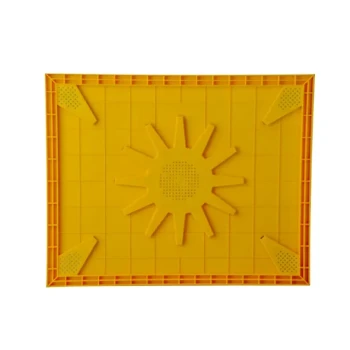
Modern implementations of the 'communication gap' focus on modifying the foundation rather than the frame structure. While early methods required complex frame assembly, modern solutions utilize plastic foundation sheets with integrated passageways. These are typically implemented as holes in the lower corners of wax-covered sheets or as perforated, break-off tabs that allow the beekeeper to manually create a gap.
The 'communication gap' is a critical feature that allows bees to travel horizontally between combs without traversing the entire face of the frame. Modern plastic foundations streamline this by incorporating configurable corner openings, replacing the labor-intensive structural gaps used in the 1920s.
The Evolution of the Gap
Early Structural Approaches
In the 1920s, creating a communication gap was a structural challenge. Beekeepers utilized shallow frames constructed with four end bars to force a central gap within the frame itself. This method was effective but relied on non-standard assembly and specialized components.
The Shift to Foundation Design
In later years, the focus shifted away from the wooden frame and toward the foundation insert. This evolution allowed for standard frame construction while still providing the necessary passageways for the colony.
How Modern Plastic Frames Create the Path
Pre-Formed Passageways
Many modern plastic foundation sheets, specifically those covered with wax, feature holes pre-positioned in the lower corners. These openings are molded directly into the plastic, providing an immediate, permanent route for bees upon installation.
Customizable Perforations
A more flexible modern iteration involves perforated lower corners. These plastic foundation sheets are manufactured with "break-off" tabs in the corners. This design gives the beekeeper a choice: leave the foundation solid or snap off the corner to open the communication gap.
The Functional Goal
Facilitating Horizontal Travel
Regardless of the implementation method, the objective remains the same: horizontal travel. By placing these gaps in the lower corners, bees can move directly from one comb to the next. This reduces congestion and energy expenditure, as bees do not have to climb up and around the frames to switch combs.
Understanding the Trade-offs
Permanence vs. Flexibility
The 1920s four-bar method and pre-drilled plastic holes are permanent structural choices. Once implemented, the gap is always there.
The Value of the Break-Off Design
The modern perforated tab offers a distinct advantage: reversibility (until broken). A beekeeper can purchase the foundation and decide on a frame-by-frame basis whether the communication gap is required, rather than being committed to a specific frame style from the outset.
Making the Right Choice for Your Goal
When selecting frames or foundation, consider how bee movement impacts your management style.
- If your primary focus is reducing hive congestion: Select plastic foundations with pre-drilled holes or break off the perforated corners to ensure maximum horizontal mobility.
- If your primary focus is standardizing equipment: Utilize modern plastic foundation inserts, as they fit standard frames and avoid the complex four-bar assembly of the 1920s.
Modernizing the communication gap allows you to facilitate essential bee movement through simple, effective modifications to the foundation.
Summary Table:
| Feature | 1920s Structural Gaps | Modern Plastic Foundations |
|---|---|---|
| Implementation | Complex four-bar frame assembly | Integrated holes/tabs in foundation |
| Ease of Use | Labor-intensive construction | Plug-and-play installation |
| Flexibility | Permanent structural change | Customizable break-off tabs |
| Main Benefit | Horizontal travel between combs | Reduced congestion & standardized equipment |
| Equipment | Specialized, non-standard frames | Standard frames with plastic inserts |
Maximize Your Apiary Efficiency with HONESTBEE
At HONESTBEE, we understand that every detail in hive management—from the communication gap to foundation durability—impacts your bottom line. As a leading partner for commercial apiaries and distributors, we offer a comprehensive wholesale range designed to streamline your operations.
Our Value to You:
- Comprehensive Wholesale Range: From precision hive-making and honey-filling machinery to high-quality beekeeping tools.
- Modern Consumables: Advanced foundation sheets and essential industry supplies that facilitate colony health and honey production.
- Cultural Merchandise: Expand your market reach with our unique honey-themed merchandise.
Whether you are scaling up a commercial operation or supplying the next generation of beekeepers, HONESTBEE provides the specialized hardware and equipment you need to succeed.
Contact HONESTBEE Today for Wholesale Solutions
Related Products
- Food Grade Plastic bee Foundation for Bee Frames
- Assembled Wooden Bee Frames with Plastic Foundation for Durability and Convenience by HONESTBEE
- Plastic Bee Frame Beekeeping Hive Frames for Wholesale
- Professional Durable Two-Piece Plastic Bee Escape
- HONESTBEE Multi Exit Plastic Bee Escape Board for Efficient Honey Harvesting
People Also Ask
- What are the advantages of using plastic foundation in a beehive? Boost Efficiency and Durability in Your Apiary
- How is plastic foundation installed in a bee frame? Master the 'Bend and Pop' Technique for Better Efficiency
- How to get bees to accept plastic foundation? Apply a Wax Coating for Fast Comb Building
- What is the recommended method for re-waxing plastic bee frame foundation? Master the Foam Brush Technique
- What are the disadvantages of using plastic foundation in a hive? Pros and Cons for Your Apiary