Beeswax is separated primarily through the application of heat and the natural laws of density. After collection, the raw wax is melted, typically in a water bath. Because beeswax is significantly lighter than both water and honey, it naturally rises to the surface, while heavier impurities sink or dissolve. As the mixture cools, the floating wax solidifies into a clean cake that is easily lifted away from the liquid residue.
Core Takeaway: The purification of beeswax relies on the fact that it is hydrophobic and less dense than water. By melting the raw material in water, you force the lighter wax to float and the heavier honey and debris to settle, creating a self-separating system once the wax hardens.
The Principles of Separation
The Role of Density
The most critical factor in separating beeswax is specific gravity. Beeswax is lighter than water, whereas honey and most solid impurities are heavier.
Utilizing Water
To facilitate separation, the wax is often melted directly in water. This allows the wax to float to the top layer while water-soluble impurities, such as residual honey, dissolve into the water below.
Solidification
Once the heat source is removed, the floating layer of wax cools and hardens. This results in a solid block (often called a cake) that can be physically removed, leaving the dirty water and settled debris behind.
The Purification Process
Gentle Melting
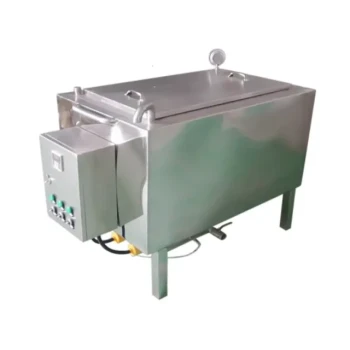
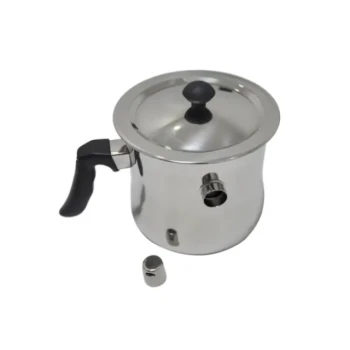
Raw wax, including cappings, is processed by slowly melting it. This is often done using a double boiler or a specialized electric beeswax melter to ensure even heat distribution.
Filtration
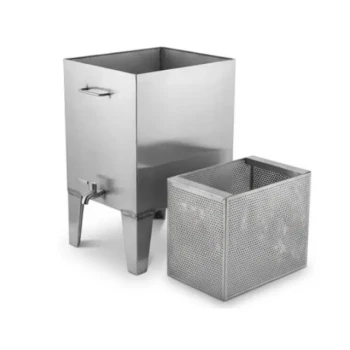
While gravity separates heavy debris, fine particles may remain suspended. To achieve high purity, the melted wax is often poured through a filter cloth or fine mesh to catch these remaining solids.
Commercial Extraction
For larger operations, time is money, and gravity settling may be too slow. In these contexts, mechanical spinners are often utilized to use centrifugal force to rapidly separate the honey from the wax capping.
Common Pitfalls to Avoid
Avoiding Scorching
Beeswax is sensitive to high temperatures. It is vital to melt the wax slowly to prevent scorching, which discolors the wax and degrades its quality.
Incomplete Separation
If the wax is not allowed to cool completely undisturbed, impurities from the bottom layer may re-contaminate the wax. Patience during the cooling phase is essential for a clean separation.
Making the Right Choice for Your Goal
How you approach beeswax separation depends largely on the volume of wax you are processing and your available equipment.
- If your primary focus is small-batch purity: Use a water bath and double boiler method, allowing the wax to cool slowly overnight for maximum gravity separation.
- If your primary focus is commercial efficiency: Invest in a mechanical spinner to rapidly separate honey from the wax before melting, reducing the processing time.
- If your primary focus is absolute clarity: Ensure you add a filtration step, pouring the hot, melted wax through a fine mesh or cheesecloth before allowing it to settle.
By leveraging simple thermodynamics, you can turn raw, sticky cappings into pristine, usable beeswax.
Summary Table:
| Separation Method | Core Principle | Primary Advantage |
|---|---|---|
| Water Bath Melting | Density & Buoyancy | Efficiently separates honey and heavy debris via gravity. |
| Fine Filtration | Mechanical Sifting | Removes microscopic suspended particles for absolute clarity. |
| Mechanical Spinning | Centrifugal Force | Rapidly processes high volumes for commercial efficiency. |
| Double Boiling | Controlled Heat | Prevents scorching and discoloration to maintain wax quality. |
Optimize Your Wax Processing with HONESTBEE
Are you looking to scale your production or upgrade your apiary’s efficiency? HONESTBEE specializes in supporting commercial apiaries and distributors with premium wholesale solutions. We provide a comprehensive range of beekeeping tools, machinery, and equipment—including specialized honey-filling machines and hive-making hardware—to help you deliver high-quality products to your market.
From industrial-grade consumables to honey-themed cultural merchandise, we have everything you need to grow. Contact us today to enhance your operations!
Related Products
- Electric Commercial Beeswax Melter for Factory Use
- Steam Beeswax Melter Wax Warmer for Wax Processing
- Electric Beeswax Flat Sheet Machine with Operating Tray for Wax Processing
- Solar Beeswax Melter Easy Solar Wax Melter for Beeswax
- Beeswax Melter for Candle Making Honey Bee Wax Melter
People Also Ask
- Why might a commercial beekeeper prefer an electric beeswax melter? Maximize Profit with Speed & Scale
- What safety precautions should be taken when melting beeswax? A Guide to Flammable Wax Handling
- What types of beeswax melters are available for different scales of beekeeping? Solar vs. Electric Melters Compared
- What are the three popular methods for melting beeswax? Safely Process Your Wax with Ease
- How do you melt beeswax without making a mess? Master Safe & Clean Techniques