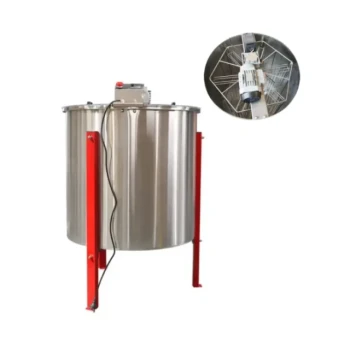
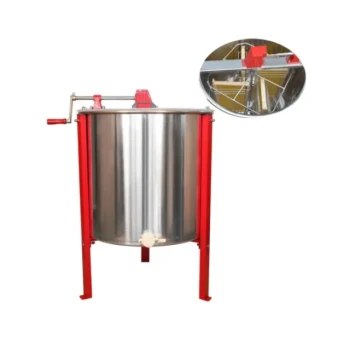
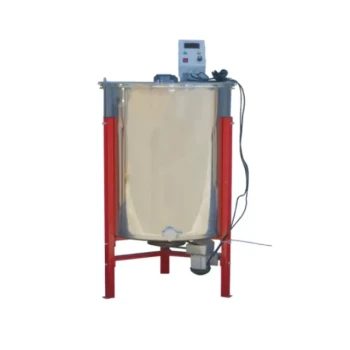
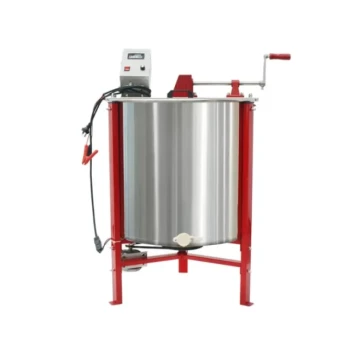
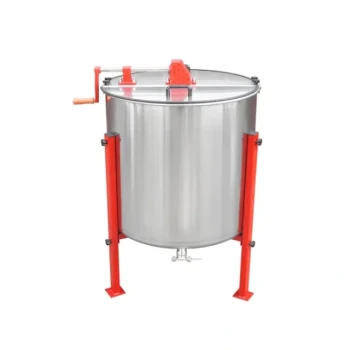
The ideal method for drying a honey extractor is a thorough air dry. After washing, you should leave the unit completely open to allow moisture to evaporate naturally over the course of a day or two. If you are under strict time constraints, you may use a hairdryer set to low heat to accelerate the process.
Core Takeaway Moisture trapped inside your equipment is the primary cause of mold growth during storage. Regardless of the method used, the extractor must be completely free of water before being covered to ensure it remains sanitary for your next harvest.
The Natural Drying Process
Maximizing Airflow
To dry the extractor properly, you must create an environment that encourages evaporation. Leave both the top lids and the honey gate open.
Duration of Drying
Patience is required for this method. It is best practice to let the extractor sit for a day or two.
Gravity Assist
Before the final air dry, ensure you have tilted the machine to drain as much water as possible. This prevents water from pooling in the bottom seams or around the bottom bearing.
Accelerating the Process
Using Forced Air
If you cannot wait 24 to 48 hours, you can speed up evaporation mechanically. Use a hairdryer to blow warm air into the unit.
Managing Heat Levels
Crucially, you must keep the hairdryer on a low heat setting. Excessive heat can damage seals, plastic components, or lubricants within the extractor's mechanism.
Critical Pre-Drying Context
The Risk of Residue
Honey is water-soluble, so water is your primary cleaning agent. However, if you used any soap, it must be rinsed out extremely thoroughly before drying begins.
Why Rinsing Matters
Even trace amounts of dried soap residue can rehydrate during the next extraction. This will contaminate your honey, rendering it inedible.
Proper Storage Protocol
Protecting the Equipment
Once you have verified that the extractor is bone-dry, you must protect it from dust and debris. Cover the unit with a plastic bag or sheet.
The Moisture Trap
Do not cover the extractor until you are certain it is dry. Placing a plastic cover over a damp machine creates a humid microclimate that guarantees mold growth.
Making the Right Choice for Your Goal
To ensure your equipment lasts and your honey remains pure, choose the method that fits your schedule:
- If your primary focus is equipment longevity: Allow the unit to air dry with the gate open for at least 24 hours to ensure no moisture remains in the seams.
- If your primary focus is speed: Use a hairdryer on low heat to target wet spots, ensuring you do not overheat mechanical parts.
Your goal is a sterile, dry environment that protects your investment until the next season.
Summary Table:
| Drying Method | Duration | Best For | Key Requirement |
|---|---|---|---|
| Natural Air Dry | 24 - 48 Hours | Longevity & Safety | Keep lids and honey gate fully open |
| Forced Air (Hairdryer) | 10 - 20 Minutes | Quick Turnaround | Use low heat only to protect seals |
| Gravity Assist | 5 - 10 Minutes | Pre-drying step | Tilt unit to drain water from bottom seams |
Scale Your Honey Production with HONESTBEE
Maintaining your equipment is just the first step—ensure your apiary is powered by the industry's most reliable tools. HONESTBEE specializes in supporting commercial apiaries and distributors with a comprehensive range of high-performance beekeeping solutions. From high-capacity honey extractors and honey-filling machines to advanced hive-making machinery and essential consumables, we provide the hardware you need to maximize efficiency.
Ready to upgrade your wholesale supply or streamline your extraction process? Contact us today to discover how our professional-grade equipment and global distribution expertise can grow your beekeeping business.
Related Products
- HONESTBEE 72 Frame Industrial Electric Honey Extractor for Beekeeping
- Commercial Electric 12 Frame Honey Extractor Spinner Motorized Honey Extractor
- HONESTBEE 6 Frame Self Reversing Electric Honey Extractor for Beekeeping
- HONESTBEE 3-Frame Manual Acrylic Honey Extractor
- Stainless Steel Manual 8 Frame Radial Honey Extractor Machine for Beehives
People Also Ask
- What is the importance of balancing honeycomb frames within a honey extractor? Ensure Stability and Protect Machinery
- How is honey separated from the frames after they are uncapped? Efficient Extraction Methods for High Yields
- What are the main benefits of using a honey extractor? Maximize Yields and Protect Your Honeycomb
- What are the recommended methods for removing honey from the honeycomb? Top Extraction Techniques for Maximum Efficiency
- How do manual honey extractors compare to electric honey extractors? Choosing the Right Tool for Your Apiary Growth