Keep every sweet resource controlled, enclosed, and clean. Apiary managers should feed colonies with internal or hive-top feeders, never exposed containers or entrance-level feeding stations, and should install entrance reducers on vulnerable colonies. During honey harvesting, keep frames, supers, covers, gloves, and tools sealed or covered whenever they are not being handled, because even small honey or syrup residues can trigger bee frenzy and initiate robbing.
The central rule is simple: bees should access feed and harvested honey only through the intended colony’s hive or a controlled processing area. Reduce entrances, eliminate spills and odors, seal equipment promptly, and return wet supers directly to the correct hives.
Why Feeding and Harvesting Can Trigger Robbing
Exposed Feed Acts as a Signal
Open sugar syrup, raw honey, or nectar substitutes release strong odors that attract foraging bees from across the apiary. Once bees discover an easy food source, competition can quickly escalate into aggressive feeding and hive robbing.
Robbing Targets Weak Colonies
Strong colonies can overwhelm weaker colonies and take their stored honey. The attack may cause drifting, spread pests or pathogens, kill the queen, and ultimately destroy the weaker colony.
Harvesting Creates Temporary Vulnerability
Opening hives and removing honey frames exposes valuable food reserves at the exact moment when nearby bees may be searching for resources, particularly during a nectar dearth. Harvesting procedures therefore need the same level of access control as feeding procedures.
How to Manage Feeding Consumables
Use Internal or Hive-Top Feeders
Feed syrup or other approved consumables inside the hive, using equipment that allows access only to the target colony. Hive-top and internal feeders are preferable to open feeding stations because they reduce odor release and prevent competition among colonies.
Avoid Entrance-Level Feeders for Robbing-Prone Colonies
Boardman-style entrance feeders can place syrup directly at the hive entrance, where its odor is easily detected by neighboring bees. For colonies under pressure, late-season feeding, or apiaries experiencing robbing, use a feeder positioned within the hive and ensure there are no gaps between the feeder and hive bodies.
Prevent Spills During Handling
Fill, transport, and install feeders carefully. Any spilled syrup should be cleaned immediately, and containers holding feed should never be left open in the bee yard.
Feed During Lower-Activity Periods
When practical, install or refill internal feeders during the late evening, when fewer foragers are active. This does not replace good containment, but it reduces the likelihood that fresh syrup will immediately attract robbers.
Protect the Consumables Supply Chain
For commercial apiaries, distributors and resellers should supply feeders with secure lids, reliable seals, and colony-exclusive access. A dependable product range should also include replacement seals, feeder components, entrance reducers, robber screens, and appropriately sized hive covers.
How to Control Hive Access
Reduce Entrances on Vulnerable Colonies
Entrance reducers make a colony’s opening easier to defend by limiting the number of bees that can enter simultaneously. They are especially useful for weak colonies, newly established colonies, nucs, and hives being fed during a nectar dearth.
Seal Structural Gaps
Hive bodies, covers, supers, and feeder interfaces should fit tightly. Cracks, loose covers, and gaps around feeding equipment create additional entry points that make defense more difficult.
Use Robber Screens When Necessary
Robber screens can help confuse invading bees while allowing the resident colony to use the hive entrance normally. If robbing is already severe, entrances may need to be reduced to a single bee space while maintaining adequate ventilation.
Cover Hives Between Tasks
When a hive is not actively being worked, cover it with an inner cover, cloth cover, or flat board as appropriate. The objective is to prevent exposed comb and honey from broadcasting their scent across the apiary.
How to Handle Harvesting Tools and Equipment
Keep Honey-Contaminated Tools Controlled
Hive tools, uncapping tools, gloves, buckets, and other equipment should not be left where bees can contact them. Even apparently minor honey residue can attract bees and create a focal point for aggression.
Seal Removed Frames and Supers Promptly
As soon as frames or supers are removed, place them in bee-proof containers or cover them with flat covers or boards. Do not leave harvested supers exposed while other hives are being processed.
Prepare Supers Before Harvest Day
Where applicable, loosen supers the day before harvesting to break propolis seals. This can reduce the amount of fresh honey exposure and shorten the time that hives remain open during the harvest.
Return Wet Supers Directly to the Correct Hives
After extraction, wet supers should be returned promptly to the harvested colonies for internal cleaning. Leaving wet supers in the open apiary creates a concentrated food source that can attract robbers.
Separate and Clean Apiary Equipment
Commercial operations should maintain disciplined hygiene for hive tools, gloves, and extraction equipment. Equipment should be cleaned between apiaries, and reusable hive parts or frames should be disinfected and carefully evaluated before being returned to service.
Preserve Adequate Colony Food Reserves
Do Not Over-Harvest
Honey is the colony’s primary energy reserve for maintaining activity and generating heat during winter or periods of limited forage. Managers should not remove more honey than the colony can safely spare.
Base Decisions on Local Conditions
The appropriate reserve depends on climate, hive size, configuration, ventilation, colony population, and the availability of supplemental feeding. A harvesting plan that is safe in one location may leave colonies vulnerable in another.
Treat Supplemental Feeding as Risk Management
Feeding can compensate for reduced reserves, but it does not eliminate the need for careful harvesting decisions. Supplemental feed should be delivered in a way that supports the intended colony without creating an external attractant.
Understanding the Trade-offs
Entrance Reduction Versus Ventilation
Narrow entrances improve defense but can restrict traffic and ventilation if applied excessively. During a robbing event, reduce access while ensuring the hive remains adequately ventilated and does not overheat.
Speed Versus Process Control
Fast harvesting reduces the time hives remain open, but rushed work increases the likelihood of spills, uncovered supers, and misplaced equipment. The right objective is efficient, organized handling, not simply moving faster.
Product Convenience Versus Security
Entrance feeders may be convenient to refill, but their location can expose syrup to neighboring bees. Internal feeders require more deliberate installation and inspection, yet they provide substantially better control over colony access.
Hygiene Versus Equipment Availability
Reusing contaminated or unknown-origin comb and equipment may reduce short-term purchasing needs but increases biosecurity risk. Commercial operators should prioritize traceable, clean, and serviceable equipment over marginal savings.
How to Apply This to Your Apiary or Product Program
A consistent operating procedure should combine secure feeding equipment, entrance control, covered harvesting gear, and rapid cleanup.
- If your primary focus is preventing robbing: Use internal or hive-top feeders, reduce entrances on weak colonies, seal hive gaps, and eliminate every exposed syrup or honey source.
- If your primary focus is safer honey harvesting: Keep removed frames and wet supers covered, use controlled extraction workflows, and return wet supers directly to their originating hives.
- If your primary focus is commercial apiary efficiency: Standardize feeder, reducer, cover, and tool specifications across sites and maintain dependable replacement inventory for rapid fulfillment.
- If your primary focus is B2B distribution: Build a full-spectrum offering around feeders, robber screens, entrance reducers, hive covers, extraction tools, cleaning supplies, and spare hive components.
- If your primary focus is biosecurity: Separate equipment by apiary where possible, clean honey-contaminated tools promptly, and avoid reusing unverified comb or hive parts.
Controlled access and disciplined handling protect colonies, improve harvest reliability, and give apiary operators a repeatable system for scaling safely.
Summary Table:
| Aspect | Best Practices |
|---|---|
| Feeding | Use internal/hive-top feeders; avoid entrance feeders; clean spills immediately |
| Hive Access | Install entrance reducers; seal gaps; use robber screens when needed |
| Harvesting | Keep tools sealed; cover removed frames; return wet supers to original hives |
| Food Reserves | Avoid over-harvesting; supplement as needed; base decisions on local conditions |
| Equipment | Maintain hygiene; separate by apiary; replace worn parts promptly |
Optimize Your Apiary Management with HONESTBEE
At HONESTBEE, we understand the challenges beekeepers and distributors face in preventing bee frenzy and robbing. Our comprehensive range of feeding equipment, entrance reducers, robber screens, and honey harvesting tools is designed to help you maintain controlled access and efficient operations. Whether you're looking for durable feeders, reliable extraction tools, or full-spectrum supply support, we offer quick response, expert guidance, and ultra-fast delivery to keep your apiary secure and productive.
Contact us today to discuss your needs and discover how HONESTBEE can enhance your beekeeping success!
Related Products
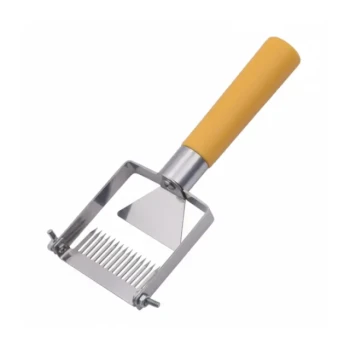
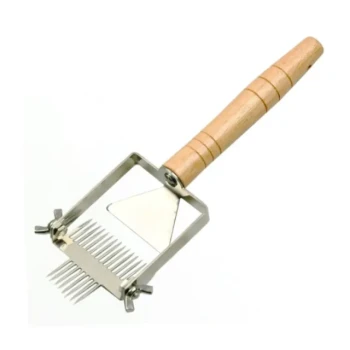
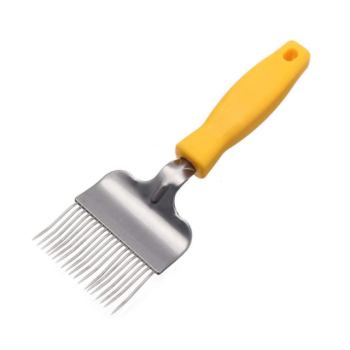
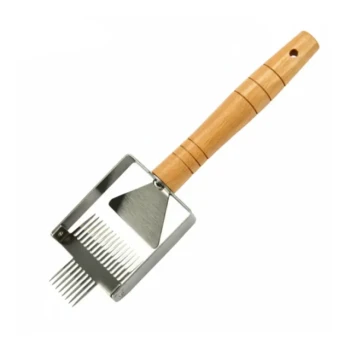
- Adjustable Stainless Steel Honey Uncapping Fork with Plastic Handle for Beekeeping
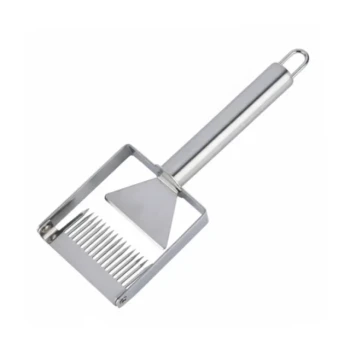
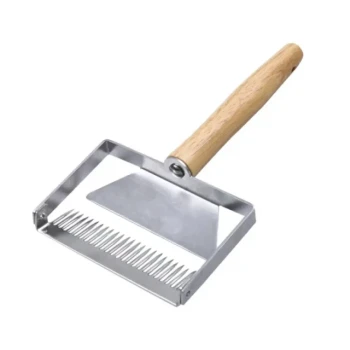
- All-Stainless Steel Pivoting Honey Uncapping Fork for Beekeeping
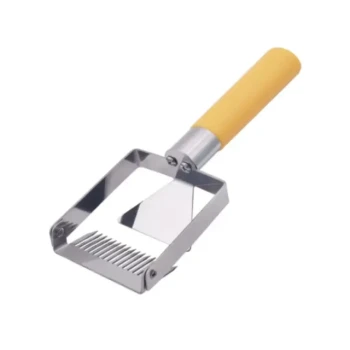
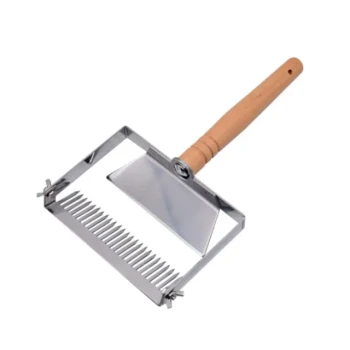
- Stainless Steel Pivoting Honey Uncapping Fork with Plastic Handle
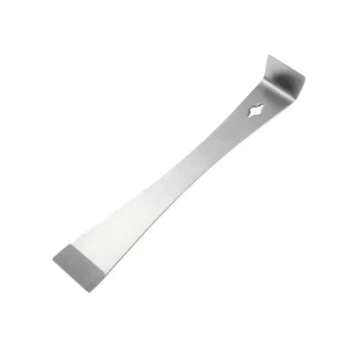
- Professional Stainless Steel Pry-Bar Hive Tool
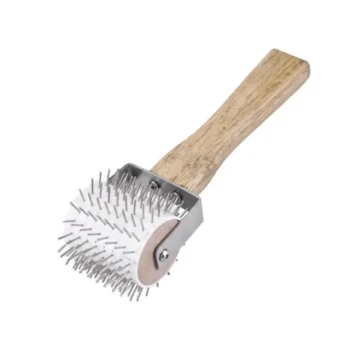
- Professional Honey Uncapping Roller for Efficient Harvesting
People Also Ask
- What is the design purpose of honey uncapping forks and honey uncapping tanks? Maximize Your Harvest Efficiency
- How does a honey uncapping fork supplement the use of an uncapping knife? Boost Your Honey Yield and Extraction Efficiency
- What are the essential tools for uncapping honey frames? Choose the Right Tool for Your Apiary
- What other tools are available for honey uncapping besides knives? Find the Right Tool for Your Apiary's Scale
- What tools are used for honey uncapping? Choose the Right Knife for Your Harvest