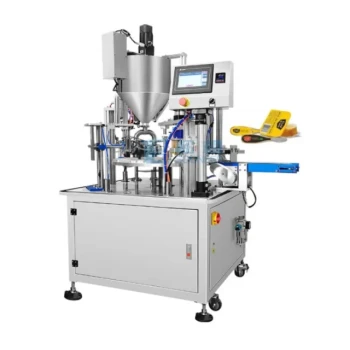
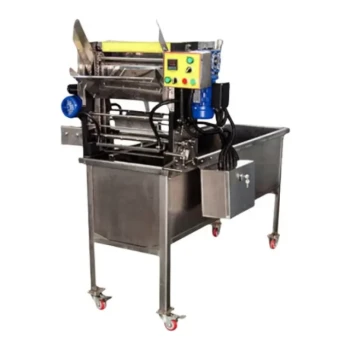
Evaluating the cost-effectiveness of a honey packaging machine requires looking beyond the purchase price tag to the Total Cost of Ownership (TCO). While the initial capital investment is a necessary starting point, true value is determined by long-term operational savings, specifically through waste reduction, filling accuracy, and the ability to scale production speed as your business grows.
The most cost-effective machine is not necessarily the cheapest option, but the one that aligns with your production scale while minimizing product loss. By balancing upfront costs with long-term efficiency gains—such as precise filling and reduced downtime—producers can maximize profitability.
Balancing Initial Investment with Long-Term Returns
The Financial Impact of Accuracy
Cost-effectiveness is heavily influenced by how well a machine preserves your product. Efficient honey packaging machines are designed to improve filling accuracy.
Even minor overfilling can lead to significant revenue loss over thousands of units. Investing in precision technology minimizes product loss, directly improving your bottom line.
Speed as a Cost Reducer
Time is a tangible cost in production. Machines that increase production speed allow you to process more volume in fewer hours.
By reducing the time required to fill, seal, and label containers, you effectively lower the labor and overhead costs associated with every jar produced.
Matching Machine Capability to Production Scale
Solutions for Small-Scale Operations
For smaller producers, the goal is to find a balance between automation and budget. Semi-automatic machines often provide the best return on investment for this demographic.
If you are filling approximately 50 to 200 jars per day, a semi-automatic unit offers a significant efficiency upgrade over manual methods without the prohibitive cost of a fully industrial system.
Scaling Up for High Volume
Large-scale producers must prioritize throughput to maintain cost-effectiveness. In this context, the higher initial cost of fully automated systems is justified by the massive increase in output.
Multi-lane sachet packing machines or fully automatic lines can process hundreds of containers per hour. This capability maximizes production capacity, drastically reducing the cost-per-unit in high-volume environments.
Understanding the Trade-offs: Maintenance and Viscosity
The Hidden Cost of Cleaning
Honey is naturally sticky and viscous, which presents unique maintenance challenges. A machine that is cheap to buy but difficult to clean will cost you more in labor hours over time.
You must evaluate how easily parts can be removed for cleaning. Easy-to-remove parts streamline the sanitation process, ensuring that your labor budget is spent on production, not scrubbing.
Preventing Contamination and Downtime
Neglecting the physical properties of honey can lead to residue buildup and batch contamination. A machine that is hard to maintain shortens its own lifespan and risks product quality.
Regular maintenance is essential to avoid production downtime. A stopped machine generates zero revenue, making reliability a critical factor in the cost-effectiveness equation.
Making the Right Choice for Your Goal
To select the machine that offers the best financial return, align the equipment with your specific business objectives:
- If your primary focus is small-batch production (50-200 jars/day): Opt for a semi-automatic machine to balance a lower upfront investment with improved operational efficiency.
- If your primary focus is maximizing volume and speed: Invest in fully automated, multi-lane systems to significantly reduce production time and labor costs per unit.
- If your primary focus is long-term savings: Prioritize machines with high filling accuracy and easy-to-clean components to minimize product waste and maintenance labor.
True cost-effectiveness is achieved when your equipment reduces waste and scales seamlessly with your production demands.
Summary Table:
| Evaluation Factor | Impact on Cost-Effectiveness | Key Considerations |
|---|---|---|
| Filling Accuracy | Reduces product waste & loss | Precision technology directly boosts bottom-line revenue |
| Production Speed | Lowers labor & overhead costs | Faster output reduces the per-unit processing cost |
| Operational Scale | Optimizes capital allocation | Semi-automatic (50-200 jars/day) vs. Fully automatic (high volume) |
| Maintenance Design | Reduces labor hours & downtime | Easy-to-remove parts streamline cleaning and prevent contamination |
Scale Your Apiary Success with HONESTBEE
Are you looking to optimize your honey production for maximum profitability? At HONESTBEE, we specialize in empowering commercial apiaries and distributors with high-performance solutions. From precision honey-filling machines and automated packaging lines to specialized hive-making machinery, we provide the full spectrum of equipment needed to reduce waste and boost output.
Beyond hardware, our portfolio includes essential industry consumables and honey-themed merchandise to support your entire business ecosystem. Whether you are scaling up or upgrading for efficiency, our team is ready to provide the wholesale tools your operation demands.
Contact HONESTBEE today to find your perfect packaging solution!
Related Products
- Automatic Single-Dose Snap & Squeeze Honey Sachets Packing Machine
- Fully Automatic Honey Filling Packaging Machine for Processing Line
- Precision Automated Packaging Turntable Honey Spoon Filling Sealing Packing Machine
- Economy Small Honey Filling Machine Honey Bottle Filler Packaging Machine
- Honey Stick Filler Vertical Paste Sachet Packing Machine for Honey Sachets
People Also Ask
- What are the advantages of honey sachet packing machines? Boost Efficiency & Unlock New Markets
- What are the main functions of a honey sachet packing machine? Boost Efficiency with Automated Precision
- How does an industrial-grade honey sachet packaging machine assist beekeepers in accessing public institution markets?
- Why is automated packaging machinery essential for scaling industrial honey production? Drive Commercial Scalability
- Why is it advantageous for apiaries to be located near honey processing centers? Boost Quality and Market Reach