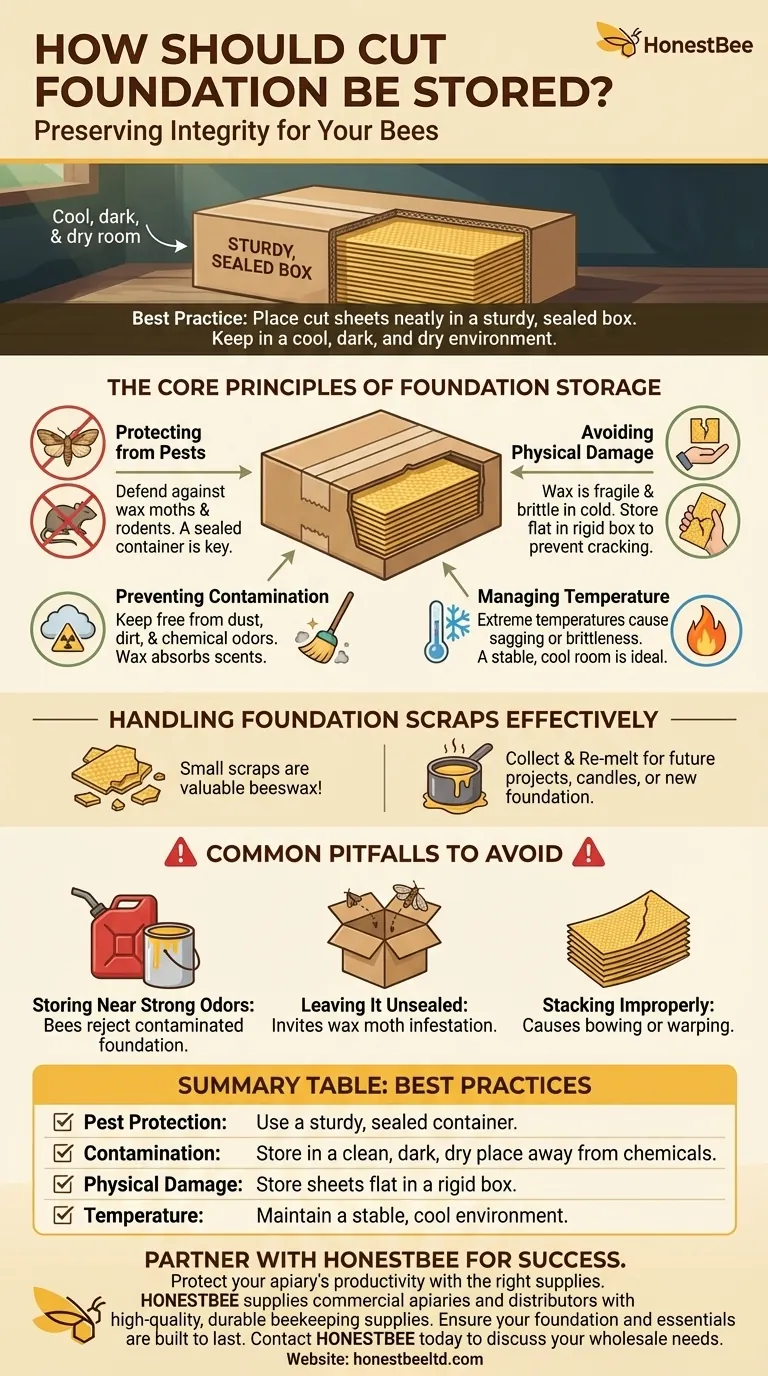
To properly store cut wax foundation, you must protect it from pests, contamination, and physical damage. The most effective method is to place the cut sheets neatly in a sturdy box, seal it securely, and keep it in a cool, dark, and dry environment until you are ready to use it in your hives.
Storing foundation is about preserving its integrity for your bees. Proper storage prevents warping, contamination, and pest damage, ensuring the wax remains a clean and attractive template for comb construction.
The Core Principles of Foundation Storage
Understanding why certain storage steps are necessary helps ensure your foundation remains in perfect condition. Bees can be particular, and a well-preserved sheet is far more likely to be accepted and drawn out quickly.
Protecting from Pests
The most significant threats to stored beeswax are wax moths and rodents. A sealed, sturdy container is your primary line of defense against these pests, who are naturally drawn to beeswax.
Preventing Contamination
Foundation should be kept free from dust, dirt, and chemical odors. Beeswax readily absorbs scents, so storing it away from gasoline, pesticides, or other strong chemicals is critical to keep it appealing to your colony.
Avoiding Physical Damage
Beeswax foundation is fragile. It can become brittle in the cold and is easily broken or warped if not handled carefully. Storing sheets flat within a rigid box prevents cracking and maintains their shape.
Managing Temperature
Extreme temperatures are the enemy of wax foundation. High heat can cause sheets to soften, sag, or warp, while very cold temperatures increase their brittleness and risk of shattering. A stable, cool room is the ideal environment.
Handling Foundation Scraps Effectively
Cutting foundation to fit specific frame sizes inevitably produces scraps and small leftover pieces. These should not be discarded.
The Value in Leftovers
Even the smallest scraps are valuable, clean beeswax. Wasting them is like throwing away a small piece of your honey harvest.
The Re-melting Process
Collect all your clean scraps in a dedicated container. These can be washed and melted down in a wax-melting pot to create solid blocks of beeswax for future projects, candle making, or even creating new foundation sheets.
Common Pitfalls to Avoid
Simple mistakes in storage can render your foundation useless. Being aware of these common errors will help you protect your investment.
Storing Near Strong Odors
Never store your foundation in a garage or shed next to chemicals, fuels, or paints. The wax will act like a sponge, and the bees will likely reject the contaminated foundation.
Leaving It Unsealed
An unsealed box is an open invitation to wax moths. A female moth can easily enter and lay eggs, leading to an infestation that will destroy your entire supply.
Stacking Improperly
Do not stand foundation sheets on their edge or stack them unevenly for long periods. This can cause the wax to bow or warp under its own weight, making it difficult to install in frames later.
Making the Right Choice for Your Goal
Your storage strategy depends on what you are storing.
- If your primary focus is storing usable cut sheets: Box them flat, seal the container completely, and store it in a cool, pest-free location like a closet or basement.
- If your primary focus is managing small scraps: Keep a separate, clean bucket or bag to collect all leftover pieces for future melting.
- If your primary focus is long-term winter storage: Ensure your container is completely airtight to eliminate any risk of pest infestation over the months.
Properly protecting your foundation is a simple step that safeguards your investment and sets your bees up for a successful season.
Summary Table:
| Storage Factor | Key Consideration | Best Practice |
|---|---|---|
| Pest Protection | Defend against wax moths and rodents. | Use a sturdy, sealed container. |
| Contamination | Wax absorbs odors and dust. | Store in a clean, dark, dry place away from chemicals. |
| Physical Damage | Wax can warp or become brittle. | Store sheets flat in a rigid box. |
| Temperature | Extreme heat or cold damages wax. | Maintain a stable, cool environment. |
Protect your apiary's productivity with the right supplies. Proper foundation storage is just one part of successful beekeeping. HONESTBEE supplies commercial apiaries and beekeeping equipment distributors with high-quality, durable beekeeping supplies and equipment through our wholesale-focused operations. Ensure your foundation and other essentials are built to last. Contact HONESTBEE today to discuss your wholesale needs and how we can support your operation's success.
Visual Guide
Related Products
- Professional Rolling Wax Cutter with Ergonomic Handle
- Manual Beeswax Comb Foundation Machine Wax Foundation Mill Embossing Machine
- Notebook Style Beeswax Foundation Mould Wax Foundation Mold
- Beeswax Machine Press Embosser Wax Foundation Mold Printer Bee Hive Equipment Making Sheet
- Fully Automatic Beeswax Embossing Machine Foundation Mill
People Also Ask
- What tools are used to cut wax foundations? The Essential Guide for a Perfect Fit
- What is the function of a beekeeping knife? Master the Art of Honey Uncapping and Extraction
- What is the process for cutting milled wax foundation to a specific size? Master Precision Beekeeping Techniques
- How is a comb cutter used to produce cut comb honey? Master the Art of Precision Harvesting
- How are the finished wax foundation sheets cut to the correct size? Precision Trimming for Perfect Hive Frames