The organization of frames during a manual split dictates the future stability of the colony. You must distribute frames as equally as possible between the original and new hive bodies to ensure both units have adequate resources. Specifically, the new hive must have the queen cell frame in the center, flanked immediately by pollen frames, with empty drawn comb placed at the outer edges to allow for growth.
A successful split is not just about dividing the population, but about balancing the "pantry" and the "nursery." Each unit requires at least one frame of honey, significant pollen stores, and empty drawn comb to survive and expand.
The Strategy of Resource Distribution
The Equal Share Principle
The fundamental rule of a manual split is balance. You cannot strip one hive to support the other; resources must be distributed as equally as possible.
Essential Provisions
Every split acts as a standalone survival unit. Consequently, each box must contain specific resources to function independently.
The Honey Minimum
At a minimum, every unit requires one full frame of honey. This ensures the bees have immediate energy reserves while they re-establish themselves.
Pollen and Comb Requirements
In addition to honey, you must provide a significant amount of pollen for protein. You must also include empty frames with drawn comb to provide immediate infrastructure for the colony.
Optimizing Frame Position in the New Hive
Centering the Future Queen
In the new hive body, the brood frame containing the queen cell acts as the anchor. This frame should be placed in the exact center of the box.
Immediate Nutrient Access
Position the pollen frames directly on either side of the central queen cell frame. This ensures that nurse bees have immediate access to protein sources right next to the developing brood.
Creating Expansion Zones
Place the empty frames containing drawn comb at the outermost positions of the box. This arrangement provides the necessary physical space for the colony to expand outward as the population grows.
Best Practices for Frame Handling
Utilizing the Correct Tool
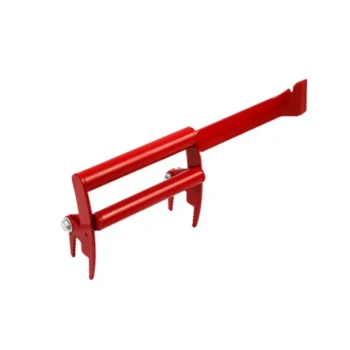
When manipulating frames during a split or inspection, rely on the hook end of your hive tool. This provides the best leverage for safe removal.
The Lifting Technique
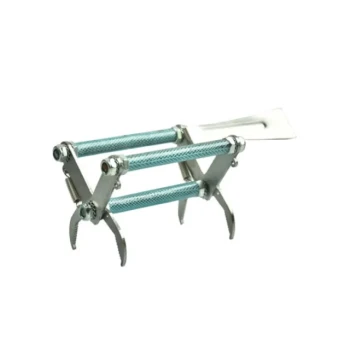
Slide the hook under the top bar of the frame. Lift carefully and gently vertically.
Protecting the Population
The primary goal during lifting is to avoid harming the bees. Gentle movements prevent crushing bees between the frame ears or side walls.
Common Pitfalls to Avoid
Overcrowding the Center
A common error is clustering all full frames in the center without leaving room for growth. While the brood needs warmth, the colony needs the outer "empty drawn comb" to prevent immediate congestion.
Neglecting the "Pantry"
Do not focus solely on moving the queen cell. If you move the brood but fail to provide the flanking pollen frames or the minimum honey frame, the new colony may starve before it can forage effectively.
Ensuring Success for Both Colonies
To maximize the survival rate of your split, prioritize your frame arrangement based on the colony's immediate biological needs.
- If your primary focus is immediate brood survival: Place the queen cell frame in the center flanked by pollen to minimize travel time for nurse bees.
- If your primary focus is colony expansion: Ensure the outermost positions contain empty drawn comb to encourage the bees to build outward rather than becoming honey-bound.
Treat the arrangement of frames not as a storage task, but as the construction of a functional living environment.
Summary Table:
| Frame Position | Resource Type | Purpose |
|---|---|---|
| Center | Queen Cell / Brood Frame | Core of the nursery; anchor for the new colony. |
| Flanking Center | Pollen Frames | Immediate protein access for nurse bees. |
| Mid-Sections | Honey Frames | Energy reserves for colony survival and work. |
| Outer Edges | Empty Drawn Comb | Expansion zone to prevent congestion and allow growth. |
Scale Your Apiary Operations with HONESTBEE
Successful hive splits require precision, and so does your equipment. HONESTBEE empowers commercial apiaries and distributors with high-performance beekeeping solutions designed for professional growth.
Whether you are expanding your colony numbers or upgrading your facility, we provide a full spectrum of wholesale offerings, including:
- Advanced Machinery: Precise hive-making and honey-filling machines to automate your production.
- Professional Tools: Durable hive tools, smokers, and extraction equipment built for heavy-duty use.
- Industry Consumables: Essential supplies to keep your colonies thriving year-round.
Maximize your efficiency and yield today. Our team is ready to provide the specialized hardware and wholesale support your business demands.
Related Products
- Wooden Bee Hive Frames for Beekeeping and Wholesale
- Ergonomic Plastic Frame Spacer Tool for Rapid Hive Management Beekeeping
- Plastic Bee Frame Beekeeping Hive Frames for Wholesale
- Mini Desktop Bee Hive Frame Forming Making Machine
- Beehive Handle and Frame Rest Cutting Machine: Your Specialized Hive Machine
People Also Ask
- How does balancing the number of frames impact hive productivity? Optimize Your Apiary's Biological Output
- How do wooden and plastic hive frames compare in terms of durability? Wood vs. Plastic Longevity & Repairability
- What are the main considerations when choosing between wooden and plastic bee hive frames? Optimize Your Apiary's Efficiency
- How should beehive frames be maintained to prolong their lifespan? 5 Pro Tips for Durable Beekeeping Equipment
- What is the primary function of frames within a beehive system? Structural Foundation and Hive Management