Select honey combs that are fully capped with wax to ensure the honey does not spoil. This visual cue indicates that the bees have dehydrated the nectar to a safe moisture level. Harvesting uncapped combs introduces excess water into your extraction, which lowers the overall sugar concentration and creates an environment where yeast and bacteria can thrive.
The biological stability of honey depends entirely on moisture control; fully capped combs guarantee a sugar concentration high enough to naturally inhibit fermentation and bacterial growth.
The Principles of Safe Selection
The Significance of the Wax Cap
When bees process nectar, they actively evaporate water from it. Only when the moisture content is sufficiently low do they seal the cell with a wax cap.
Therefore, the presence of a full wax cap is the definitive sign that the honey is "ripe" and shelf-stable.
Sugar Concentration as a Preservative
Honey prevents spoilage through osmotic pressure. The high sugar concentration in cured honey draws water out of microbes, effectively neutralizing them.
Capped honey maintains this critical sugar density, ensuring that yeasts and bacteria cannot reproduce.
The Dangers of Uncapped Nectar
High Water Content Leads to Fermentation
Uncapped cells generally contain nectar that is still in the process of dehydration. This fluid has a much higher water content than cured honey.
If harvested, this excess water dilutes the sugar concentration, removing the natural preservative barrier and allowing fermentation to begin.
Contamination of the Batch
It is critical to understand that mixing uncapped frames with capped frames is a significant risk.
Because extracted honey is often pooled together, the excess moisture from a single uncapped section can raise the water content of the entire batch, causing the whole harvest to spoil.
Understanding Environmental Factors
Honey is Hygroscopic
Even after you select fully capped combs, the honey remains sensitive to the environment. Honey is hygroscopic, meaning it actively absorbs moisture from the surrounding air.
Once the wax caps are broken during harvest (crushing or spinning), the honey immediately begins interacting with the humidity in the room.
Critical Storage Parameters
To maintain the quality secured by proper selection, storage conditions must be strictly controlled.
Supplementary data indicates that storage environments should be kept at 10-16°C with relative humidity below 65%. This inhibits the production of hydroxymethylfurfural (HMF) and preserves the honey's chemical integrity.
Making the Right Choice for Your Goal
To maximize the longevity and quality of your harvest, apply these criteria:
- If your primary focus is preventing immediate spoilage: Harvest only frames that are fully capped, rejecting any containing open nectar cells to avoid water contamination.
- If your primary focus is long-term chemical integrity: Ensure your processing and storage areas maintain a relative humidity below 65% and a temperature between 10-16°C.
Prioritize the harvest of fully capped combs to rely on the bees' natural preservation process rather than hoping for luck with moisture levels.
Summary Table:
| Selection Criteria | Observation | Importance for Stability |
|---|---|---|
| Wax Capping | Fully sealed cells | Indicates honey is "ripe" with safe moisture levels |
| Sugar Density | High concentration | Creates osmotic pressure to inhibit bacterial growth |
| Moisture Content | Low (<18-20%) | Prevents yeast activity and natural fermentation |
| Environment | Controlled Humidity | Prevents hygroscopic absorption after extraction |
| Storage Temp | 10-16°C | Preserves chemical integrity and inhibits HMF production |
Maximize Your Harvest Quality with HONESTBEE
Ensuring your honey harvest is shelf-stable starts with the right selection and ends with the right equipment. HONESTBEE specializes in supporting commercial apiaries and distributors with a comprehensive range of professional-grade beekeeping solutions.
From high-efficiency honey-filling machines to durable hive-making machinery and essential industry consumables, we provide the tools you need to maintain the highest quality standards from hive to jar. Whether you are scaling your extraction process or stocking premium hardware, our wholesale offerings are designed to enhance your operational efficiency.
Ready to elevate your beekeeping business? Contact us today to discover how HONESTBEE can streamline your production and supply chain with expert equipment and global wholesale support.
Related Products
- Heart-Shaped Comb Honey Frame and Honeycomb Cassette
- Plastic Honey Comb Frames Cassette Box for Honey
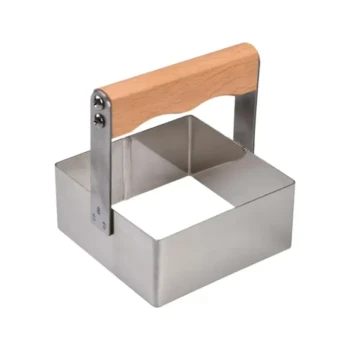
- Heavy Duty Stainless Steel Honeycomb Cutter
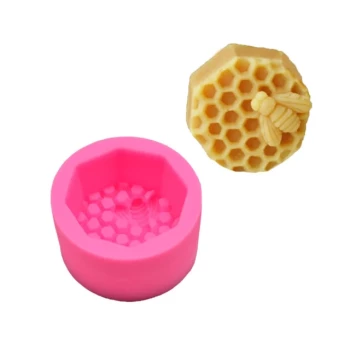
- Hexagonal Bee Honeycomb Silicone Soap Mold by HONESTBEE
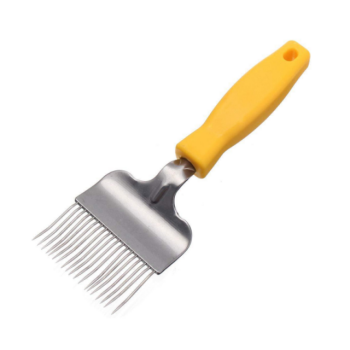
- Professional Bent Tine Honey Uncapping Fork with Ergonomic Grip
People Also Ask
- How are honeybee combs utilized for non-destructive colony monitoring? Master Population Density Tracking
- What is a honeycomb frame? The Key to Modern, Sustainable Beekeeping
- What is the technical purpose of exchanging honeycomb frames? Master Apiary Equalization for Growth
- What frame to use for honeycomb? Choose the Right System for Pure, Edible Comb
- What is the significance of sampling honeycomb frames and hive bottoms? A Guide to Scientific Sanitation Monitoring